Chinese semiconductor thread II

tokenanalyst

Lieutenant General
Registered Member

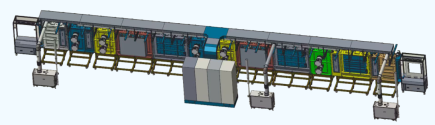
Iris: Breakthrough in Mass Production of Seed Layer Technology and Equipment for Large-Scale TGV Glass Substrates​

Iris Surface Technology (Suzhou) Co., Ltd. is committed to continuous innovation and the research, development, manufacturing, and application of surface modification materials. It provides professional PVD/PECVD vacuum nano-surface modification materials and solutions to industries such as 3C5G, new energy, optoelectronics, medical, precision equipment, smart home appliances, and precision components. It is one of the few national-level specialized and innovative small giant enterprises in China with the capability of "synchronous design and development" with customers, providing vertical and comprehensive solutions.

As advanced packaging evolves towards higher integration and larger panel-level dimensions, TGV technology has moved from the "laboratory process verification" stage to the critical phase of "mass production capacity construction." Aisen has targeted large-panel (≥ 510mm × 515mm) glass substrates, using double-sided conformal magnetron sputtering technology as its core breakthrough. Over three years, it has achieved a complete breakthrough across the entire chain, from process development and equipment integration to mass production verification. This breakthrough directly addresses the most critical "seed layer" preparation stage for TGV industrialization, achieving equipment breakthroughs—architectural innovation from "experimental equipment" to "mass production equipment"; process breakthroughs—full coverage of high aspect ratio vias; and mass production verification—a closed loop from data to customer factories.​

1774383719855.png

Please, Log in or Register to view URLs content!
 

tokenanalyst

Lieutenant General
Registered Member
Please, Log in or Register to view URLs content!

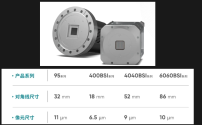
EUV sensor for EUV mask defect inspection.
China R&D institutions like CIOMP have being developing EUV imaging sensors for its space program for almost two decade. Now its seems that commercialization of these sensors for semiconductor manufacturing is gaining ground.

1774386328242.png
For EUV mass production mask defect detection in advanced processes of 7nm and below, the core principle is to conduct in-situ detection with the same wavelength as the photolithography process. The mainstream solution consists of three core modules: light source, optical system, and imaging camera. Commercial mass production solutions have long been monopolized by foreign technology.
  • Technological leadership: Xintu is the first domestic manufacturer to achieve independent control over soft X-ray and extreme ultraviolet direct imaging technology , and is one of the very few domestic camera manufacturers capable of providing imaging solutions for the 13.5nm special band .
  • Engineering platform capabilities : We have overcome key engineering challenges such as chip radiation resistance in high-energy ray scenarios , special material adaptation , and high vacuum environment compatibility , and achieved a full-chain technological breakthrough from optical systems and core imaging chips to system integration.​
  • Customized adaptation : It can quickly customize different target surfaces and high-speed data interface solutions, providing a comprehensive solution with deep software and hardware adaptation for various application scenarios and detection systems ;​
  • Industrialization Value : Xintu has completed the construction of a high-reliability engineering standardization system for scientific cameras, which can provide high-reliability and high-quality core support for the R&D of advanced domestic semiconductor processes and the mass production of commercial equipment .
 

tokenanalyst

Lieutenant General
Registered Member

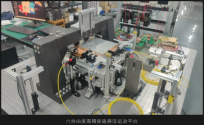
Nanjing University of Science and Technology Six-DOF High-Precision Magnetic Levitation Motion Platform for Semiconductor Manufacturing Equipment.​


1. Motion range: Unlimited travel in the XY plane, expandable as needed; Z-direction travel: 10mm; Rotation angle in the XY plane: 360° continuous rotation; Pitch and yaw: ≥±5°;
2. Motion resolution: Displacement resolution: ≤10nm; Angular resolution: ≤10 microradians;
3. Load capacity: ≥20KG; Maximum speed: ≥1 m/s; Maximum acceleration: ≥2g

1774386769418.png

Please, Log in or Register to view URLs content!
 

latenlazy

Brigadier
Please, Log in or Register to view URLs content!

Here’s the original interview. So EUV mass production sometime between 2027 and 2030?
Does anyone have full access to Toyo Keizai’s interview with Richard Zhang? He might be so far the most authoritative figure to openly speak about Chinese EUV efforts.

You are probably going to do a fair amount of trial production at least a year before you hit mass production.
 

Michael90

Senior Member
Registered Member
I am not sure that’s real? Afterall, Chinese managers/CEOs in EUV are cautious about making any remarks about EUV, since the government prefers to keep it low profile . So It’s a black box for now until they start putting them in production. . So we won’t hear much from official sources , I guess we will only know for real when they start production. So I’m surprised to see such a highly placed figure make statements about readiness timeline of EUV.
I don’t think it can be before 2030 . Afterall, it takes alot of time to test them before commercialization . Early/mid 2030s is more plausible .
 

latenlazy

Brigadier
I am not sure that’s real? Afterall, Chinese managers/CEOs in EUV are cautious about making any remarks about EUV, since the government prefers to keep it low profile . So It’s a black box for now until they start putting them in production. . So we won’t hear much from official sources , I guess we will only know for real when they start production. So I’m surprised to see such a highly placed figure make statements about readiness timeline of EUV.
I don’t think it can be before 2030 . Afterall, it takes alot of time to test them before commercialization . Early/mid 2030s is more plausible .
Usually blackbox projects start to get leaky as you get close to adoption because the more preliminary preparation for commercialization you do the more people outside your information controls are touching the project. The additional post verification testing you have to do for commercial adoption is ultimately just a function of man hours (sometimes this step is called validation). If you devote a lot of human resources to do parallel preparation for commercialization you can significantly compress that timeline. Normally private commercial entities don’t do this because it’s quite expensive to do it this way.
 

meedicx

Junior Member
Registered Member
I am not sure that’s real? Afterall, Chinese managers/CEOs in EUV are cautious about making any remarks about EUV, since the government prefers to keep it low profile . So It’s a black box for now until they start putting them in production. . So we won’t hear much from official sources , I guess we will only know for real when they start production. So I’m surprised to see such a highly placed figure make statements about readiness timeline of EUV.
I don’t think it can be before 2030 . Afterall, it takes alot of time to test them before commercialization . Early/mid 2030s is more plausible .

This should be read in context with the previous article before the two sessions authored by many CEOs of Chinese semi companies including the SMIC CEO who gave the interview
Please, Log in or Register to view URLs content!

I gave my thoughts on it previously in this thread
You need to put the article in context; it was published before the two sessions and advocates for specific policy. If you read the original article in Chinese, it reads like one of those political articles from Qiushi that states a problem with the proposed solution being already decided before publication. The article is a post-hoc public justification.

From the article, it seems all the core EUV components have made breakthroughs and there will probably be a merger to create a national lithography champion to integrate the component and mass produce scanner. There will probably be other mergers to create a big national champion for EDA.

So it's very likely there will be a new company being formed soon to mass produce lithography machines
 
Top