Chinese semiconductor thread II

tokenanalyst

Lieutenant General
Registered Member

Shunyi sees the birth of an ultra-wide bandgap semiconductor core platform​


Shunyi District in Beijing has launched a municipal-level "Ultra-Wide Bandgap Semiconductor Incubation Platform," recognizing its leadership in next-generation semiconductor development. Led by Beijing Mingjia Semiconductor Co., Ltd., the platform focuses on gallium oxide—a high-performance, cost-effective material that outperforms silicon carbide in applications like electric vehicles, smart grids, and aerospace. The company achieved a global first in 2025 by successfully producing a 4-inch (010) gallium oxide wafer using an advanced process, paving the way for larger-scale, lower-cost semiconductor manufacturing.

The platform operates under a collaborative "three-dimensional innovation model" involving Mingjia Semiconductor as the core technology driver, Chuangyuan Chengye for pilot production scaling, and Chuangzhi Yilian providing full-service ecosystem support. This integrated approach streamlines the transition from laboratory research to market-ready products. The initiative is supported by Shunyi’s favorable industrial environment, including dedicated space allocation of 989 square meters and specialized policies that cover R&D, talent development, and technology commercialization.

With this milestone, Shunyi aims to establish a leading fourth-generation semiconductor ecosystem centered on gallium oxide, positioning the district as a key player in Beijing's broader strategy for cutting-edge technological innovation. The platform not only strengthens local industry capabilities but also accelerates regional progress toward becoming a global hub for advanced semiconductors.​

Please, Log in or Register to view URLs content!
 

tokenanalyst

Lieutenant General
Registered Member

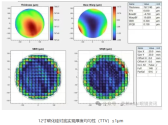
Zhejiang Jingrui achieves 12-inch silicon carbide TTV ≤ 1μm​


Zhejiang Jingrui SuperSiC, a subsidiary of Jingsheng Mechanical & Electrical Co., Ltd., has achieved a major technological breakthrough by attaining a thickness uniformity (TTV) of ≤1μm in its 12-inch silicon carbide (SiC) substrates. This milestone is made possible through the company’s independently developed 12-inch pilot production line, marking one of the first domestic successes in producing high-precision SiC wafers with such ultra-fine uniformity.
1768401304172.png

The advancement is particularly significant for the rapidly growing AR and AI/AR glasses market, where SiC's high refractive index, excellent thermal conductivity, and low light absorption make it ideal for optical waveguide lenses. 12-inch SiC substrates offer superior performance in terms of wafer yield, edge loss reduction, and compatibility with advanced manufacturing processes key factors driving industry-wide adoption.

By integrating full domestic capabilities across crystal processing, cutting, thinning, polishing, cleaning, and testing and developing all equipment in-house—Jingsheng Mechanical & Electrical and Zhejiang Jingrui SuperSiC have overcome longstanding challenges related to ultra-precision machining of SiC, a material known for its near-diamond hardness. This achievement meets the stringent 1μm-level TTV/LTV requirements essential for high-resolution photolithography and bonding in advanced AR optics.

Currently in small-batch production, the company is advancing toward stable mass production. With growing demand from AR device manufacturers, Zhejiang Jingrui SuperSiC aims to accelerate large-scale deployment of 12-inch SiC substrates in AR lenses and other high-end applications, solidifying China’s position in next-generation optical materials innovation.​

Please, Log in or Register to view URLs content!
 

tokenanalyst

Lieutenant General
Registered Member

The groundbreaking ceremony for Hangzhou Xinguang Semiconductor's national high-end advanced chip testing base was held.​


On the morning of January 13, the groundbreaking ceremony for the first phase of the high-end advanced chip national testing base of Hangzhou Xinguang Semiconductor Co., Ltd. was held in Hangzhou Binfu Special Cooperation Zone.

According to Zhu Baoli, General Manager of the Strategic Investment Department of GF Qianhe, a shareholder representative, Lucent Semiconductor continues to expand its testing footprint in cutting-edge fields. Xinguang Semiconductor is a milestone for the company in its climb to the industry peak, representing a crucial step towards becoming a public company with both scale advantages and a greater industrial mission. Weng Jiayan, General Manager of Hangzhou Hehe Venture Capital Co., Ltd., another shareholder representative, pointed out that Xinguang Semiconductor is a key component of Lucent Semiconductor's industrial chain extension and a significant achievement of the Binfu Cooperation Zone. She encouraged Lucent Semiconductor to maintain its rapid growth and become a leading benchmark in the semiconductor industry with advanced technology and excellent profitability.

According to a report released by Hangzhou Municipal Government on January 5, the Hangzhou Xinguang Semiconductor Co., Ltd.'s high-end advanced chip national testing base project is a newly started provincial "thousand projects worth trillions" project this year.
Public information shows that Hangzhou Lucent Technologies Co., Ltd., founded in 2010, is a leading integrated circuit testing service provider in China, focusing on R&D in the integrated circuit field, advanced chip full-process testing services, and the construction of an industry talent ecosystem.

Please, Log in or Register to view URLs content!
 

FriedButter

Brigadier
Registered Member
Please, Log in or Register to view URLs content!

China's customs agents told Nvidia's H200 chips are not permitted, sources say​

Jan 14 (Reuters) - Chinese customs authorities told customs agents this week that Nvidia's (NVDA.O) H200 artificial intelligence chips are not permitted to enter China, according to three people briefed on the matter.

Chinese government officials also summoned domestic technology companies to meetings on Tuesday where they were explicitly instructed not to purchase the chips unless necessary, two of the people and a third source said.

"The wording from the officials is so severe that it is basically a ban for now, though this might change in the future should things evolve," one of the people said.

The H200, Nvidia's second most powerful AI chip, is one of the biggest flashpoints in current U.S.-Sino relations. Though there is strong demand from Chinese firms, it remains unclear whether Beijing wants to ban it outright so that domestic chip companies can flourish, or is still chewing over restrictions, or whether these measures could be used as a bargaining tactic in talks with Washington.

The chip, formally approved by the Trump administration for export to China this week with some conditions, is also a hot-button issue in the U.S., with many China hawks concerned that the chips could supercharge the Chinese military and erode the U.S. advantage in AI.

The sources, who spoke on condition of anonymity due to the sensitivity of the matter, said authorities had not provided any reasons for their directives and had not given any indication whether this constitutes a formal ban or a temporary measure.

Reuters was not immediately able to ascertain whether the directives applied to existing orders for H200 chips or only to new orders.

China's General Administration of Customs, the Ministry of Industry and Information Technology and the National Development and Reform Commission had not responded to Reuters requests for comment at the time of publication. Nvidia also did not reply to Reuters queries.

A BEIJING BARGAINING TACTIC TO PUSH FOR BIGGER CONCESSIONS?

The Information on Tuesday reported that the Chinese government this week told some tech companies it would only approve their H200 purchases under special circumstances, such as for research and development conducted in partnerships at universities.

Exemptions are being discussed for R&D purposes and universities, said one of the sources.

Analysts say Beijing's move could be aimed at exerting leverage on Washington in the run-up to U.S. President Donald Trump's April visit to Beijing to meet with Xi Jinping as both sides navigate an uneasy truce on trade.

"Beijing is .... pushing to see what bigger concessions they can get to dismantle U.S.-led tech controls," said Reva Goujon, a geopolitical strategist at research firm Rhodium Group.

Keen to stifle China's AI and technological development, the U.S. has since 2022 placed restrictions on exports to China of high-end chips.

Last year, Trump banned and then allowed exports of a much weaker chip, the H20. But then Beijing de facto blocked those sales from around August, prompting Nvidia CEO Jensen Huang to say the company's share of the AI chip market in the world's second-largest economy had shrunk to zero.

The H200, however, delivers roughly six times the performance of the H20, making it a highly attractive product.

While Chinese chipmakers have developed AI processors like Huawei's (HWT.UL) Ascend 910C, the H200 is considered far more efficient for large-scale training of advanced AI models.

Chinese technology companies have placed orders for more than two million H200 chips priced at around $27,000 each, far exceeding Nvidia's inventory of 700,000 chips, sources said last month.

It remains debatable, however, which side has more to gain from the sales of H200 chips to China.

Re-entry into the Chinese market would mean huge profits for Nvidia and the U.S. government, which will take a 25% fee on the chip sales.

White House AI czar David Sacks and others have also argued that exporting such chips to China discourages Chinese competitors from redoubling efforts to catch up with Nvidia's most advanced chip designs.

"(Beijing) believes the U.S. is desperate to sell AI chips to China, so it believes China has the leverage to extract concessions from the U.S. in exchange for license approvals," said Chris McGuire, senior fellow for China and emerging tech at the Council on Foreign Relations think tank.
"The wording from the officials is so severe that it is basically a ban for now, though this might change in the future should things evolve," one of the people said.
Chinese government officials also summoned domestic technology companies to meetings on Tuesday where they were explicitly instructed not to purchase the chips unless necessary,
 
Top