Last edited:


Two Dinglong Technology produced high end photoresists have passed verification by major domestic wafer foundries and secured orders.
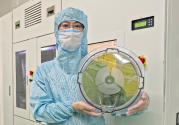
Dinglong Technology has achieved significant progress in domestically produced high-end wafer photoresists, with two KrF and ArF photoresists passing verification by major Chinese semiconductor foundries and securing orders. This marks a critical step toward reducing reliance on imported materials amid global supply chain decoupling.
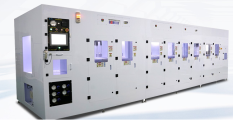
With over 30 high-end photoresist products covering KrF and immersion ArF processes, Dinglong has established an independent R&D and manufacturing system from raw materials to finished goods, underpinned by a "self-developed R&D + vertical integration" strategy. Its Qianjiang Phase I factory currently supports annual production of 30 tons, with plans to scale up to 300 tons via a 910 million yuan convertible bond issuance (480 million yuan allocated for industrialization).
View attachment 166730
Beyond photoresists, Dinglong is a leader in semiconductor CMP materials the only domestic company fully mastering the core technology and process of CMP polishing pads, with strong growth in polishing slurries and cleaning fluids. In H1 2025, its CMP segment revenues rose by over 59% year-on-year, including first-time orders for copper polishing slurry.
This breakthrough strengthens China’s semiconductor supply chain security, demonstrating Dinglong's capability to provide stable, high-performance domestic alternatives in key bottleneck materials.
I don't know why iPhone dominates the flagship segment so much in China. Most celebrities (espescially 99% of the female) always use an iPhone.So no, Kirin chip production is not the main issue for Huawei. The main issue is that China's high end phone market is only so large and iPhone continue to dominate the market share and Xiaomi 15/17 is also in there now, so it is not possible for Huawei to actually sell 20 million of flagship Mate/Pura phones per year right now.
US labels Chinese chips an economic threat, but delays tariff impact until 2027
In a formal notice of action filed with the Federal Register, the agency said the US is implementing a tariff action on a wide range of Chinese semiconductors, with an initial rate of 0 per cent. The rate is set to rise in 18 months, on June 23, 2027, to a higher level that will be announced 30 days before the deadline.

I will add more....
Two Dinglong Technology produced high end photoresists have passed verification by major domestic wafer foundries and secured orders.
Dinglong Technology has achieved significant progress in domestically produced high-end wafer photoresists, with two KrF and ArF photoresists passing verification by major Chinese semiconductor foundries and securing orders. This marks a critical step toward reducing reliance on imported materials amid global supply chain decoupling.
With over 30 high-end photoresist products covering KrF and immersion ArF processes, Dinglong has established an independent R&D and manufacturing system from raw materials to finished goods, underpinned by a "self-developed R&D + vertical integration" strategy. Its Qianjiang Phase I factory currently supports annual production of 30 tons, with plans to scale up to 300 tons via a 910 million yuan convertible bond issuance (480 million yuan allocated for industrialization).
View attachment 166730
Beyond photoresists, Dinglong is a leader in semiconductor CMP materials the only domestic company fully mastering the core technology and process of CMP polishing pads, with strong growth in polishing slurries and cleaning fluids. In H1 2025, its CMP segment revenues rose by over 59% year-on-year, including first-time orders for copper polishing slurry.
This breakthrough strengthens China’s semiconductor supply chain security, demonstrating Dinglong's capability to provide stable, high-performance domestic alternatives in key bottleneck materials.