
Chinese semiconductor thread II

tphuang

General
Staff member
Super Moderator
VIP Professional
Registered Member
KrF development is pretty mature right now and it was pretty mature in the 600 series, RSLaser KrF light source was already developed in the 600 series, KrF optics and light sources are way cheaper and easier to make so I don´t think will bog down ArF/ArFi machines production .

Their machines where developed to be used along ASML machines, especially in metal layers and I think will be a prime target for entering the domestic lithography market for companies outside the sanction regime instead of going for the more risky ArF machines. Also can be used by mature nodes 130nm nodes by companies, like auto chips and MEMs.

Also you have to take into account that ASML makes machine for a global market and multiple pretty big companies. Domestic lithography machines performance has to be tied to domestic demand, for now, going for ASML performance from the start would probably bog down the development of domestic lithography machines unnecessary. The goal is not to compete with ASML, for now, but to meet domestic demands already sanctioned companies.
Was 600 series ever actually competitive though?

my understanding is that it was never up to par economically so anything SMEE produce now for KRF should also be 800 series.
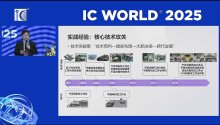
 

snake070

New Member
Registered Member
600 series is already in serial production for quite some time.

800 series specifically developed to compete in immersion category coz US always threaten to cut off ASML supply. article says 800 series achieved mass production. it means SMEE planning to compete with ASML in DUVi category and obviously can't compare economically with ASML initially but can compensate in numbers.

remember @interestedseal did post about Lithography suppliers mass production plan in 2026. i believe from 2026 onward SMEE will increase immersion scanner production further. maybe we see improved SSA800 variant soon. i m sure improved version is already under development or near completion. this is the Chinese pattern in pretty much every high tech field.
My English is very poor, so I'm using AI translation (DeepSeek V4)

You're right, the upgraded version should still be in testing.


The 28 nm lithography machine reported in the news has a WPH of 150, but that is not the latest upgraded version. havok mentioned that the new upgraded version is benchmarked against the 1980Di.

havok:14nm对机器整体套刻精度,ArFi光源中心波长稳定性,浸液系统污染物控制等等众多指标都要求更高。不过现在有些子系统已能满足14nm的制造要求

havok:采用激光干涉仪的工件台,它的微动台有个很重要的部件叫反射镜,这个制造起来是非常困难,而且很重,微动台要带着这个重反射镜高速运动 动态性能就会受很大影响,进而影响工件台的产能,而且由于反射镜长时间受到激光照射会发热影响运动精度,所以还需要额外采取降温措施,这也会增加重量。如果采用平面光栅就没有这些问题因为不需要反射镜,所以wph就会大大提高
havok: For the 14 nm node, the overall overlay accuracy of the tool, the central wavelength stability of the ArFi light source, contamination control of the immersion system, and many other specifications all become more stringent. That said, some subsystems are already capable of meeting 14 nm manufacturing requirements.

havok: In a wafer stage that uses laser interferometers, the fine stage contains a critical component called a mirror. This mirror is extremely difficult to manufacture and is very heavy. When the fine stage has to move at high speed while carrying this heavy mirror, dynamic performance is significantly compromised, which in turn limits the wafer stage’s WPH (wafers per hour). Moreover, the mirror heats up under prolonged laser exposure, degrading motion accuracy, so extra cooling measures are needed—which adds even more weight. If a planar grating is used instead, these problems are eliminated because no mirror is required, and the WPH can be greatly increased.

双工件台11111.jpg
 
Last edited:

tokenanalyst

Lieutenant General
Registered Member
Was 600 series ever actually competitive though?
ArF was a disappointment but looks they sold some I-line and KrF machines.
my understanding is that it was never up to par economically so anything SMEE produce now for KRF should also be 800 series.
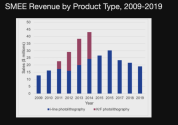
They had been selling KrF machines since the early 2010s, as far as I know the KrF is mostly an upgrade to what the use to have with a more powerful excimer laser, better optics and upgrade stage. It could be they relegate the 800 series to mostly immersion and the dry versions to 600 series.

1778387585192.png

1778387880233.png
 

MortyandRick

Senior Member
Registered Member
this has been posted on this thread.

during SEMICON 2026, SMEE representatives said, we have achieved double digit production of advance lithography.

that is Korean guy Jukan screen-shot from twitter.

View attachment 174681

but yeah we should wait for official SMEE announcement with full specifications. i think this immersion scanner serial production info started to emerge in Q4,2025.
--------------------------------------------------------------------------------------------------------------------
i have decided to dig up some old news related domestic immersion scanner.

in December, 2025 Beijing Yandong announced 28nm production in Q2,2026 and we all know that Beijing Yandong is 100 percent domestic line.

View attachment 174682

Q2, 2026 date is absolute matches with SSA800 this new information.. interesting right ?

@european_guy refresh this page and read additional information. but we still have to wait for more information better if its from SMEE.
I think many of us are cautiously optimistic. This is big news if true and would be undoubtedly bigger if SMEE lists the SSA800 officially on this website.
 

spaceship9876

New Member
Registered Member
If i recall there was a chinese company making a competitor to i-line 350nm using LED as a light source instead which uses much less power and lasts longer.
 

GulfLander

Brigadier
Registered Member
Located in the Lingang Special Area, the "Oriental Chip Port" is a specialized industrial park for integrated circuits that Shanghai is focusing on developing.

The Awinic Automotive-Grade Reliability Testing Center at Oriental Chip Port has entered completion acceptance and is set to operate this June.

With a total investment of about 1.7 billion yuan and over 110,000 square meters of floor space, the facility will cover the full chip testing process—wafer test, final test at three temperatures, failure analysis, and reliability certification.

To ensure stable operation of high-precision equipment, the construction process was optimized during the internal structure work.

At full capacity, its annual testing volume of 30–50 billion chips will help make Oriental Chip Port a hub for chip testing and verification in China.

It will support high-end chip R&D, testing, verification, and mass production for automotive and other sectors.
 

Totoro

Major
VIP Professional
So 2026/2027 is the year when China managed to do complete 28nm process on commerical scale, on all its own?

Is that the right conclusion?

If so, that can be compared to 2013 when various companies in the west achieved said process node? I am sure two are not directly comparable but still...
 
Top