
You are using an out of date browser. It may not display this or other websites correctly.
You should upgrade or use an alternative browser.
You should upgrade or use an alternative browser.
Chinese semiconductor thread II
- Thread starter vincent
- Start date
North China Electronics: Revenue continues to grow at a high rate. Also Launched a Plasma Immersion Ion Implantation Tool.
Naura Technology Group Co., Ltd. released its Q1 2026 financial report, achieving revenue of RMB 10.323 billion (YoY +25.80%) and net profit attributable to shareholders of RMB 1.635 billion (YoY +3.42%), in line with our expectations (RMB 10.306 billion/RMB 1.60 billion). Revenue growth stemmed from the continued improvement in the process coverage and market share of multiple equipment products. In Q1 2026, the company continued to increase its R&D investment in high-end equipment, with R&D expenses reaching RMB 1.402 billion (YoY +36.64%), putting temporary pressure on profits due to the high increase in R&D expenses. By 2025, the company's integrated circuit equipment revenue is projected to grow by over 50% year-on-year, with etching and thin-film equipment revenue both exceeding RMB 10 billion. According to Gartner 2025 data, the company ranks first in China and sixth globally among integrated circuit equipment companies. Looking ahead to 2026, the expansion of domestic memory and advanced process technologies is expected to accelerate.
High revenue growth in etching, thin film, heat treatment, and wet processing equipment highlights the company's core competitiveness. The company's etching, thin film, heat treatment, and wet processing equipment revenues have grown significantly.
1) The etching equipment layout includes ICP, CCP, dry resist removal, high-selectivity etching, Bevel etching, and IBE etching, with etching revenue exceeding RMB 10 billion in 2025.
2) The thin film deposition equipment layout includes physical vapor deposition, chemical vapor deposition, epitaxy, atomic layer deposition, electroplating, and metal-organic chemical vapor deposition equipment, with thin film deposition equipment revenue exceeding RMB 10 billion in 2025.
3) The company has established a complete product portfolio including tubular oxidation equipment, tubular annealing equipment, and rapid thermal treatment equipment;
4) The company has established a comprehensive portfolio of single-wafer and tank-type equipment, and the acquisition of Sinyuan Microelectronics has enriched its physical brushing and single-wafer cleaning portfolio;
5) The company has launched several products, including a 12-inch plasma immersion ion implantation device;
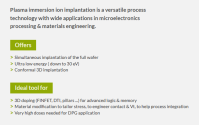
6) The acquisition of Sinyuan Microelectronics has allowed the company to enter the coating and developing field, further improving its product matrix. The company's
High revenue growth in etching, thin film, heat treatment, and wet processing equipment highlights the company's core competitiveness. The company's etching, thin film, heat treatment, and wet processing equipment revenues have grown significantly.
1) The etching equipment layout includes ICP, CCP, dry resist removal, high-selectivity etching, Bevel etching, and IBE etching, with etching revenue exceeding RMB 10 billion in 2025.
2) The thin film deposition equipment layout includes physical vapor deposition, chemical vapor deposition, epitaxy, atomic layer deposition, electroplating, and metal-organic chemical vapor deposition equipment, with thin film deposition equipment revenue exceeding RMB 10 billion in 2025.
3) The company has established a complete product portfolio including tubular oxidation equipment, tubular annealing equipment, and rapid thermal treatment equipment;
4) The company has established a comprehensive portfolio of single-wafer and tank-type equipment, and the acquisition of Sinyuan Microelectronics has enriched its physical brushing and single-wafer cleaning portfolio;
5) The company has launched several products, including a 12-inch plasma immersion ion implantation device;
6) The acquisition of Sinyuan Microelectronics has allowed the company to enter the coating and developing field, further improving its product matrix. The company's
The first time I read about a ban on semiconductor manufacturing tools was in 2017 by one of the CEOs of google, Eric Schmidt, he was advocating for a full ban in Immersion lithography. At the time the focus was more about banning Huawei access to US tech because most stooges where under the impression that China was not really capable in chip manufacturing and the none of China fabs would be capable of making the kind of chips that US companies make.A blanket ban om semi equipment would have huge disruption in 2021 that us and the world were not going to be able to deal with
By 2019 the realization that China semiconductor manufacturing capabilities where much better than expected become more palpable and the noise for a bigger ban started to grow. US companies fought back of course by lobbying the hell out of the Trump administration and the ban was mostly limited to EUV and very few fabs. But when the more legalistic Biden administration arrived in 2021 the industry totally lost their voice to Think Tank stooges and the ever more restrictived ban started.
The irony was that as these controls become more restrictive pushed Chinese companies to stockpile equipment, making US companies even more dependent in the Chinese market. Also pushed US companies to move production out the US into Asia. There has been a significantly decline of tools made in the US exported to China. That is leaving aside that pushed China to the most comprehensive industrial indigenization effort in Chinese modern history because didn't come out of a government mandate but out of necessity.
If you ask me what would be the time that a total ban would be the most effective I would say in 2019 when the revenue of US companies from China was relative low and there was WAY less domestic replacement than is today but the retaliation from China would had been brutal. A total ban in critical minerals and full blown trade war. That would had almost halted or significantly slow China production, would had been really bad. China would had accelerate the production of domestic alternatives faster than even today because there is still some naivete today. But a total ban in 2019 would had been the nail in the coffin.
Domestically produced SSA800 lithography machine achieves mass delivery
According to reports, Shanghai Microelectronics Equipment (Group) Co., Ltd. (SMEE) has recently completed the first batch delivery of its independently developed SSA800 series 28nm immersion DUV lithography machine, which has entered the mass production process verification stage.
The machine passed the acceptance test by the expert group of the Ministry of Industry and Information Technology in July 2025, completing the full-process technical verification. In January 2026, Shanghai Microelectronics officially announced for the first time at the Yangtze River Delta Semiconductor Industry Summit that the SSA800 series had achieved full-scale mass production, with a production yield consistently above 90%. In March 2026, Shanghai Microelectronics publicly showcased the machine for the first time at SEMICON China 2026. The completion of the first batch delivery of the SSA800 series lithography machine marks a crucial leap for domestically produced 28nm immersion lithography machines, from "usable" to "easy to use and mass-producible."
The SSA800 series reportedly employs 193nm ArF immersion lithography technology, natively supporting 28nm processes in a single exposure, and can stably achieve 14nm and even more advanced process production through multiple exposure processes. The equipment's overlay accuracy is controlled within ±2.3~2.5nm, with a stable mass production yield of 90%~95%, and it can process 150 wafers per hour. Regarding supply chain self-sufficiency, the SSA800 boasts a domestic production rate exceeding 85%, with all three core subsystems being domestically developed and manufactured.
Regarding mass production planning, the SSA800 series is expected to complete the delivery of 5-8 units in the second quarter, achieving stable mass production and delivery throughout the year. Industry experts predict that as production capacity continues to ramp up, the SSA800 series lithography machines will quickly cover the expansion needs of most mature process wafer fabs in China, and the market share of mature process lithography machines in China will rapidly shift towards domestically produced equipment.
Currently, the core chips used in everyday products such as automobiles, home appliances, industrial equipment, and communication terminals all rely on mature process production capacity. The mass delivery of SSA800 will fill the gap in core equipment for domestic mature process chip manufacturing. More importantly, it can drive technological iteration in light sources, optical lenses, dual workpiece stages, precision motion control, immersion systems, detection systems, and component manufacturers, opening up the entire process system of high-end lithography machine R&D, manufacturing, mass production, and commercialization. This will accumulate core technologies, supply chain support, and mass production experience for the development of more advanced process lithography machines in the future.
The machine passed the acceptance test by the expert group of the Ministry of Industry and Information Technology in July 2025, completing the full-process technical verification. In January 2026, Shanghai Microelectronics officially announced for the first time at the Yangtze River Delta Semiconductor Industry Summit that the SSA800 series had achieved full-scale mass production, with a production yield consistently above 90%. In March 2026, Shanghai Microelectronics publicly showcased the machine for the first time at SEMICON China 2026. The completion of the first batch delivery of the SSA800 series lithography machine marks a crucial leap for domestically produced 28nm immersion lithography machines, from "usable" to "easy to use and mass-producible."
The SSA800 series reportedly employs 193nm ArF immersion lithography technology, natively supporting 28nm processes in a single exposure, and can stably achieve 14nm and even more advanced process production through multiple exposure processes. The equipment's overlay accuracy is controlled within ±2.3~2.5nm, with a stable mass production yield of 90%~95%, and it can process 150 wafers per hour. Regarding supply chain self-sufficiency, the SSA800 boasts a domestic production rate exceeding 85%, with all three core subsystems being domestically developed and manufactured.
Regarding mass production planning, the SSA800 series is expected to complete the delivery of 5-8 units in the second quarter, achieving stable mass production and delivery throughout the year. Industry experts predict that as production capacity continues to ramp up, the SSA800 series lithography machines will quickly cover the expansion needs of most mature process wafer fabs in China, and the market share of mature process lithography machines in China will rapidly shift towards domestically produced equipment.
Currently, the core chips used in everyday products such as automobiles, home appliances, industrial equipment, and communication terminals all rely on mature process production capacity. The mass delivery of SSA800 will fill the gap in core equipment for domestic mature process chip manufacturing. More importantly, it can drive technological iteration in light sources, optical lenses, dual workpiece stages, precision motion control, immersion systems, detection systems, and component manufacturers, opening up the entire process system of high-end lithography machine R&D, manufacturing, mass production, and commercialization. This will accumulate core technologies, supply chain support, and mass production experience for the development of more advanced process lithography machines in the future.
the overlay requirements for 7nm is 2.0nm so is very close.

Domestically produced SSA800 lithography machine achieves mass delivery
According to reports, Shanghai Microelectronics Equipment (Group) Co., Ltd. (SMEE) has recently completed the first batch delivery of its independently developed SSA800 series 28nm immersion DUV lithography machine, which has entered the mass production process verification stage.
The machine passed the acceptance test by the expert group of the Ministry of Industry and Information Technology in July 2025, completing the full-process technical verification. In January 2026, Shanghai Microelectronics officially announced for the first time at the Yangtze River Delta Semiconductor Industry Summit that the SSA800 series had achieved full-scale mass production, with a production yield consistently above 90%. In March 2026, Shanghai Microelectronics publicly showcased the machine for the first time at SEMICON China 2026. The completion of the first batch delivery of the SSA800 series lithography machine marks a crucial leap for domestically produced 28nm immersion lithography machines, from "usable" to "easy to use and mass-producible."
The SSA800 series reportedly employs 193nm ArF immersion lithography technology, natively supporting 28nm processes in a single exposure, and can stably achieve 14nm and even more advanced process production through multiple exposure processes. The equipment's overlay accuracy is controlled within ±2.3~2.5nm, with a stable mass production yield of 90%~95%, and it can process 150 wafers per hour. Regarding supply chain self-sufficiency, the SSA800 boasts a domestic production rate exceeding 85%, with all three core subsystems being domestically developed and manufactured.
Regarding mass production planning, the SSA800 series is expected to complete the delivery of 5-8 units in the second quarter, achieving stable mass production and delivery throughout the year. Industry experts predict that as production capacity continues to ramp up, the SSA800 series lithography machines will quickly cover the expansion needs of most mature process wafer fabs in China, and the market share of mature process lithography machines in China will rapidly shift towards domestically produced equipment.
Currently, the core chips used in everyday products such as automobiles, home appliances, industrial equipment, and communication terminals all rely on mature process production capacity. The mass delivery of SSA800 will fill the gap in core equipment for domestic mature process chip manufacturing. More importantly, it can drive technological iteration in light sources, optical lenses, dual workpiece stages, precision motion control, immersion systems, detection systems, and component manufacturers, opening up the entire process system of high-end lithography machine R&D, manufacturing, mass production, and commercialization. This will accumulate core technologies, supply chain support, and mass production experience for the development of more advanced process lithography machines in the future.
Finally. Long-awaited advancement for domestic development, and with many more to follow.

Finally.
Domestically produced SSA800 lithography machine achieves mass delivery
According to reports, Shanghai Microelectronics Equipment (Group) Co., Ltd. (SMEE) has recently completed the first batch delivery of its independently developed SSA800 series 28nm immersion DUV lithography machine, which has entered the mass production process verification stage.
The machine passed the acceptance test by the expert group of the Ministry of Industry and Information Technology in July 2025, completing the full-process technical verification. In January 2026, Shanghai Microelectronics officially announced for the first time at the Yangtze River Delta Semiconductor Industry Summit that the SSA800 series had achieved full-scale mass production, with a production yield consistently above 90%. In March 2026, Shanghai Microelectronics publicly showcased the machine for the first time at SEMICON China 2026. The completion of the first batch delivery of the SSA800 series lithography machine marks a crucial leap for domestically produced 28nm immersion lithography machines, from "usable" to "easy to use and mass-producible."
The SSA800 series reportedly employs 193nm ArF immersion lithography technology, natively supporting 28nm processes in a single exposure, and can stably achieve 14nm and even more advanced process production through multiple exposure processes. The equipment's overlay accuracy is controlled within ±2.3~2.5nm, with a stable mass production yield of 90%~95%, and it can process 150 wafers per hour. Regarding supply chain self-sufficiency, the SSA800 boasts a domestic production rate exceeding 85%, with all three core subsystems being domestically developed and manufactured.
Regarding mass production planning, the SSA800 series is expected to complete the delivery of 5-8 units in the second quarter, achieving stable mass production and delivery throughout the year. Industry experts predict that as production capacity continues to ramp up, the SSA800 series lithography machines will quickly cover the expansion needs of most mature process wafer fabs in China, and the market share of mature process lithography machines in China will rapidly shift towards domestically produced equipment.
Currently, the core chips used in everyday products such as automobiles, home appliances, industrial equipment, and communication terminals all rely on mature process production capacity. The mass delivery of SSA800 will fill the gap in core equipment for domestic mature process chip manufacturing. More importantly, it can drive technological iteration in light sources, optical lenses, dual workpiece stages, precision motion control, immersion systems, detection systems, and component manufacturers, opening up the entire process system of high-end lithography machine R&D, manufacturing, mass production, and commercialization. This will accumulate core technologies, supply chain support, and mass production experience for the development of more advanced process lithography machines in the future.
the big news is, supply chain of immersion scanner achieved mass production which is far more complex to accomplish. this is why the announcement of SSA800 came this late. they were working on supply chain. Atomic level of precision required to manufacture Lithography core components.
Domestically produced SSA800 lithography machine achieves mass delivery
According to reports, Shanghai Microelectronics Equipment (Group) Co., Ltd. (SMEE) has recently completed the first batch delivery of its independently developed SSA800 series 28nm immersion DUV lithography machine, which has entered the mass production process verification stage.
The machine passed the acceptance test by the expert group of the Ministry of Industry and Information Technology in July 2025, completing the full-process technical verification. In January 2026, Shanghai Microelectronics officially announced for the first time at the Yangtze River Delta Semiconductor Industry Summit that the SSA800 series had achieved full-scale mass production, with a production yield consistently above 90%. In March 2026, Shanghai Microelectronics publicly showcased the machine for the first time at SEMICON China 2026. The completion of the first batch delivery of the SSA800 series lithography machine marks a crucial leap for domestically produced 28nm immersion lithography machines, from "usable" to "easy to use and mass-producible."
The SSA800 series reportedly employs 193nm ArF immersion lithography technology, natively supporting 28nm processes in a single exposure, and can stably achieve 14nm and even more advanced process production through multiple exposure processes. The equipment's overlay accuracy is controlled within ±2.3~2.5nm, with a stable mass production yield of 90%~95%, and it can process 150 wafers per hour. Regarding supply chain self-sufficiency, the SSA800 boasts a domestic production rate exceeding 85%, with all three core subsystems being domestically developed and manufactured.
Regarding mass production planning, the SSA800 series is expected to complete the delivery of 5-8 units in the second quarter, achieving stable mass production and delivery throughout the year. Industry experts predict that as production capacity continues to ramp up, the SSA800 series lithography machines will quickly cover the expansion needs of most mature process wafer fabs in China, and the market share of mature process lithography machines in China will rapidly shift towards domestically produced equipment.
Currently, the core chips used in everyday products such as automobiles, home appliances, industrial equipment, and communication terminals all rely on mature process production capacity. The mass delivery of SSA800 will fill the gap in core equipment for domestic mature process chip manufacturing. More importantly, it can drive technological iteration in light sources, optical lenses, dual workpiece stages, precision motion control, immersion systems, detection systems, and component manufacturers, opening up the entire process system of high-end lithography machine R&D, manufacturing, mass production, and commercialization. This will accumulate core technologies, supply chain support, and mass production experience for the development of more advanced process lithography machines in the future.
This may well be the most important news of the last 2 years.
Because of this I am wondering about the sources: "According to reports" what it means according to reports?
They say "In March 2026, Shanghai Microelectronics publicly showcased the machine for the first time at SEMICON China 2026" but this is not what has been reported in this forum in March, actually the stand of SMEE was showing a mock-up that they present every year and I don't remember of any official announcement at the time: SEMICON China 2026 was covered at length here.
Also overlay tolerance ±2.3~2.5nm is the single most important parameter for a litho machine. It would be important to have an official spec by SMEE in this regards. The article seems to hint that the SSA800 machine is now publicly acknowledged and officially reported by SMEE: so why specs arrive through "reports" ?
Again, I am questioning not to minimize the news, but actually for the opposite reason, because the news if official (currently it is not IMHO) would be the single most important of the last few years: there is a big difference between knowing that the SSA800 exists and it works and its official presentation with official specs by SMEE.
this has been posted on this thread.This may well be the most important news of the last 2 years.
Because of this I am wondering about the sources: "According to reports" what it means according to reports?
They say "In March 2026, Shanghai Microelectronics publicly showcased the machine for the first time at SEMICON China 2026" but this is not what has been reported in this forum in March, actually the stand of SMEE was showing a mock-up that they present every year and I don't remember of any official announcement at the time: SEMICON China 2026 was covered at length here.
Also overlay tolerance ±2.3~2.5nm is the single most important parameter for a litho machine. It would be important to have an official spec by SMEE in this regards. The article seems to hint that the SSA800 machine is now publicly acknowledged and officially reported by SMEE: so why specs arrive through "reports" ?
Again, I am questioning not to minimize the news, but actually for the opposite reason, because the news if official (currently it is not IMHO) would be the single most important of the last few years: there is a big difference between knowing that the SSA800 exists and it works and its official presentation with official specs by SMEE.
during SEMICON 2026, SMEE representatives said, we have achieved double digit production of advance lithography.
that is Korean guy Jukan screen-shot from twitter.
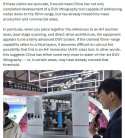
but yeah we should wait for official SMEE announcement with full specifications. i think this immersion scanner serial production info started to emerge in Q4,2025.
--------------------------------------------------------------------------------------------------------------------
i have decided to dig up some old news related domestic immersion scanner.
in December, 2025 Beijing Yandong announced 28nm production in Q2,2026 and we all know that Beijing Yandong is 100 percent domestic line.
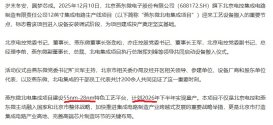
Q2, 2026 date is absolute matches with SSA800 this new information.. interesting right ?
@european_guy refresh this page and read additional information. but we still have to wait for more information better if its from SMEE.
Last edited: