Chinese semiconductor thread II

tokenanalyst

Lieutenant General
Registered Member

Moore Threads completes the full-link engineering adaptation of DeepSeek-V4: S5000 enables rapid deployment of complex MoE models based on MUSA+SGLang​


Recently, Moore Threads, relying on the flagship AI training and push integrated intelligent computing card MTT S5000 and its self-developed MUSA software stack, successfully completed the full operation verification of DeepSeek-V4 based on the SGLang open-source inference framework . This achievement demonstrates that, for the next generation of large MoE models, Moore Threads has built a systematic adaptation link from the core computing engine of the hardware architecture and support for hotspot operators to end-to-end deployment verification , verifying the carrying capacity and engineering implementation capability of domestic GPU platforms for cutting-edge large models with "framework-level compatibility and out-of-the-box deployment".

As large-scale model architectures continue to evolve, advanced models such as DeepSeek-V4 place stringent demands on underlying accuracy, operator coverage, compilation optimization, parallel communication, and inference efficiency. Moore Threads fully leverages the native FP8 computing power of the S5000 , the deep CUDA compatibility of MUSA, and the perfect support of the TileLang MUSA compiler for the TileLang ecosystem. Combined with the reuse of the TileKernels open-source library and the rapid development of custom operators based on TileLang, Moore Threads quickly established a seamless DeepSeek-V4 inference adaptation pipeline . This further validates Moore Threads' ability to provide developers and industry users with an efficient and easily deployable domestic hardware and software foundation for running large-scale models.

It is worth noting that TileLang-MUSA has officially been integrated into the TileLang mainline, achieving seamless Day-0 support for the latest DeepSeek-V4 release of the TileLang operator library, TileKernels. This means that the MUSA platform has the engineering foundation to support the cutting-edge LLM operator ecosystem, providing a directly reusable operator pathway for subsequent adaptation to advanced open-source models.


Please, Log in or Register to view URLs content!
 

sunnymaxi

Colonel
Registered Member
It’s extremely expensive, difficult, and time‑consuming to make a mirror with a surface accuracy of 0.02 nm. It requires continuous polishing for around 18 months, and only Zeiss can do it after decades of R&D.

For perspective on how flat 0.02 nm is: if a Zeiss EUV mirror were expanded to the size of China’s landmass, the tallest surface bump would be about 0.2 mm, roughly the thickness of a sheet of paper.

China’s best mirrors, from CIOMP, SIOM, and CAS, have achieved around 0.1–0.2 nm accuracy. That’s similar to Nikon’s level and good enough for ArF immersion, but nowhere near Zeiss’s EUV precision. The U.S. can also achieve around 0.2 nm, but mainly for space optics, not lithography.

China’s approach to dealing with the extreme precision gap is actually very clever and brilliant. Instead of trying to match Zeiss’s perfection, they use advanced AI to correct the “imperfections” of the mirror. AI constantly measures the light, predicts distortion, and pre‑corrects the system so the wafer still prints accurately even if the optics aren’t perfect. It monitors wavefront sensors, thermal drift, stage motion, and vibration, then uses a trained model to predict how the optics will deform in the next milliseconds. It adjusts deformable mirrors, focus, tilt, dose, and even pre‑distorts the mask pattern so the final image lands exactly where it should. In short: the hardware makes mistakes, AI predicts them, and the system cancels them before they matter — letting “good‑enough” mirrors behave like Zeiss‑grade optics.
this is not even your writing. from where did you copy this. and that China related part is totally wrong especially that Ai part.

with due respect bro.. this is completely bullshit. LMAO

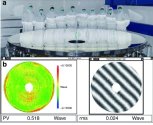
Achieving an RMS roughness of 0.02 nm (20 picometers) would mean a surface smoother than the diameter of a single atom (a hydrogen atom radius is roughly 25-50 picometers), which is beyond current practical, high-volume production capabilities.

currently EUV mirror roughness is generally achieved in the sub-0.2 nm to 0.1 nm range. even 0.3 nm mirror roughness is enough to reflect 13.5nm EUV light source.

EUV mirror.....jpg
656565656566565656.jpg

i m not even expert in Lithography but used google and official ASML/Zeiss articles and i found this.

its 0.2 to 0.1 but not 0.02 which is impossible.
---------------------------------------------------------------------------------------------------------------------
let me clarify.

EUV mirrors are one of the earliest components in China's EUV machine to successfully developed. the troublesome part was the freaking light source which was not upto the mark until recently.

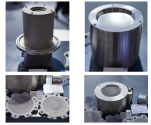
CIOMP manufactured this monster back in 2018.

Please, Log in or Register to view URLs content!

999999999.jpg

i have absolutely no idea why people overhype Zeiss. Japan is as good as ZEISS when it comes to optics. they even presented 4 Mirrors package of EUV machine instead of 10. which dramatically increase energy efficiency .

Please, Log in or Register to view URLs content!

Japan manufactures specialized Extreme Ultraviolet (EUV) mirrors and optical components, this company Natsume Optical Corporation produce EUV mirrors.

Please, Log in or Register to view URLs content!
 
Last edited:

latenlazy

Brigadier
You don’t need to get to absolute best in world levels of surface smoothness to get very good perfectly usable EUV mirrors. The point ultimately is that the mirrors are not a prohibitive factor for a domestic EUV machine. People should try to use a bit more critical thinking and do a bit less pearl clutching around blind numbers envy. The first Chinese EUV instrument doesn’t need to be bestest in the world to break the chokehold and to be honest I’m not sure why people should expect it to be. Maybe give it 1-2 commercial design iterations before getting panties twisted over whether China makes the bestest EUV everything.
 

oracular

Just Hatched
Registered Member
this is not even your writing. from where did you copy this. and that China related part is totally wrong especially that Ai part.

with due respect bro.. this is completely bullshit. LMAO

Achieving an RMS roughness of 0.02 nm (20 picometers) would mean a surface smoother than the diameter of a single atom (a hydrogen atom radius is roughly 25-50 picometers), which is beyond current practical, high-volume production capabilities.

currently EUV mirror roughness is generally achieved in the sub-0.2 nm to 0.1 nm range. even 0.3 nm mirror roughness is enough to reflect 13.5nm EUV light source.
Pangram states that all of this hocum was generated by an LLM.
 

Attachments

  • Screenshot From 2026-05-03 21-11-46.png
    Screenshot From 2026-05-03 21-11-46.png
    299 KB · Views: 49

tokenanalyst

Lieutenant General
Registered Member
China’s best mirrors, from CIOMP, SIOM, and CAS, have achieved around 0.1–0.2 nm accuracy. That’s similar to Nikon’s level and good enough for ArF immersion, but nowhere near Zeiss’s EUV precision. The U.S. can also achieve around 0.2 nm, but mainly for space optics, not lithography.
Dude that was a decade ago. 2014. They are few picometer levels now. Because they never stopped developing polishing techniques.
EUV was in the 2015 roadmap of China semiconductor development for 2030
It’s extremely expensive, difficult, and time‑consuming to make a mirror with a surface accuracy of 0.02 nm. It requires continuous polishing for around 18 months, and only Zeiss can do it after decades of R&D.

For perspective on how flat 0.02 nm is: if a Zeiss EUV mirror were expanded to the size of China’s landmass, the tallest surface bump would be about 0.2 mm, roughly the thickness of a sheet of paper.
Money is non and issue here and is difficult but people are underestimating for how long China has been developing this technology, they didn´t started yesterday.
 

tokenanalyst

Lieutenant General
Registered Member
this is not even your writing. from where did you copy this. and that China related part is totally wrong especially that Ai part.

with due respect bro.. this is completely bullshit. LMAO

Achieving an RMS roughness of 0.02 nm (20 picometers) would mean a surface smoother than the diameter of a single atom (a hydrogen atom radius is roughly 25-50 picometers), which is beyond current practical, high-volume production capabilities.

currently EUV mirror roughness is generally achieved in the sub-0.2 nm to 0.1 nm range. even 0.3 nm mirror roughness is enough to reflect 13.5nm EUV light source.

View attachment 174361
View attachment 174362

i m not even expert in Lithography but used google and official ASML/Zeiss articles and i found this.

its 0.2 to 0.1 but not 0.02 which is impossible.
---------------------------------------------------------------------------------------------------------------------
let me clarify.

EUV mirrors are one of the earliest components in China's EUV machine to successfully developed. the troublesome part was the freaking light source which was not upto the mark until recently.

CIOMP manufactured this monster back in 2018.

Please, Log in or Register to view URLs content!

View attachment 174363

i have absolutely no idea why people overhype Zeiss. Japan is as good as ZEISS when it comes to optics. they even presented 4 Mirrors package of EUV machine instead of 10. which dramatically increase energy efficiency .

Please, Log in or Register to view URLs content!

Japan manufactures specialized Extreme Ultraviolet (EUV) mirrors and optical components, this company Natsume Optical Corporation produce EUV mirrors.

Please, Log in or Register to view URLs content!
You are correct. The surface roughness for Zeiss High NA mirrors are suppose to be closer to 50 picometers or 0.05nm almost atom flat and I think China should be close to 75 picometer or less, in 2014 the RMS was 0.30nm or 300 picometers and they use it for China first EUV lithography stepper in 2017
1777815307539.png
Their mirrors are already good enough for production.
 

tokenanalyst

Lieutenant General
Registered Member
You don’t need to get to absolute best in world levels of surface smoothness to get very good perfectly usable EUV mirrors. The point ultimately is that the mirrors are not a prohibitive factor for a domestic EUV machine. People should try to use a bit more critical thinking and do a bit less pearl clutching around blind numbers envy. The first Chinese EUV instrument doesn’t need to be bestest in the world to break the chokehold and to be honest I’m not sure why people should expect it to be. Maybe give it 1-2 commercial design iterations before getting panties twisted over whether China makes the bestest EUV everything.
Exactly, ASML doesn´t sell EUV scanners in China so there is no competition happening. The early tools only has to be good enough meet domestic production.
 

tokenanalyst

Lieutenant General
Registered Member
IBDTEC added Ion Beam Etching to their tech stack.​

Boton Optoelectronics showcases its "ion beam" technology at the Munich Photonics Fair, empowering a new dimension of micro-nano fabrication and manufacturing.​


Boton Optoelectronics made a strong appearance with its fully independently controllable core components—ion sources, ion beam micro-nano processing equipment, and process solutions . Focusing on high-performance ion sources, ion beam coating/etching/ion beam shaping/additive/subtractive material synergy, and other core equipment, Boton Optoelectronics leverages its nanoscale processing capabilities to provide one-stop ion beam micro-nano processing equipment and process solutions for high-end optics, optoelectronics, laser devices, infrared sensing, and other fields.

Independent and controllable, with ultimate precision
At the exhibition, Boton Optoelectronics showcased its full-stack ion beam micro-nano processing equipment solutions , covering core components, customized complete equipment, and process solutions, comprehensively demonstrating the core strength of domestically produced high-end ion beam equipment.
01 High-performance ion source series
The fully self-developed high-performance ion source includes core components such as large-aperture/small radio frequency ion sources, hollow cathode Hall ion sources, and dedicated modified ion sources, filling the gap in domestic high-end ion source technology. The film uniformity, adhesion, and laser damage resistance threshold reach the international advanced level, adapting to the processing needs of ultra-high precision optical devices.
1777820445571.png
02 Ion Beam Processing Equipment
  • IBS ion beam sputtering coating machine: designed for high-precision optical thin films, infrared filters, and laser devices, producing high-density, pollution-free, and highly compatible films, supporting the mass production of high-end optoelectronic components.​
  • IBE (Ion Beam Etching) machine: Supports precise etching of nanometer-width, high aspect ratio microstructures with excellent uniformity, and is suitable for the processing of complex micro/nano optical/semiconductor devices.​
  • Additive and subtractive material co-processing platform: Integrating deposition, etching, and supersurface treatment, it can complete the entire process of manufacturing complex micro-nano structures in one stop, and is suitable for high-end R&D and mass production scenarios with multiple varieties and small batches.​

Please, Log in or Register to view URLs content!
 
Top