Chinese semiconductor thread II

tokenanalyst

Lieutenant General
Registered Member

Tongcheng New Materials' net profit excluding non-recurring items increased by nearly 30% in 2025, and its ArF photoresist revenue increased by more than 8 times year-on-year.​


Tongcheng New Materials reported strong financial performance for 2025 and a robust start to 2026, driven by significant improvements in core operating quality. In 2025, the company achieved an operating revenue of 3.43 billion yuan, up 4.85% year-on-year, while net profit attributable to shareholders rose by 8.86% to 563 million yuan. Notably, the net profit excluding non-recurring items surged by nearly 30% to 539 million yuan, reflecting enhanced operational efficiency. This positive trend continued into the first quarter of 2026, with revenue climbing 22.51% to 1.049 billion yuan and net profit increasing by 13.83% to 182 million yuan, signaling sustained growth momentum.

The semiconductor photoresist sector emerged as a key growth engine, with ArF photoresist revenue skyrocketing by over 800% year-on-year in 2025. The company’s electronic chemicals business grew by 32%, reaching nearly 1 billion yuan in revenue, as mid-to-high-end products gained traction. Multiple product lines, including ArF and KrF photoresists, anti-reflective coatings, and EBR, have passed verification by domestic customers and entered mass production. With nearly 200 R&D projects underway and over 30% already in commercialization or verification stages, Tongcheng is accelerating domestic substitution and expanding output to meet rising demand from wafer foundries.

In the display panel sector, Tongcheng New Materials maintained its leadership among local suppliers, capturing approximately 30% of the domestic market share for photoresist products in 2025. Its position is even stronger with major manufacturers, where it holds over 60% market share with the largest domestic panel maker and supplies 100% to certain factories of other key clients. The company is also making strides in the AMOLED field, with increased market share for mass-produced items and successful certifications for high-sensitivity, high-resolution photoresists. Additionally, its low-temperature photoresists for AMOLED Touch are seeing expanded adoption across LTPS and LTPO processes, contributing to steady revenue growth.

Strategically, the company is strengthening its supply chain security and profitability by vertical integration, having successfully commissioned new production lines for cresol-formaldehyde, PHS, and acrylic resins in the Shanghai Chemical Industry Park. This move ensures a stable supply of core materials, with self-produced resins now matching imported counterparts in quality. Looking ahead to 2026, Tongcheng plans to ramp up capacity for high-end photoresists, CMP polishing pads, and OLED luminescent materials, while actively pursuing new customer certifications and increasing supply shares in mainstream wafer fabs to sustain its competitive edge and revenue growth.

Please, Log in or Register to view URLs content!
 

interestedseal

Junior Member
Registered Member
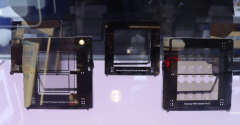
From the above HCVAC (Guangdong Huicheng Vacuum Technology 广东汇成真空)


Beijing Guowang Optical Technology 国望光学 is the Optical system supplier for immersion lithography DUVi of SMEE

So this seems a real hint that at least 5 DUVi will be shipped this year. Immersion lithography can mean anything from 28nm down to 7nm.

My 2 cents is that 7nm is still maybe too early, last year was probably the DUVi 28nm in production, maybe this year SMEE will push to 14nm in production, and 7nm in 2027. It is not realistic to expect a faster schedule: ASML took many years to jump through 28, 14 and 7nm nodes.
They were referring to 5 magnetron sputtering coating machines for DUV optics not 5 DUV scanners, each machine should be enough for coating many DUV optics. So 5 coaters probably sufficient for at least 50 additional DUVs? Unlike euv coating, the bulk of DUV coating is done with IBS, not magnetron sputtering. So they need a lot more IBS coaters from the other company I posted
 

mossen

Senior Member
Registered Member
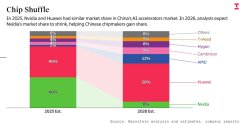
Why did Jensen fly into rage during his recent interview with Dwarkesh?

This might be why.

HGWsrSnakAAyQNL.jpg

This is probably the last moment of opportunity for NV to sell any chips to China before domestic alternatives (and AMD!) take over. I suspect AMD is just a temporary blip.
 

tokenanalyst

Lieutenant General
Registered Member

The Songci New Energy and Semiconductor Advanced Equipment R&D and Manufacturing Project, with a total investment of 1 billion yuan, has commenced construction.​


On April 18, the Songci New Energy and Semiconductor Advanced Equipment R&D and Manufacturing Project, with a total investment of 1 billion yuan, broke ground in Xishan Economic and Technological Development Zone. This project is a major project of Jiangsu Province in 2026.

The project, with a total investment of 1 billion yuan and covering an area of approximately 57.4 acres, focuses on the research, development, manufacturing, sales, and comprehensive solutions for crystal growth equipment for the photovoltaic and semiconductor industries. Once fully operational, the project is expected to generate annual sales of 500 million yuan, injecting strong momentum into the region's high-end equipment industry's move up the value chain.

According to a relevant official from Xishan Economic Development Zone, Songci Electromechanical is a high-tech enterprise and a provincial-level specialized and innovative SME controlled by Autowell Technology. Its core product, the Czochralski single crystal growth furnace, has been recognized as a first-of-its-kind major equipment in the Suzhou-Wuxi-Changzhou region. It has established stable partnerships with leading domestic and international companies such as Jinko, Trina Solar, and JA Solar, and its patented technologies cover key aspects of crystal growth. The commencement of this new project is not only a strategic move for the company's technological iteration and capacity expansion, but also a vivid example of Xishan Economic Development Zone's practice of deploying the innovation chain around the industrial chain and arranging the industrial chain around the innovation chain.

Please, Log in or Register to view URLs content!
 

Michael90

Senior Member
Registered Member
Why did Jensen fly into rage during his recent interview with Dwarkesh?

This might be why.

View attachment 173696

This is probably the last moment of opportunity for NV to sell any chips to China before domestic alternatives (and AMD!) take over. I suspect AMD is just a temporary blip.
AMD? The don’t face the same sanctions the US imposed on Nvidia over China ?
im
Actually surprised Nvidia is still allowed in China to be honest. So I don’t think it’s as bad for them ,could be worse , if they are banned by both governments, ironically China has become more open than the US. There’s no way anybody in the USA will afree to allow a Chinese AI chips company to operate in a crucial sector like this is in the US for security reasons. China is doing better in this aspect , by still believing in international free trade to some extent. The US has stopped even pretending .
 

tokenanalyst

Lieutenant General
Registered Member

Luwei Optoelectronics: The move towards mass production of glass substrate packaging brings new demand for photomasks.​

As a key material in the semiconductor and display manufacturing industry, Luwei Optoelectronics' photomask products are essential master templates for downstream customers to transfer patterns in photolithography processes. Photolithography machines/exposure machines transfer the patterns on the photomask to downstream substrate materials ( silicon wafers, glass substrates, organic substrates, etc. ) by exposing the photomask. The quality of the photomask itself directly affects the quality and yield of the end product.

In the semiconductor field, Luwei Optoelectronics adheres to the development strategy of "using displays to drive chip development," establishing strong partnerships with leading domestic wafer manufacturers specializing in specialty processes, chip design companies, and advanced packaging manufacturers. It is a leading supplier of advanced packaging photomasks. Currently, the company has achieved mass production of 150nm process node semiconductor photomasks, and its 130nm process node semiconductor photomasks have passed customer verification and are in small-batch production . Furthermore, the company's semiconductor photomask manufacturing technology covers third-generation semiconductor-related products, and its products are comprehensively applied in IC manufacturing, IC devices, and advanced packaging, meeting the needs of advanced semiconductor chip packaging, semiconductor devices, MEMS sensors, RF chips, silicon-based OLEDs, and other applications. This provides crucial upstream material localization support for the development of China's semiconductor industry.

By investing in and constructing the Luxin Semiconductor Mask Project , Luwei Optoelectronics is further improving its layout in the semiconductor field. The first phase of the project focuses on 130-40nm semiconductor masks, and mass production was gradually achieved by 2025. Customer verification and supply of complete 90nm and above mask sets have been completed, as have customer verification and supply of 40nm and 28nm monolithic mask sets. Customer sampling for 40nm complete mask sets is also progressing. The second phase focuses on 28-14nm semiconductor masks, with construction planned to begin in 2026. After the project is operational, its products will gradually cover semiconductor manufacturing-related fields such as MCU, SiPh, CIS, BCD, DDIC, MS/RF, Embed.NVM, NOR/NAND Flash, and DRAM, further improving the supply chain and promoting domestic substitution.​

1776701266296.png

Please, Log in or Register to view URLs content!
 

jx191

Junior Member
Registered Member

Kirin 9030 Pro launched with Pura X Max and Kirin 9030S with Pura 90. this to me indicates significant amount of binning going on with N+3 process. I think N+2 is more a less stable now.
To be expected. N+2 being stable is also not a surprise considering how much they are being used now.

I expect the N+3 yields to quietly increase over time along with other achievements from Huawei in other areas. But for now yields will probably be low for a while.
 

tokenanalyst

Lieutenant General
Registered Member

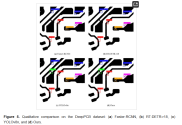
Lightweight Semantic-Guided FCOS for In-Line Micro-Defect Inspection in Semiconductor Manufacturing​

Abstract​

The relentless miniaturization of semiconductor components and Printed Circuit Boards (PCBs) has rendered Automated Optical Inspection (AOI) of micro-defects a critical bottleneck in modern manufacturing and metrology. While in-line inspection systems offer economically viable and scalable quality control solutions, they impose stringent constraints on both inference latency and detection robustness—particularly for diminutive, sparsely distributed defects (e.g., mouse bites, pinholes) amidst complex, repetitive circuit topologies. To bridge this gap, we present a semantic-enhanced FCOS framework specifically engineered for micro-defect inspection. Our approach introduces two synergistic innovations: (1) a Semantic-Guided Upsampling Unit (SGU) that adaptively reweights channel–spatial features to reconcile the semantic disparity between shallow textural details and deep contextual representations; and (2) a Sparse Center-ness Calibration (SCC) module that enforces high-confidence, spatially sparse supervision to sharpen localization precision and suppress false positives. The SGU is integrated within a Progressive Semantic-Enhanced Feature Pyramid Network (PSE-FPN) that extends multi-scale representations to stride-4 (P2) resolution, while the SCC module is embedded directly into the detection head. Comprehensive evaluations on MS COCO and the real-world DeepPCB dataset validate the efficacy of our design. On COCO, our model achieves 41.8% AP with real-time throughput of 28 FPS on a single NVIDIA 1080Ti GPU. A lightweight variant further attains 41.6% AP at 42 FPS, accommodating high-throughput production environments. For PCB defect detection, the framework delivers 98.7% [email protected], substantially outperforming contemporary detectors. These results demonstrate that semantics-aware, lightweight architectures enable scalable, real-time quality assurance in semiconductor manufacturing.
1776702429935.png

Please, Log in or Register to view URLs content!
 

tokenanalyst

Lieutenant General
Registered Member

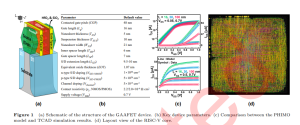
PKP: Open-source Compact Models and Predictive PDK for GAA Technology​


Beyond the 3-nm node, the integrated circuit (IC) technology roadmap has transitioned to nanosheet (NS) gateall-around field-effect transistors (GAAFETs), establishing design–technology co-optimization (DTCO) as the dominant paradigm for optimizing power, performance, and area (PPA). Effective DTCO relies on credible device/circuit views packaged into a process design kit (PDK), allowing designers to freely navigate the full digital flow [1]. Although commercial PDKs are essential to the semiconductor industry, their strict confidentiality renders them inaccessible to most academic groups, impeding reproducible research and the early exploration of design enablement at cutting-edge nodes. To bridge this gap, we propose physics integrated models (PHIMOs) and the Peking University Predictive PDK (PKP) for NS GAAFET technology. The device and interconnect design rules align with advanced node specifications (e.g., contacted gate and metal pitches), with the essential models extracted from calibrated numerical technology computer-aided design (TCAD) simulations. PKP3 (the PKP for 3-nm GAAFET technology) supports standard-cell layout and timing/power characterization, enabling an endto-end digital design flow.

1776702555410.png

Please, Log in or Register to view URLs content!
 
Top