Chinese semiconductor thread II

tokenanalyst

Lieutenant General
Registered Member

ChipLink Integrated: Revenue to exceed 8 billion yuan by 2025, firmly maintaining its position as China's largest MEMS wafer foundry.​


According to MEMS Consulting, on the evening of April 20, 2026, Chiplink Integrated Circuits released its 2025 annual report: the company's operating revenue was 8.18 billion yuan, a year-on-year increase of 25.67%; net profit attributable to shareholders of the listed company was -595 million yuan, a year-on-year reduction in losses of 38.17%. Chiplink Integrated Circuits' main business involves wafer foundry and module packaging and testing services in the fields of MEMS and power devices, providing customers with one-stop system foundry solutions. In terms of MEMS and signal chain foundry, Chiplink Integrated Circuits' products include MEMS microphones, MEMS micromirrors and VCSEL laser chips in LiDAR, MEMS pressure sensors, and MEMS inertial sensors. Among them, the third-generation MEMS microphones used in high-end consumer and new energy vehicles have entered mass production, and the fourth-generation MEMS microphones have passed preliminary verification and entered product iteration; automotive and consumer multi-axis MEMS inertial sensors are in mass production; and automotive LiDAR VCSEL chips are in large-scale mass production.​

Please, Log in or Register to view URLs content!
 

tokenanalyst

Lieutenant General
Registered Member

A major domestic display materials manufacturer announces capacity expansion with a total investment of 4.59 billion yuan.​

On April 16, Chengzhi Co., Ltd. (hereinafter referred to as "Chengzhi") disclosed two major investment announcements in quick succession. Through its two subsidiaries, it will respectively deploy industrial extension and R&D platform construction, with a total investment of over RMB 4.591 billion, comprehensively deepening the layout of the high-end chemical new materials industry chain and simultaneously strengthening its independent innovation capabilities.

Among them, Nanjing Chengzhi New Materials Co., Ltd., a wholly-owned subsidiary of the company’s wholly-owned subsidiary Nanjing Chengzhi Clean Energy Co., Ltd., plans to invest in the construction of an ethylene value chain extension and high-end optical new materials project in Nanjing Jiangbei New Area New Materials Science and Technology Park. The total investment is about RMB 3.901 billion, and the funds will come from its own funds and self-raised funds. The construction period is expected to be 2.5 years, and it is currently in the preliminary approval stage.

The project's core construction encompasses two main sections: an ethylene value chain extension unit and a high-end optical new materials unit, along with supporting facilities such as storage and transportation engineering, utilities, a central control room, and an analysis building. It is understood that this project uses the company's self-produced ethylene and syngas as raw materials, effectively alleviating the pressure on Nanjing Chengzhi's ethylene sales, reducing the price and supply risks of purchased propionaldehyde and MMA, hedging against the risks of bulk raw material fluctuations, and deepening the integrated layout of the MMA-PMMA industrial chain to strengthen cost advantages. PMMA, as a high-end optical material, is widely used in displays, optical devices, new energy, and other fields, forming synergy with the company's semiconductor display materials industry and driving the product structure towards higher added value and higher technology content.

Please, Log in or Register to view URLs content!
 

tokenanalyst

Lieutenant General
Registered Member

Xirui Technology: Deeply involved in intelligent electroplating equipment, successfully entered the core supply chain of NVIDIA AI server PCBs.​


Dongguan Xirui Automation Technology Co., Ltd. has solidified its position as a key player in the AI computing hardware sector by successfully entering the core supply chain for NVIDIA's AI server PCBs. Leveraging over a decade of experience in intelligent and environmentally friendly surface treatment, Xirui specializes in developing automated electroplating lines and high-end production systems. By integrating mature precision technology with the rigorous reliability demands of AI infrastructure, the company has evolved from an advocate of green manufacturing into a critical participant in global AI data center construction.

The company's strategic progression was marked by significant technical milestones between 2024 and early 2026. After launching independent R&D for AI-specific PCB lines in 2024, Xirui passed NVIDIA's stringent certification process in the first half of 2025 and secured its initial order for a VCP filling production line. Following successful mass production verification in December 2025, the firm received multiple large-scale additional orders in early 2026. This rapid growth underscores Xirui's ability to deliver stable equipment performance and efficient service, leading to deepened cooperation that now covers core manufacturing processes for AI server PCBs across various global clients including AMD and Google.
1776703256654.png
Technologically, Xirui is at the forefront of high-complexity PCB manufacturing, capable of producing massive volumes of 6-layer through 24-layer HDI boards essential for modern data centers. The company is currently advancing R&D for 10+ layer HDI structures with long-term reserves exceeding 100 layers, a necessity driven by the shift toward M9-grade materials and up to 52-layer inference chips in platforms like NVIDIA's Blackwell and Rubin. Amidst a projected market surge from $3.1 billion to $27.1 billion between 2024 and 2027, Xirui continues to expand its technological capabilities while maintaining an integrated industry-academia-research platform to drive innovation and digital transformation in the global PCB sector.

Please, Log in or Register to view URLs content!
 

tokenanalyst

Lieutenant General
Registered Member

Milink Technology Revenue Increased in 2025.​


Milink Technology (reported as Rilian Technology in the text) is poised for outstanding results in 2025, driven by surging revenue and net profit alongside booming cash flow operations. The company reported a year-on-year revenue increase of 45.77% to reach RMB 1 billion, with net profit climbing 22.84% to RMB 176 million. Excluding non-recurring items, the adjusted net profit grew even more robustly by 51.34%. Most notably, operating cash flow surged by an impressive 512.23%, reaching RMB 192 million, signaling a significant improvement in liquidity. Reflecting this strong financial performance, the company plans to distribute cash dividends totaling over RMB 98.6 million and repurchased shares worth approximately RMB 10 million, amounting to 61.76% of its annual net profit.

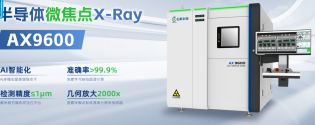
Rilian Technology operates as a leading domestic supplier in industrial intelligent inspection equipment, specializing in X-ray technology for sectors including integrated circuits, new energy batteries, casting, and food safety. The current reporting period marked a pivotal expansion phase where the company successfully launched into new downstream scenarios while solidifying a global layout described as "3 major domestic bases + 3 major overseas bases." This strategy involves establishing R&D and production hubs in Wuxi, Chongqing, Shenzhen, alongside an overseas headquarters in Singapore and facilities in Malaysia, Hungary, and the United States. With products now sold across over 70 countries, the company has achieved full operationality in all its international locations, creating new growth drivers for future performance.
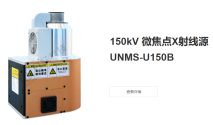
A cornerstone of the company's recent success is the industrialization of its core X-ray sources, which possess high technological barriers to entry. The firm achieved full-spectrum coverage of product types—including closed-tube microfocus, open-tube, and high-power small-focus sources—and became the only domestic player to master key material control, complex manufacturing processes, and reliability verification for these components. During the period, it introduced ten new X-ray source products, including batch-shipped nanoscale open-tube and high-power models, while increasing its self-use penetration rate and independent external sales volume. This breakthrough in core components has facilitated the widespread domestic substitution of previously imported technologies.
1776703791401.png1776703845670.png
Beyond core components, Rilian Technology continues to iterate its testing equipment portfolio, which now exceeds 100 standardized models with full coverage of 3D/CT capabilities. Specific applications highlight the company's versatility: high-multilayer PCB inspection equipment enables visualized internal imaging and back-drilling quality control; advanced semiconductor packaging tools utilize sub-micron resolution for defect identification in online production lines; liquid-cooled plate inspections verify flow channels and welding integrity; optical module testing ensures precision on chips and fiber alignment; and solid-state battery testers monitor internal structures and defects. These solutions have already been deployed or are undergoing verification with major industry players such as Shenghong Technology, Qingtao Energy, and Guansheng Dongchi.

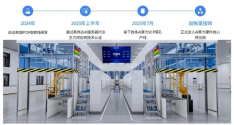
To sustain long-term growth, the company is executing a dual strategy of horizontal expansion and vertical deepening through mergers and acquisitions (M&A). Vertically, it has strengthened its capabilities in submicron and high-power X-ray sources by acquiring Zhuhai Jiuyuan, which completed business registration as a holding subsidiary in August 2025. Following the completion of Zhuhai Jiuyuan's new factory in late November 2025, the company is capitalizing on the explosive growth of the energy storage sector to launch globally first-in-class 15MW matrix testing systems. Horizontally, through investments and acquisitions like Creative Electronics (USA), SSTI (Singapore), Mife Technologies, Yifeng Electronics, and Ultramicro Measurement, Rilian Technology is diversifying into optical, ultrasonic, magnetic particle, and semiconductor failure analysis technologies, effectively building a comprehensive platform-based industrial testing capability across multiple industries.

Please, Log in or Register to view URLs content!
 

tokenanalyst

Lieutenant General
Registered Member

Mini/Micro LED Defect AI Detection Project Implemented in Haimen​


On April 15th, the Haimen National Economic and Technological Development Zone announced the successful signing of five artificial intelligence (AI) science and technology innovation projects, including a Mini/Micro LED defect AI detection project led by Professor Jiang Xiaoheng of Zhengzhou University. This project focuses on the research and development of high-end intelligent inspection equipment in the new display field, utilizing 2D and 3D machine vision and artificial intelligence technologies to overcome the industry's bottleneck in nanometer-level precision quality inspection. The establishment of this project will provide crucial technological support for quality control in the LED display industry.

Please, Log in or Register to view URLs content!
 

tokenanalyst

Lieutenant General
Registered Member

Huazhong University Progress in X-Ray Metrology For 3DNAND.​

From optics to X-rays, solving the high aspect ratio problem


Traditional optical methods face challenges in measuring high aspect ratio structures at 3 nanometers and below. In his report, "Online Measurement Technology of Key Dimensions in IC Nanostructures," Professor Chen Xiuguo of Huazhong University of Science and Technology systematically introduced the path of technological iteration. He first explained the principle of traditional optical critical dimension (OCD) technology, which involves inversely fitting the spectrum by establishing an optical model, and pointed out new challenges in terms of sensitivity and dramatic increase in parameters. To address this, he focused on X-ray scattering (CD-SAXS) technology. This technology, utilizing the short wavelength and strong penetrating power of X-rays, has a natural advantage in measuring high aspect ratio structures and complex multilayer films (such as 3D NAND). He demonstrated the 9-meter-scale CD-SAXS measurement system built by his team, verifying its effectiveness, and pointed out that the current main bottleneck lies in the flux of the X-ray source. As optical technology approaches physical limits, exploring shorter wavelengths (X-rays) becomes an inevitable direction of evolution.
 

tokenanalyst

Lieutenant General
Registered Member

Nanjing University Progress In Large Aperture Interferometer For Lithography Optical Components​


Large-aperture interferometers support the manufacturing of core photolithography components.

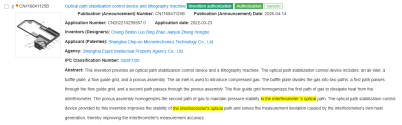
Breakthroughs in testing methods ultimately hinge on the development of independently controllable high-end instruments and equipment. In his report, "Large-Aperture High-Precision Interferometric Testing Technology and Instruments," Researcher Han Zhigang of Nanjing University of Science and Technology showcased my country's formidable strength in the field of large-aperture optical component testing. Core components such as lithography objectives and wafer chucks impose stringent sub-nanometer requirements on area measurement. The team tackled all challenges, from core light sources and algorithm software to environmental support components, independently developing a frequency-stabilized laser for high-precision measurements and a short-coherence laser capable of withstanding vibration environments. They also developed a high-precision standard mirror using the flattest natural "liquid plane" as a reference. Their 800mm vertical Fizeau interferometer and 300mm vacuum vertical interferometer, among other equipment, achieve repeatability within 0.06 nanometers and have been successfully applied to solve the testing challenges of large-aperture optical components in major national projects, providing crucial metrological support for the development of domestically produced lithography machines.


tokenanalyst

Lieutenant General
Registered Member

High-Speed, Precise 3D Inspection for Chip Packaging Research & Application.​


Shanghai Guangzhiren Technology Co., Ltd., addressed the testing challenges brought about by advanced packaging in his report, "Research and Application of Key Technologies for High-Speed and High-Precision 3D Inspection of Chip Packaging." He pointed out that as 2.5D/3D packaging becomes crucial for improving computing power and bandwidth, stringent requirements have been placed on the contour and depth inspection of structures such as microbumps and TSVs, demanding both high speed and high precision. The report compared the advantages and disadvantages of mainstream inspection principles such as line scanning and fringe projection, highlighting that balancing the two is the core challenge. Xu Yixin introduced the team's special laser line scanning solution, which integrates line scanning and structured light technology with AI algorithms at the underlying level, aiming to leverage the strengths of both and suppress speckle interference. Their flagship product can be flexibly configured with various sensors to achieve high-speed measurement of the entire contour of microbumps and sampling inspection of TSV holes, demonstrating the innovative strength of domestically produced inspection equipment in solving the "bottleneck" problems of advanced packaging.

Please, Log in or Register to view URLs content!
 

tphuang

General
Staff member
Super Moderator
VIP Professional
Registered Member
Please, Log in or Register to view URLs content!

CETC 9th Institute developed a high-frequency, low-loss manganese-zinc ferrite material. Boasting advantages such as a high Curie temperature and high saturation magnetic flux density, Manganese-zinc ferrite is a magnetic material produced by sintering iron oxide, manganese oxide, and zinc oxide. With the large-scale adoption of third-generation semiconductor materials, there is an urgent need for compatible high-frequency soft magnetic materials.
 
Top