Chinese semiconductor thread II

tokenanalyst

Lieutenant General
Registered Member

Shenzhen Pinghu Laboratory Releases 100V MPW Shared Service Platform and PDK​

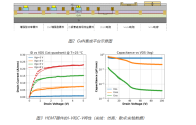
With the rapid development of emerging fields such as artificial intelligence, humanoid robots, low-altitude drones, and data centers, the demand for high-efficiency, small-size, and high-reliability power devices continues to rise, making the 100V voltage level a key node for applications in multiple scenarios. To better support industrial R&D and university talent cultivation, the Shenzhen Pinghu Laboratory has officially launched a 100V GaN MPW shared service platform and a supporting PDK design toolkit, offering full-process tape-out services to industry and universities.
I. Typical Application Scenarios of 100V GaN
100V GaN devices have a wide range of applications, offering significant advantages in areas such as low-voltage intermediate bus converters (LV IBCs, 54V to 12/6V) for data centers, joint motor drives for humanoid robots, DC-DC power supplies, LiDAR, and low-altitude drones. With their smaller size, lower losses, and higher control precision, they can effectively improve system efficiency and endurance, providing a clear application direction for this 100V MPW and PDK platform.
II. Shenzhen Pinghu Laboratory 100V GaN MPW Shared Service Platform
Leveraging its integrated R&D and pilot-scale testing platform capabilities, the Shenzhen Pinghu Laboratory has built a full-voltage GaN MPW service system covering 15~1200V. This time, it will focus on launching a 100V GaN MPW shared service.
1776442473951.png

Please, Log in or Register to view URLs content!
 

tokenanalyst

Lieutenant General
Registered Member

China Resources Microelectronics, in collaboration with Wuhan University, has made progress in optimizing the thermal field and stress during gallium oxide single crystal growth.​


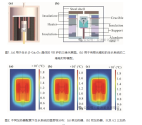
Researchers from China Resources Microelectronics, in collaboration with Wuhan University's Professor Zhang Zhaofu team, have published a study in Semiconductor Science and Technology detailing significant advancements in optimizing the growth of β-gallium oxide (β-Ga₂O₃) single crystals. Focusing on the vertical Bridgman (VB) method a preferred technique for mass-producing these substrates due to its stability the team utilized advanced numerical simulations to tackle a critical bottleneck: the material's extreme brittleness and thermal anisotropy, which often cause cracking during growth and cooling. By constructing a multiphysics three-dimensional finite element model that couples thermodynamics and mechanics, the study successfully analyzed how temperature fields and stress evolve within the furnace cavity, providing essential theoretical support for manufacturing larger, higher-quality crystals required for next-generation power electronics and deep-ultraviolet devices.

1776442720852.png

The research identified thermal radiation as the dominant heat transfer mechanism in the VB system, significantly outweighing conductive heat flow. The team discovered a trade-off between heater configurations: while multi-heater setups improve radial temperature uniformity and reduce energy use, they increase axial gradients due to insulation shielding; conversely, single-heater structures offer better axial stability but may compromise radial consistency. Furthermore, the analysis revealed that axial and radial temperature gradients change asynchronously under identical conditions. To mitigate stress concentration which primarily occurs in the crucible's shoulder region and during constant-diameter growth the study found that increasing the shoulder angle effectively shortens the mechanically constrained area, thereby reducing the risk of crystal fracture.

Ultimately, this work demonstrates that achieving large-scale production relies on synergistically optimizing multiple design parameters simultaneously. By rationally adjusting heater arrangements and thermal insulation layers alongside specific crucible geometry controls, engineers can stabilize temperature gradients and suppress harmful stress accumulation. These findings provide a crucial roadmap for process engineers to overcome current limitations in crystal quality, paving the way for the widespread commercial application of β-Ga₂O₃ in high-voltage power systems and advanced optoelectronic technologies.

Please, Log in or Register to view URLs content!
 

huemens

Junior Member
Registered Member

U.S. lawmakers scale back bill targeting Chinese chipmaking​

Please, Log in or Register to view URLs content!
A U.S. bill to keep more chipmaking equipment from China has been scaled back, according ‌to the latest version seen by Reuters, but still includes a new countrywide restriction on ASML's deep ultraviolet (DUV) immersion lithography machines.
Many of the restrictions in the early April version of the bill have been removed, including countrywide curbs on cryogenic etch tools for chips, which are made by California-based Lam Research and Japan's Tokyo Electron.
But the more tailored bill still prohibits foreign firms from selling to Chinese chipmakers CXMT (ChangXin Memory Technologies), YMTC (Yangtze Memory Technologies), and SMIC (Semiconductor Manufacturing International ⁠Corporation) for facilities barred by Washington from using American tools.
It also requires licenses for servicing equipment in covered facilities, another controversial provision for foreign firms, although applications will no longer face a policy of denial.
 

sunnymaxi

Colonel
Registered Member
That doesn't mean anything.

EUV is rarely publicly mentioned and any significant news isn't coming from a guy on X with barely any followers or inside news.

For example, Zephyr is much more active and he says Chinese EUV will be ready in some initial form by 2027 to 2028, complete opposite to the other guy.

I'm not saying he's 100% correct, but there are many different commentators on western social media and none of them are 100% accurate.

Next time you see something like that on X, don't worry about it. The real news is not coming from western media.
i have read each and every line of this article. this is the repeat of what was already mentioned by SCMP a month ago. they literally copy paste all points when wrote the article plus additional information. old article posted in page 1256 of this thread.. Blitzo sir talked about this as well.

in this new article, they didn't even mention EUV once in context with China's progress except ASML EUV has XXX number of parts. this is the only time when EUV mentioned in this lengthy article.
----------------------------------------------------------------------------------------------------
but i found something interesting in this article..

(3)夯实自主可控的 28 nm 全产业链体系;14 nm 生产链能够稳定生产;初步完成全国产化的 7 nm 生产线建设及试运行。
the construction and trial operation of a fully domestically produced 7nm production line have been initially completed.

this is exactly what @tphuang sir posted on last page regarding 7nm.. interesting

移动平台和光学系统均在不同单位取得突破性进展,如何以举国之力将其集成,是“十五五”期间必须解决的问题。如何创立中国的 ASML,让“被集成者”跳出“名利”的藩篱
Breakthroughs have been achieved in EUV laser light source , mobile platforms and optical systems across different organizations. Integrating these systems with national resources is a crucial issue that must be addressed during the 15th Five-Year Plan period.

this information have already disclosed in SCMP old article.

@Tomboy
 

tokenanalyst

Lieutenant General
Registered Member
Please, Log in or Register to view URLs content!
So US companies can sell and make money but ASML can't. I don't think that will sit well to the Dutch government. but who knows, they are so cucked by the US they will probably agree.

Either way the Chinese companies are more incentivized to indigenize their supply chains more than ever. With new fabs now require to use 50% domestic and that is set to grow to 70% nationwide. For companies blacklisted they have no other option than go to almost 100% domestic.
 

Michael90

Senior Member
Registered Member
So US companies can sell and make money but ASML can't. I don't think that will sit well to the Dutch government. but who knows, they are so cucked by the US they will probably agree.

Either way the Chinese companies are more incentivized to indigenize their supply chains more than ever. With new fabs now require to use 50% domestic and that is set to grow to 70% nationwide. For companies blacklisted they have no other option than go to almost 100% domestic.
I don’t think any US company makes DUV lithography machines. So not sure which US company will benefit from ASML DUV machines ban. I think the beneficiaries will be Japanese companies in this sector .
 

tokenanalyst

Lieutenant General
Registered Member
I don’t think any US company makes DUV lithography machines. So not sure which US company will benefit from ASML DUV machines ban. I think the beneficiaries will be Japanese companies in this sector .
I'm saying the KLA, AMAT and LAM are allowed to keep making money selling no litho tools while ASML don't. Immersion lithography is their cash cow in China. Yes the sold a lot of KrF scanners but that won't compensate and more because KrF scanners are used for the less critical layers after immersion.
 

tokenanalyst

Lieutenant General
Registered Member

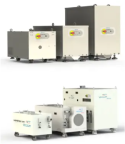
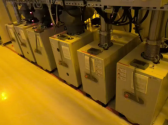
Leicester, a leading manufacturer of high-end dry vacuum pumps for semiconductors, has established a presence in Foshan.​

On April 16, Zhejiang Lester Vacuum Equipment Co., Ltd., a leading enterprise in high-end dry vacuum pumps for semiconductors, officially settled in Nanhai, Foshan. It will build a South China manufacturing base and operation and maintenance center to provide key equipment support for the semiconductor industry in the Pearl River Delta.

"Vacuum pumps are known as the 'lungs' of semiconductor production lines and are essential key equipment for core processes such as thin film deposition and etching," said a semiconductor equipment expert at Jihua Laboratory.

According to the plan, Leicester will invest in the construction of a South China manufacturing base and operation and maintenance service center in Nanhai . After the project is completed, it will provide localized and rapid-response equipment supply and technical services for the semiconductor, new display and other industrial clusters in the Pearl River Delta.
Leicester is one of the few domestic companies that has mastered the core technology of high-end dry vacuum pumps for semiconductors. The company focuses on the research and development and manufacturing of high-end dry vacuum pumps for semiconductors , and its independently developed third-generation oil-free NSS series products have been stably applied in many leading semiconductor companies.

For a long time, Leicester has been deeply serving leading companies in the semiconductor, panel, and photovoltaic industries. Its clients include Hua Hong, SK Hynix, GF, Infineon, BOE, HKC, TCL, CSOT, Lead Microelectronics, and M&A, among others. Its products are known for their stable and reliable performance and have gained high recognition within the industry. The establishment of this manufacturing base in Nanhai will enable the localization of high-end vacuum equipment production, significantly shortening response time for customers in South China.

“After establishing a manufacturing base in the South China Sea, we will achieve localized production of equipment and rapid response services,” said Shen Wenwu, founder and chairman of Leicester Vacuum. “This means that customers in the Greater Bay Area can significantly shorten response time from equipment procurement to subsequent maintenance, and significantly reduce the total life-cycle cost of the equipment. ”​

1776457094283.png1776457113678.png

Please, Log in or Register to view URLs content!
 

tokenanalyst

Lieutenant General
Registered Member

With a total investment of 100 million yuan, Jinshang Intelligent Manufacturing Semiconductor Equipment Production Headquarters Project was signed in Wuxi.​


On April 16, Jinshang Intelligent Manufacturing Technology (Jiangsu) Co., Ltd. officially signed and settled its production headquarters project in the Sino-European Industrial Innovation Zone of Wuxi High-tech Zone. The deal includes a total investment of 100 million yuan.

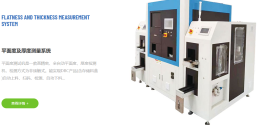
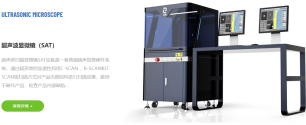
The project will establish over 12,000 square meters of high-end equipment lines within a Class 10,000 cleanroom. Production capabilities include PVD/CVD coating equipment, oscilloscopes, and wafer-level fully automated ultrasonic scanning microscopes (SAT). Once fully operational, the facility is expected to triple current capacity and generate 300 million yuan in annual sales, positioning it as a significant growth engine for the local semiconductor sector. It also marks Jinshang as the 69th designated-size enterprise and the 30th semiconductor company introduced to this specific industrial zone.
1776457504384.png1776457531469.png
As a leader in domestic semiconductor equipment, Jinshang specializes in core technologies previously reliant on imports (such as nanometer-level precision measurement). This project aims to strengthen regional industrial chains and promote "domestic substitution" within China's technology sector. Established in 2018, Jinshang has achieved complete intellectual property rights for its key products, including the mass-produced SAT machine which matches import performance. The company recently earned recognition as one of the "Top Ten Innovative Semiconductor Equipment Enterprises in China (2025)."

Please, Log in or Register to view URLs content!
 
Top