
Chinese semiconductor thread II

tokenanalyst

Lieutenant General
Registered Member

KST's new dual-series ion implanters make their debut, solidifying the strategic puzzle of domestically produced high-end equipment.​

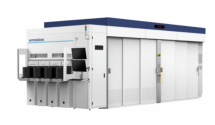
Hyperion Series Advanced Process High-Current Ion Implanter

As chip manufacturing continues to evolve towards advanced nodes, ion implantation processes face four key challenges: balancing precision and throughput in low-energy, ultra-shallow junction implantation; balancing high throughput with low-energy control in high-current applications; reducing nonlinear divergence due to reduced ion beam angle uniformity; and controlling particulate contamination. These challenges restrict improvements in chip yield. Related key processes place extreme demands on equipment energy control, beam stability, and angle accuracy, leading to long-term pressures from both technological challenges and supply constraints for domestically produced equipment.

The Hyperion series targets the high-end chip manufacturing needs of advanced process logic chips and advanced memory (DRAM, 3D NAND), fully matches the advanced domestic process manufacturing, solves industry pain points, is equipped with independent core modules, and has performance indicators comparable to mainstream imported equipment, providing an independent and controllable all-round customized solution for advanced process ion implantation technology.
1774537037683.png

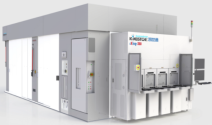
iKing 360 Series Medium Current Ion Implanter

As another core equipment masterpiece from KST, the iKing 360 series medium-current ion implanter focuses on key customer needs such as narrow linewidth, high-precision doping, and low-pollution control, achieving breakthroughs in several key technologies including energy performance, angle control, high-temperature adaptability, and mass production versatility. The equipment meets the requirements of various mainstream processes, can cover some high-energy processes, and offers over 30% higher capacity than traditional medium-current equipment, while also being compatible with 6/8-inch silicon carbide processes.
1774537111827.png

In terms of high-precision angle and energy control, the iKing 360 precisely controls the parallelism and divergence angle of the ion beam to meet the stringent standards of ion implantation angle repeatability in advanced processes; it supports high-temperature/ultra-low-temperature implantation, which can ensure wafer stability and temperature uniformity, while optimizing the channel implantation effect to meet the requirements of wide bandgap semiconductors such as SiC and GaN.

Please, Log in or Register to view URLs content!
 

tokenanalyst

Lieutenant General
Registered Member

RIGOL revenue is projected to exceed 900 million yuan in 2025, representing a year-on-year increase of 16.04%.​


RIGOL Electronics reported strong financial performance for 2025, achieving an operating revenue of 900 million yuan, a year-on-year increase of 16.04%, with net profit attributable to shareholders reaching 86 million yuan. The growth was primarily driven by the expansion of products featuring its self-developed core technology platform, which accounted for over half of total sales and saw significant double-digit gains across key segments like high-resolution digital oscilloscopes (MHO/DHO series). Furthermore, revenue from major customers surged by nearly 55%, with optical communication clients growing by over 70%, while the solutions business also expanded rapidly, bolstered notably by a massive increase in sales related to the SPQ digital array measurement and control system.

Beyond domestic success, the company is actively deepening its globalization strategy with its Malaysian production base now fully operational and overseas sales accounting for nearly 36% of main business revenue. In capital markets, RIGOL Electronics submitted an H-share listing application to the Hong Kong Stock Exchange in late 2025, aiming to issue over 24 million shares to establish a synergistic domestic and international platform. Simultaneously, the company remains committed to innovation, investing RMB 226 million (25% of operating revenue) into R&D to strengthen its core technologies and intellectual property portfolio, accumulating hundreds of patents while leading in the formulation of national standards and industry specifications.

Please, Log in or Register to view URLs content!
 

tphuang

General
Staff member
Super Moderator
VIP Professional
Registered Member
Please, Log in or Register to view URLs content!

HG Tech on 2026/03 reported transceiver market size to be 20-30m (more than 20m it had projected in 2025/09). Market has moved from 400G to 800G + there is 1.6T product demand. Currently mass delivering 800G modules. It has 1.6T orders from oversea market and has started delivery. Received at least 400k 800G LPO order from North American market. Expect to deliver at least 700k orders this year across 4+ customers. Has started 1.6T FRO & LRO validation.
 

tokenanalyst

Lieutenant General
Registered Member

Saiwei Electronics: MEMS business gross margin improved, plans to build a new 12-inch MEMS production line​


Saiwei Electronics released its 2025 annual report revealing a financial landscape heavily influenced by strategic restructuring rather than organic operational growth. While operating revenue dropped significantly by 31.59% to 824 million yuan, the company's profitability surged dramatically; operating profit and net profit both increased by over 64%, with profits attributable to shareholders rising nearly 100%. This exceptional performance was primarily driven by the sale of its controlling interest in Silex, a subsidiary based in Sweden, which resulted in a one-time gain that offset significant fluctuations in regular business activities.

Despite the high headline numbers, the core MEMS business faced headwinds during the reporting period, with revenue declining to 684 million yuan and wafer manufacturing income falling by nearly 40%. These declines were largely attributed to the deconsolidation of Silex from the financial statements in July 2025 and ongoing challenges at the Beijing Yizhuang mass production line. Revenue there dropped due to fluctuating orders from existing customers caused by shifting downstream market demands, while the business continued to absorb high R&D costs and operating expenses during its capacity ramp-up phase, leading to a widening loss margin for that specific division.

In response to these challenges and future growth needs, Saiwei Electronics has outlined an ambitious expansion plan centered on scaling up production capabilities. By the end of 2025, the Beijing Yizhuang line had already reached Phase I capacity (10,000 wafers/month) and is actively building toward a Phase II target of 20,000 wafers, currently at 15,000. To further solidify its position in the pure MEMS foundry market, the company intends to construct a new 12-inch production line within its own semiconductor industrial park and is preparing to establish a pilot line in Huairou, Beijing.

Technologically, the company advanced its manufacturing portfolio by achieving mass production for key components like microphones, BAW filters, micromirrors, and ultra-high frequency devices, alongside small-batch trials of gas sensors and biochips. Concurrently, gross profit margins improved overall to 37.86%, with process development services showing a notable increase to 42.41% thanks to effective cost controls and product mix adjustments.
Continued heavy investment in R&D is focused on upgrading processes such as TSV and wafer bonding, as well as developing new materials like piezoelectric polymers, aiming to enhance yield, expand service offerings, and strengthen competitiveness across domestic and international production lines.

Please, Log in or Register to view URLs content!
 

Wrought

Captain
Registered Member
Reuters claims SMIC is making sales to Iran. Not sure how the logic tracks—wouldn't they go directly to the upstream SME suppliers if they were buying tools instead of finished chips? That being said, maybe SMIC is serving as a go-between. Guess that's what happens when you're already sanctioned; you stop being scared of sanctionable activity. Just like Huawei.

WASHINGTON, March 26 (Reuters) - SMIC, China's largest chipmaker, has sent chipmaking tools to Iran's military, two senior Trump ‌administration officials said on Thursday, raising questions about Beijing's stance in the month-old U.S.-Israeli conflict with Iran. SMIC
Please, Log in or Register to view URLs content!
, which has been heavily sanctioned by the U.S. government over alleged ties to the Chinese military, began sending the tools to Iran roughly a year ago and "we have no reason to believe that any of this has stopped," one of the officials said. The official added that the collaboration "almost certainly included technical training on SMIC's semiconductor technology."

Please, Log in or Register to view URLs content!
 

bsdnf

Senior Member
Registered Member
Reuters claims SMIC is making sales to Iran. Not sure how the logic tracks—wouldn't they go directly to the upstream SME suppliers if they were buying tools instead of finished chips? That being said, maybe SMIC is serving as a go-between. Guess that's what happens when you're already sanctioned; you stop being scared of sanctionable activity. Just like Huawei.


Please, Log in or Register to view URLs content!
They can't even make up a good lie.
 

tphuang

General
Staff member
Super Moderator
VIP Professional
Registered Member

Saiwei Electronics: MEMS business gross margin improved, plans to build a new 12-inch MEMS production line​


Saiwei Electronics released its 2025 annual report revealing a financial landscape heavily influenced by strategic restructuring rather than organic operational growth. While operating revenue dropped significantly by 31.59% to 824 million yuan, the company's profitability surged dramatically; operating profit and net profit both increased by over 64%, with profits attributable to shareholders rising nearly 100%. This exceptional performance was primarily driven by the sale of its controlling interest in Silex, a subsidiary based in Sweden, which resulted in a one-time gain that offset significant fluctuations in regular business activities.

Despite the high headline numbers, the core MEMS business faced headwinds during the reporting period, with revenue declining to 684 million yuan and wafer manufacturing income falling by nearly 40%. These declines were largely attributed to the deconsolidation of Silex from the financial statements in July 2025 and ongoing challenges at the Beijing Yizhuang mass production line. Revenue there dropped due to fluctuating orders from existing customers caused by shifting downstream market demands, while the business continued to absorb high R&D costs and operating expenses during its capacity ramp-up phase, leading to a widening loss margin for that specific division.

In response to these challenges and future growth needs, Saiwei Electronics has outlined an ambitious expansion plan centered on scaling up production capabilities. By the end of 2025, the Beijing Yizhuang line had already reached Phase I capacity (10,000 wafers/month) and is actively building toward a Phase II target of 20,000 wafers, currently at 15,000. To further solidify its position in the pure MEMS foundry market, the company intends to construct a new 12-inch production line within its own semiconductor industrial park and is preparing to establish a pilot line in Huairou, Beijing.

Technologically, the company advanced its manufacturing portfolio by achieving mass production for key components like microphones, BAW filters, micromirrors, and ultra-high frequency devices, alongside small-batch trials of gas sensors and biochips. Concurrently, gross profit margins improved overall to 37.86%, with process development services showing a notable increase to 42.41% thanks to effective cost controls and product mix adjustments.
Continued heavy investment in R&D is focused on upgrading processes such as TSV and wafer bonding, as well as developing new materials like piezoelectric polymers, aiming to enhance yield, expand service offerings, and strengthen competitiveness across domestic and international production lines.

Please, Log in or Register to view URLs content!
this should be one of the biggest piece of news. 12-inch MEMS fab would have huge cost advantage for these modern sensors, especially the micro mirrors (I think for Lidar), BAW filter (for 5G phones) and micro phones (wide consumer electronics application).
 

tphuang

General
Staff member
Super Moderator
VIP Professional
Registered Member
Please, Log in or Register to view URLs content!

Huawei mentioned its new chip last September when it
Please, Log in or Register to view URLs content!
its long-term semiconductor plans for the first time and said it would ⁠be launching some of the world's most powerful computing systems.
The 950PR, which uses traditional DDR memory, will be priced at around 50,000 yuan ($6,900) per card, while a premium version with faster HBM memory will sell for around 70,000 yuan, the sources said.
pricing for Ascend-950PR and DT.

This time around, tech firms intend to use the new 950PR more ⁠extensively, much happier now that the chip is more compatible with Nvidia's CUDA software system and has better response speeds, said the two people and a third person with knowledge of those plans.
Huawei plans to ship around 750,000 950PRs this year, according to two of the people. They said samples were sent to customers in January, and that mass production should begin next month, setting the stage for fully fledged shipments to start in the second half of the year.
The sources were not authorised to speak to media and declined to be identified. Huawei, ByteDance, Alibaba
Please, Log in or Register to view URLs content!
did not reply to Reuters requests for comments.
I tend to think these numbers are under estimates as usual.
 

tphuang

General
Staff member
Super Moderator
VIP Professional
Registered Member
Please, Log in or Register to view URLs content!

Eswin/奕斯伟材料 showcases its 12-inch Silicon wafers at SEMICON China 2026. Its first factory has reached stable full production & second factory is increasing production and 3rd factory has started work. It reached 650k wpm in first factory & 200k with 2nd factory. Third factory has 500k wpm of planned capacity. It expects to have 1.8 million wpm of capacity when all 3 factories are fully ramped. Its wafers can be used in 2YY+ layer NAND Flash, DRAM chips and advanced logic process. It achieved 2.649B RMB in revenue in 2025, up 24.88%.
 
Top