Z-20 (all variants) thread

Blitzo

General
Staff member
Super Moderator
Registered Member
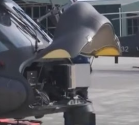
Could be a SAR, to augment/combine with the data from the FLIR?

No offense, but you aren't saying anything new with this post.

Synthetic aperture radar is a function that many radars have, and yes it could be an expected function of a radar for this helicopter, if it is a radar in the nose.


I am asking if anyone has any information beyond what I've already posted -- i.e. that it may be a radar -- to allow us more definitively to make that call.
For example, additional images and angles of the sensor, or any grapevine rumours, or if anyone has seen any documentation or even parents around it.


Saying that it "could be a SAR" is the equivalent of saying "it may be a radar" which I already posted originally. It doesn't actually add anything new to our understanding of what that sensor actually is.
 

Engineer

Major
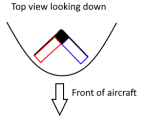
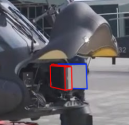
In any case, to illustrate what I'm "seeing" and why I'm describing it as odd, is because this is what I'm seeing as a "V shaped" array, which is kinda odd
I'm happy to be corrected if anyone else sees it differently

View attachment 172974
View attachment 172976

View attachment 172977
My guess is that the dark part is the actual array of the radar, while the white part is the back. The radar has been turned to face aft-right, so the mechanic can gain access to the back.
 

no_name

Colonel
mmm....to me the white/grey part looks more like the radar transparent cover in front of the elements and the black part looks more like the back casing. You need somewhere for the connecting wires/cables and I feel the bottom there is not enough space especially if you also need a turning mechanisms there. I don't see anything on the grey/white part for connections whereas the black region is too unclear to make out but the cables can go on the back black side.

V-shape could simply to have more elements while not taking up as much space. Arranged in a V to scan a wider angle without being too far-off boresight from the elements positions.

And just a thought thrown out, maybe the two panels are used to provide some sort of binocular/depth distinguishing function, Like e.g. looking at a tree and something close behind it, and separating out the two. Similar to looking at something with two eyes rather than one, and goes back to my previous comment about augmenting data from the FLIR sensors. I was gonna write it then but seemed pretty speculative so I didn't.
 
Last edited:

shiftenter

Junior Member
Registered Member
My theory:
The arrangement of concave V-shape suggest it might be a special variant of some kind of AWACS type of Z-20, for the purpose of further dectection range.
This kind of array can achieve meaningful sidelobe suppression and increase the power directly in front, while narrowing the beam.

1775545819736.jpeg
 

no_name

Colonel
My theory:
The arrangement of concave V-shape suggest it might be a special variant of some kind of AWACS type of Z-20, for the purpose of further dectection range.
This kind of array can achieve meaningful sidelobe suppression and increase the power directly in front, while narrowing the beam.

View attachment 173038
Maybe even used as a microwave soft-kill/jamming system.
 

Blitzo

General
Staff member
Super Moderator
Registered Member
My theory:
The arrangement of concave V-shape suggest it might be a special variant of some kind of AWACS type of Z-20, for the purpose of further dectection range.
This kind of array can achieve meaningful sidelobe suppression and increase the power directly in front, while narrowing the beam.

View attachment 173038

The Z-20 in question looks like a standard Z-20, as does its nose radome.

I see no particular reason to suspect it is an AWACS or otherwise special variant
 

no_name

Colonel
Could it be that the array is hinged to allow easier maintenance access to the backend when needed, and is just reverted to a normal flat face when in use?
Yes sometimes the simplest explanation could be it. It's folded when in maintenance mode to be easer to reach around behind where all the connections/electronics are, without actually needing to take the whole panel off.
 
Top