US Military News, Reports, Data, etc.

bsdnf

Senior Member
Registered Member
To go with these shipbuilding related posts, I found this interesting report from Boston Consulting group. Specifically, this image below:

90


Please, Log in or Register to view URLs content!


The above statistics are very interesting and not what I would have expected. The US doesn't have drydock disadvantage (in terms of drydocks) against Korea or Japan, nor does it have a labour force or revenue disadvantage. Yet it has virtually has no commercial shipbuilding and its Naval output is struggling to expand.
Jiangnan Shipyard did not occupy much deep-water port, deep-water coastline, or industrial waterfront.
 

SlothmanAllen

Senior Member
Registered Member
It throws together a bunch of stuff that is largely irrelevant to the shipbuilding capability, though. Like, what does it matter how many km of deep water coastlines do you have for the matter of shipbuilding capabilities?. Also it, like the deep water ports is a "duh!" moment because that should be obvious considering the US have more coastlines than Korea and China and while still less than Japan, they are limited by the smaller size of the islands in general.

Also it doesn't make it clear what are the criterias they are using to count the drydocks viable for this kind of shipbuilding capabilities while also doing the usual cope "we can now because we totally did it in WW2 and the Cold War" completely ignoring the fact that most of the work was done in state owned yards that no longer exist. Also no mention on improving the benefits of dockyard workers which one of the main issues affecting them, because working in McDonalds pays more and has more benefits than working at a shipyard and has less risk.

IMO these are largely ambiguous figures.

1. Revenue - US ship building revenues would likely be from expensive aircraft carriers, nuclear power submarines etc while figures for Japan China and Korea are likely publicly available figures for commercial ships. Meaning less ships and small tonnages built in USA compare to others despite the cost per ship, example more than US$12 billion for only one 100,000 tons aircraft carrier, there is huge disparity between revenue earned and number/tonnages of ships built.

2. Workforce - what kind of skill levels and how much robotics are employed instead of human workers?

3. Dry docks - sizes, different capabilities and areas must be clearly stated.

4. Deepwater ports - more relevant to import/export than ship building capabilities.

5. Deepwater coastlines - irrelevant.

6. Industrial waterfront - SIze could be useful but shipbuilding infrastructure on the property is more relevant.

Jiangnan Shipyard did not occupy much deep-water port, deep-water coastline, or industrial waterfront.

I think I might not have been clear with my intent of posting that section of the report. For example, many times the problems in production are stated as a shorted in manpower, yet this document shows a greater number of people employed in shipbuilding in the US than employed in Japan. Yet Japan completely outproduces the US in shipbuilding and has for decades.

As many of you rightly pointed out the types of drydocks, skill level of work force and lack of automation are all likely issues. I just think it is also important to not loose sight of the fact that the US (despite having many natural advantages - large available manpower, etc) is unable to efficiently allocate resources to shipbuilding.
 

Temstar

Brigadier
Registered Member
Please, Log in or Register to view URLs content!
1778547353382.png
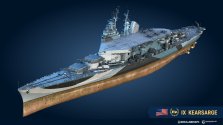
Trump-class BB has this uncanny ability to be a meme when it should be serious but then have serious aspects when you just flat out trying to treat it as a meme. Nuclear power is at once sensible for a ship of that magnitude yet also a joke because it will screw up their carrier construction plan even more than it already is.

that the potentially $17.5 billion battleship could be nuclear-powered.
For comparison, even the ballooning cost for USS Doris Miller is projected to be $14 billion (up from $13 billion average unit cost expected for Ford class)
 
Last edited:

siegecrossbow

Field Marshall
Staff member
Super Moderator
Please, Log in or Register to view URLs content!
View attachment 174818
Trump-class BB has this uncanny ability to be a meme when it should be serious but then have serious aspects when you just flat out trying to treat it as a meme. Nuclear power is at once sensible for a ship of that magnitude yet also a joke because it will screw up their carrier construction plan even more than it already is.


For comparison, even the ballooning cost for USS Doris Miller is projected to be $14 billion (up from $13 billion average unit cost expected for Ford class)
Why don’t they just merge the two ships and make the first battle carrier in human history? I would call it Battlestar Trumptica.
 

SlothmanAllen

Senior Member
Registered Member
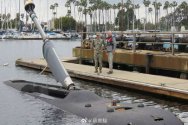
Cute Orca posting an image of the Boeing Orca.

Please, Log in or Register to view URLs content!

View attachment 174859
I didn't know this program was still active, but apparently they just christened the second one on May 7th and the FY-27 budget calls for 16 between now and FY-31.

Please, Log in or Register to view URLs content!


The Navy allocates $135.8 million for XLUUV procurement in FY2027 and $1.13 billion across the Future Years Defense Program, placing the system alongside major unmanned maritime investments tied to future sea-control operations. By funding XLUUVs together with 47 Medium Unmanned Surface Vessels, the Navy is accelerating a broader shift toward distributed autonomous warfare designed to extend undersea reach, reduce risk to crewed platforms, and strengthen survivability against peer naval threats.

Please, Log in or Register to view URLs content!
 
Top