I don't think there will be two variants of the same aircraft differentiated by nozzles. They are in the process of making a choice.So what we could be looking at is pure "J"-36/50 with TVC and "JH" with SERN?

You are using an out of date browser. It may not display this or other websites correctly.
You should upgrade or use an alternative browser.
You should upgrade or use an alternative browser.
Shenyang next gen combat aircraft (?J-XDS)
- Thread starter Blitzo
- Start date
I don't think there will be two variants of the same aircraft differentiated by nozzles. They are in the process of making a choice.
Thinking conservatively (which is the PLA's preferred mode), I'm inclined to agree with you. It would simplify logistics and reduce costs. The innate multirole nature of more advanced generations of fighters also means there's less sense for different variants (with different roles) of the same aircraft to be in parallel production.
However, I believe this is fundamentally a cost vs efficacy problem, and that as with all things a sufficiently large budget allows for more options and marginal gains in efficacy even if doing so is suboptimal to costs. I believe the discussion of generalist vs specialist platforms was already had on the J-36 thread nearly a year ago.
Depending on how much emphasis the PLA puts on the J-36 programme, its possible we could still see an Air Superiority -focused variant (outwardly identifiable with 2D TVC) and a Strike-focused variant (outwardly identifiable with trench exhausts). This is on the reasonable assumption and requirement that a specialised variant would outperform a general variant at an acceptable magnitude of increased cost, and that the total cost falls within the allocated budget.
As for the J-XDS, I don't believe we'll see a separate Air Superiority vs Strike variant that is separated on the basis of that focus, except that we're likely to see a land-based variant (that will naturally be more for Air Superiority given the existence of other land-based Strike assets) and a CATOBAR-capable variant (that will naturally be more for Strike given the lack of support from land-based Strike assets). This would be the same dynamic as J-35A vs J-35, and I remember the debate over the need for J-35A's existence before its reveal in 2024.
As an aside, I've revisited my speculations from last year in light of new information.
One was on the separate variants of the J-36 (with 2D TVC) vs JH-36 (with trench exhausts), which I see has reappeared and been discussed again.
Personally I'm actually more against this speculation than last year since it would need to be supported by continued test overflights (highlighting parallel development tracks) of both the exhaust trench variant and the 2D TVC variant. But as photo/video evidence has proved, the succeeding prototypes have all had 2D TVC and we haven't seen the trench variant in a while (but its possibly in Xinjiang for other testing). So it seems they're moving towards committing to 2D TVC.
I also agree with taxiya that once an exhaust type is installed the airframe is stuck with it until at least an MLU, but at the very least the platform design could be modular even if individual airframes are not. Given sufficient airframe production rate, this may be an acceptable level of "modularity".
Notably I only made the above speculation in December 2025. Since then the number of flying J-36 prototypes has potentially doubled (!) from 2 to 4. The pace of development has greatly exceeded my expectations.
The other was the idea that the J-XDS/50 side bays were for novel short-ranged munitions to defeat CCA/drone swarms that have sufficient stealth to enter WVR ranges.
Since May 2025, we've seen the reveal of Chinese high-end UCAVs now dubbed UADFs. Rather than merely collaborative UCAVs that function as extensions of a manned fighter, these seem like unmanned replacements for manned light fighters and possibly the final solution to WVR dogfighting, given a drone's ability to sustain far higher Gs and operate whilst under pressure. This would be a departure from the previous idea that WVR engagement scenarios are wholly outdated and would not occur.
Chinese military procurement generally treats the US as a rational actor and template to beat. I imagine they expected the US to pursue UADF development as well. While swarms of small CCAs are not worth the attention (a limited resource) of top-end manned fighters, highly stealthy enemy UADFs could pose a sufficient threat that needs SRAAMs to answer. The reveal of LockMart's Vectis shows the US is moving towards larger CCAs, although not J-10 -sized UADFs yet. If the J-XDS is envisaged as a forward-placed platform in the order of battle, then its likely to run into stealthy UADFs that could outmaneuver even PL-15/16 BVRAAMs and would need (IR-guided) WVRAAMs to contest in turning fights.
One was on the separate variants of the J-36 (with 2D TVC) vs JH-36 (with trench exhausts), which I see has reappeared and been discussed again.
Chengdu next gen combat aircraft (?J-36)
Just got a hint by a friend that „the two South Six aircraft flew together.“ and images would be released soon. All I want for Christmas is two birds simultaneously flying on the 26th. Santa Claus is real!www.sinodefenceforum.com
While not necessarily related to having two configurations in the same photo, I've been having the thought recently that perhaps we will see two variants (not upgrades) of the J-36 be developed concurrently.
One optimised for strike, the other for air superiority.
A "JH-36" with trench exhausts and perhaps a rotary launcher in the main IWB to strike at 2IC. And a "J-36" with 2D-TVC netting improved maneuverability for BVR A2A engagements. With other smaller, less externally visible changes as well.
This would boil down to how cost-effective it is to create specialised variants (that leverage features that would require a refit, like different exhaust types) rather than just use the same platform with different expendables (e.g., munitions) for different missions.
Of course, the platform could just be so modular so they wouldn't even be divided into very "separate" variants altogether. But I'm not sold on modularity for top-end platforms just yet, especially not for significant changes like exhaust type or IWB internal mechanisms.
Personally I'm actually more against this speculation than last year since it would need to be supported by continued test overflights (highlighting parallel development tracks) of both the exhaust trench variant and the 2D TVC variant. But as photo/video evidence has proved, the succeeding prototypes have all had 2D TVC and we haven't seen the trench variant in a while (but its possibly in Xinjiang for other testing). So it seems they're moving towards committing to 2D TVC.
I also agree with taxiya that once an exhaust type is installed the airframe is stuck with it until at least an MLU, but at the very least the platform design could be modular even if individual airframes are not. Given sufficient airframe production rate, this may be an acceptable level of "modularity".
Notably I only made the above speculation in December 2025. Since then the number of flying J-36 prototypes has potentially doubled (!) from 2 to 4. The pace of development has greatly exceeded my expectations.
The other was the idea that the J-XDS/50 side bays were for novel short-ranged munitions to defeat CCA/drone swarms that have sufficient stealth to enter WVR ranges.
J-35A fighter (PLAAF) + FC-31
PL-10s are still necessary. Just like army soldiers, they carry a rifle as well as a handgun. Never say never, the handgun may be a life saver in the battlefield. I know. I’m just saying that they get used very infrequently. A gun will see functionally zero use under the new doctrine unless...www.sinodefenceforum.com
I initially thought the J-20 would be the last Chinese fighter to have dedicated bays for SRAAMs, owing to its development starting back many years ago and as a counterpart to the F-22 with much the same combat doctrine, but the suspicious side bays of the J-50 have cast doubt on this.
A new thought I've had recently is that SRAAMs may no longer be primarily backup weapons for the Merge, but dedicated weapons to kill intervening "chaff" in contested environments (e.g., CCAs) where you need to preserve BVRAAMs to strike down multiple higher-priority targets (manned fighters, AWACs etc.). If the target is too fast for a gun, as the US has recently proved drones are with their failed attempt to gun one down, but not as evasive/protected as a fighter (that would require a long-range BVRAAM), then a truncated PL-10 may be sufficient. A small missile of such description may be able to fit into those small sidebays of the J-50.
The advent of unmanned close combat aircraft means the battlespace will get a lot more crowded, even at high altitudes. Fighters that need to get in close will need to be able to deal with this. It may not be economically practical or even practically feasible to expend expensive PL-15s and PL-17s (which I imagine are carried internally in the J-36) on CCAs. The J-36 probably avoids this by using its massive radar to identify priority targets and snipe them from afar, but the J-50 probably goes with the "get in close and kill everything" methodology so it'll need ways to efficiently kill CCAs.
J-35A fighter (PLAAF) + FC-31
The analogy is closer than you think. Pair of PL-10 + ancillary bay equipment may be about 500kg which is maybe 3% of a J-20 empty weight. Pistol right of 2.5kg on a 80kg soldier is also about 3% of weight. Biggest issue here is that instead of having that rather large bay and all that stuff...www.sinodefenceforum.com
Fair point, although I'd argue that the crowded airspace made possible by ubiquitous drones of all price ranges would mean the flexibility of having SRAAMs in the side bays is worth its tradeoff in space and weight. In that sense, the SRAAMs aren't part of the J-50's intended role to "sneak up on and destroy CCAs" but rather a sidearm to deal with CCAs if they get close enough to "swarm" (i.e., get into WVR). In short, SRAAMs aren't backups to kill manned fighters in WVR (that era has passed), but to quickly kill attacking CCAs that have gotten close so that the J-50 can focus on the enemy manned fighter. This is all highly theoretical, of course.
The side bays may also be used to house DEWs, which would be used in much the same fashion.
In any case, I don't think a long a thin bay door on both sides of a 6th-gen fighter is there for no reason, and its shape and positioning is not optimum for maintenance access. Something in there is important enough to warrant such a design when 6th-gens really shouldn't have any business with side bays if what the J-20 pilots say about the PL-10 is true.
Since May 2025, we've seen the reveal of Chinese high-end UCAVs now dubbed UADFs. Rather than merely collaborative UCAVs that function as extensions of a manned fighter, these seem like unmanned replacements for manned light fighters and possibly the final solution to WVR dogfighting, given a drone's ability to sustain far higher Gs and operate whilst under pressure. This would be a departure from the previous idea that WVR engagement scenarios are wholly outdated and would not occur.
Chinese military procurement generally treats the US as a rational actor and template to beat. I imagine they expected the US to pursue UADF development as well. While swarms of small CCAs are not worth the attention (a limited resource) of top-end manned fighters, highly stealthy enemy UADFs could pose a sufficient threat that needs SRAAMs to answer. The reveal of LockMart's Vectis shows the US is moving towards larger CCAs, although not J-10 -sized UADFs yet. If the J-XDS is envisaged as a forward-placed platform in the order of battle, then its likely to run into stealthy UADFs that could outmaneuver even PL-15/16 BVRAAMs and would need (IR-guided) WVRAAMs to contest in turning fights.

Re modular nozzles, I'm assuming TVC for air dominance focussed missions, trenches for strike missions. Any idea whether changing modules is unit level plug and play, or basically you can get one or t'other when the aircraft is delivered and you're stuck with it?
TVC allows for quite elegant trimming to compensate center of lift shift when transitioning to supersonic flight, I think I read the F-22 TVC contributes significantly to supercruise efficiency. In regular planes horizontal stabilizers induce negative lift (drag) canards induce positive lift, but obviously the J-36 lacks those. TVC is another way of doing the same thing with a weight penalty but less stealth implications than a control surface for sure, since the nozzle will mostly be masked by the fuselage anyways.
I could imagine the TVC being also considered for this aspect.
I would not imagine the J-36 overflying targets or significant air defence directly when used in a strike role, I would imagine it would launch stand-off munitions from significant ranges. Shielding IR from ground seems a low priority given it would mostly fly over empty ocean.

Remember supercirculation lift guys, the TVC deflecting (particular flat TVC) and energising the air over the trailing edge of the wing is a very helpful thing.TVC allows for quite elegant trimming to compensate center of lift shift when transitioning to supersonic flight, I think I read the F-22 TVC contributes significantly to supercruise efficiency. In regular planes horizontal stabilizers induce negative lift (drag) canards induce positive lift, but obviously the J-36 lacks those. TVC is another way of doing the same thing with a weight penalty but less stealth implications than a control surface for sure, since the nozzle will mostly be masked by the fuselage anyways.
I could imagine the TVC being also considered for this aspect.
I would not imagine the J-36 overflying targets or significant air defence directly when used in a strike role, I would imagine it would launch stand-off munitions from significant ranges. Shielding IR from ground seems a low priority given it would mostly fly over empty ocean.

Tbh i don't quite get the differentiator.Since May 2025, we've seen the reveal of Chinese high-end UCAVs now dubbed UADFs. Rather than merely collaborative UCAVs that function as extensions of a manned fighter, these seem like unmanned replacements for manned light fighters and possibly the final solution to WVR dogfighting, given a drone's ability to sustain far higher Gs and operate whilst under pressure. This would be a departure from the previous idea that WVR engagement scenarios are wholly outdated and would not occur.
It doesn't take some special difference to perform light fighter functions; those are not that complex, most of the time.
At the same time, lack of human presence onboard (los command w/o ping; command node) is not somehow disquualified.
Human(pilot/operator) onboard xpeng flying spider thing isn't in any sense unequal to a human onboard J-36.

Apparently a tender related to the next generation carrier based fighter (unless it's a navalized UAV from SAC?)
AI translation and summary

AI translation and summary
This tender (published 2026-02-11 on 中化商务电子招投标平台) is for procuring and building four pieces of test support equipment, one set each.
1. 起降试验模拟件 (takeoff/landing test mockup)
* Purpose: simulate extension and retraction functions used in takeoff and landing tests
* Basis: built with reference to an aircraft’s landing gear bay doors and arresting hook configuration
* Main components: mounting base, rocker arm, bay door, arresting hook mockup
2. 液压试验地面模拟设备 (hydraulic test ground simulation equipment)
* Purpose: support installation of the hydraulic test article, ground hydraulic servicing/refueling, pressurization, and test modification needs
* Capability: provides the required hydraulic supply capability for testing
3. 液压试验模拟件 (hydraulic test mockup)
* Purpose: simulate aircraft moving components
* Basis: built with reference to a folding-wing configuration
* Function: simulate wing-fold functionality
4. 供电试验网络台(铜鸟台)(power supply test network bench, “iron bird” stand)
* Purpose: install power system test articles and lay out test harnesses, simulating their installed state on the aircraft
* Main parts: bench frame, product mounting frame, monitoring and display units, etc
Delivery location:
* Inside the AVIC Shenyang Aircraft Design and Research Institute site (中国航空工业集团公司沈阳飞机设计研究所所区内)
Delivery timeline:
* Final acceptance within 15 months after the contract takes effect
Hi guys I saw this and it's really blurry but it looks like 2 J-50s flying side by side to me?? You would see the indents in the middle if it was the new J-36 prototypes. These ones protrude in the middle instead
https://www.reddit.com/r/SpecialAccess/comments/1rhi7cc
Oops sorry you're right. could just be flankers. Delete my post if necessary
https://www.reddit.com/r/SpecialAccess/comments/1rhi7cc
Oops sorry you're right. could just be flankers. Delete my post if necessary
Last edited:

How the hell can you even tell that they are tailless based on the sheer graininess of the video? For all we know they could just be flankers.Hi guys I saw this and it's really blurry but it looks like 2 J-50s flying side by side to me?? You would see the indents in the middle if it was the new J-36 prototypes. These ones protrude in the middle instead
https://www.reddit.com/r/SpecialAccess/comments/1rhi7cc

Allegedly SAC' J-XDS prototype was seen again today!
(Via @太湖军I名)
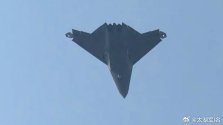
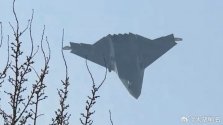
via:
(Via @太湖军I名)
via: