A2AD is too strong, large surface combatants are currently obsolete. This means neither side can actually do any meaningful high intensity conflict in the western pacific for a while (assuming crossing large swaths of ocean, obviously land invasions can still happen). At the very least until at least one side outfits the majority of their ships with multiple 1mw+ laser point defense.

You are using an out of date browser. It may not display this or other websites correctly.
You should upgrade or use an alternative browser.
You should upgrade or use an alternative browser.
PLA Strike Strategies in Westpac HIC
- Thread starter SEAD
- Start date
The US has been "trying to withdraw from Europe and the Middle East" for at least a decade, it has always ended up in fiascos. that is America's critical weakness, that it can't really let go of anywhere. Now the US is committing more forces to South America, it is music to China's ears.I speculate that the United States could withdraw forces from Europe and the Middle East in the future, increasing its military presence in the Indo-Pacific. It could deploy half of its aircraft carriers (most of its operational carriers) to South Asia, Guam, Australia, and Pearl Harbor. Simultaneously, it could station sufficient single-use lethal weapons—akin to those of the Rocket Force—in Japan and Okinawa, abandoning the defense of forward bases.
This does not mean that implementing these measures would guarantee a successful surprise attack by the United States. However, it would at least create the conditions for the United States to launch such an operation.
I agree this is difficult, but we may still have to consider a worse-case scenario.
Imagine a scenario like this — in 2031, China's J-36 has not yet entered service, the United States has 20 B-21s, there are five operational aircraft carriers in the Asia–Pacific, some form of Rocket Force has been deployed to forward bases, and the U.S. holds an advantage in space warfare. The United States then launches a strike against China's satellites; their Rocket Force would hit China's air defense systems; subsequently, B-21s taking off from Australia, escorted by fighters, would strike China's surface fleet, carrier-building yards, and other important coastal assets.
If this successful strike reduces China's A2/AD envelope to within 1,000 km of the coastline, then subsequent strategic bombing of China's coastal regions and shipyards would become possible.

Japan is rapidly building up the base on Mageshima


Their plan is to strategic assets there? or just tactical?. Because that doesn't survive a single saturation attack. Everything is exposed. My guess is that they are trying to build bases outside denser population centers. Also trying to limit public opinion on this matter.Japan is rapidly building up the base on Mageshima
Looks like is a base for US aircraft.Japan is rapidly building up the base on Mageshima
They also raise their military budget next year. I read that its around 700 billion usd (correct me if im wrong)Japan is rapidly building up the base on Mageshima

It's a ground base. Even if thoroughly attacked (and frankly there's limit to how much China can strike at this range), it will not sink into the Ocean.Their plan is to strategic assets there? or just tactical?. Because that doesn't survive a single saturation attack. Everything is exposed. My guess is that they are trying to build bases outside denser population centers. Also trying to limit public opinion on this matter.
With sufficient reinforcement and ABM, well built base can soak a lot of stand off strikes, and be still quite recoverable.
No need to look for "haha" explanations, like everything is pointless and predetermined. It's a fluid state, and building fortified bases (like this one) moves the needle.
At some point, this will need a stand in solution.

lcloo
Major
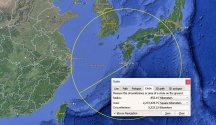
The location of Mageshima, it is about 850 km from Shanghai, and more than 1,000 km from Northern tip of Taiwan. Its defense value is more for Main islands of Japan, though Shanghai could be within the combat radius of some of the Japanese fighter jets. China's counter measure would be mainly East Sea Fleet AAW ships, and land based defense, and also PLA Rocket Force.

They also raise their military budget next year. I read that its around 700 billion usd (correct me if im wrong)
You are indeed wrong. You've confused the total government budget with the military budget.
The military budget is an order of magnitude smaller, at $70 billion.