You can literally circle Penghu in a car within an hour. It’s not exactly littered with well covered roads, and the roads are the only flat terrain you will find on that rock. Nothing is hiding on that island. I advise you to check the map. I’m not “overestimating” how valuable those launchers are. My point is that sticking them on those islands is a dumb and self defeating way to use this kind of equipment.Penghu isn't all that small.
Dongyin is, but it's the only place where HIMARS is in range of anything valuable.
It's also fortified(throughly tunneled).
I think you overestimate how valuable those launchers are. Ukrainians made them almost symbols, but the vehicles themselves are cheap and mostly redundant.
It's ultimately rocket artillery. If they could afford to lose 240mm howitzers before, they can do it with few trucks and 229mm rocket boxes.

You are using an out of date browser. It may not display this or other websites correctly.
You should upgrade or use an alternative browser.
You should upgrade or use an alternative browser.
PLA Strategy in a Taiwan Contingency
- Thread starter pugachev_diver
- Start date

You can circle a lot of very well known defensive positions in an hour. It's certainly enough for [Taiwanese] preemptive strike, and it's enough to tie significant resources for armed overwatch.You can literally circle Penghu in a car within an hour.
It doesn't need to live for too long, ultimately.
“此外,考量到外岛阵地生存率,军方规划海马士將利用外岛密布的坚固坑道掩体”It’s not exactly littered with well covered roads, and the roads are the only flat terrain you will find on that rock.
We are not talking about defensive positions. We are talking about the survivability of mobile artillery, which is not very survivable if it’s not mobile, which then defeats the point of mobile artillery. Penghu is under constant surveillance since it’s a forward operating position for Taiwan’s military, so there won’t be any possibility of preemptive strikes from that position.You can circle a lot of very well known defensive positions in an hour. It's certainly enough for [Taiwanese] preemptive strike, and it's enough to tie significant resources for armed overwatch.
It doesn't need to live for too long, ultimately.
“此外,考量到外岛阵地生存率,军方规划海马士將利用外岛密布的坚固坑道掩体”
My understanding is that those islands have underground tunnel networks, much like Taiwan proper.We are not talking about defensive positions. We are talking about the survivability of mobile artillery, which is not very survivable if it’s not mobile, which then defeats the point of mobile artillery. Penghu is under constant surveillance since it’s a forward operating position for Taiwan’s military, so there won’t be any possibility of preemptive strikes from that position.
I.e. there are multiple portals(active, hidden), where launchers can pop out and then fire it a matter of seconds, and then run back into the tunnel. As long as there are unsealed portals or as opening work is effective, or as long as there's surviving ammo inside - those can be expected to fire.
For preemptive strike, what i meant to situation similar to Iran: when(if) island gov decides that invasion is imminent and they're past the point of deterrence, they can strike first. For clear numerical reasons, each HIMARS allows x3...x6 more volume of fire per salvo per vehicle.
Taiwan itself is ultimately far, and they don't produce their own oversized rocket artillery. Moving launchers closer is the only way to increase volume with existing means.
Penghu has an underground command station. It’s not big enough for underground popup tunnels, and even if it had those the area on the island is small and low coverage enough that you wouldn’t be able to hide their exits. Once again I strongly recommend that you look at a map…My understanding is that those islands have underground tunnel networks, much like Taiwan proper.
I.e. there are multiple portals(active, hidden), where launcher can pop out and then fire it a matter of seconds, and then run back into the tunnel.
For preemptive strike, what i meant to situation similar to Iran: when(if) island gov decides that invasion is imminent and they're past the point of deterrence, they can strike first. For clear numerical reasons, each HIMARS allows x3...x6 more volume of fire per salvo per vehicle.

My understanding is that those islands have underground tunnel networks, much like Taiwan proper.
I.e. there are multiple portals(active, hidden), where launchers can pop out and then fire it a matter of seconds, and then run back into the tunnel. As long as there are unsealed portals or as opening work is effective, or as long as there's surviving ammo inside - those can be expected to fire.
For preemptive strike, what i meant to situation similar to Iran: when(if) island gov decides that invasion is imminent and they're past the point of deterrence, they can strike first. For clear numerical reasons, each HIMARS allows x3...x6 more volume of fire per salvo per vehicle.
Taiwan itself is ultimately far, and they don't produce their own oversized rocket artillery. Moving launchers closer is the only way to increase volume with existing means.
That is just a generic "fire the first shot" strategy, which is... fine, but it's also something that the ROC military itself could try to do from Taiwan proper, and they do have some other domestic long range fires to do it with (though of unknown stocks).
Moving some MLRS to Penghu will gain an additional 50-70km of westward reach, but at the expense of putting your platforms on a much smaller piece of real estate (than if they were held on Taiwan island), which will be subject to the same totality of PLA ISR and fires as Taiwan proper -- which recall, the PLA ISR and fires system of systems in a Taiwan conflict is procured and developed around striking much more systems on Taiwan itself, with more surface area and more hiding places, at longer distances.
If the goal is to gain an extra 50-70km of westward reach for HIMARS in particular, that is fine, but in context of the overall system of systems air-naval-missile conflict and associated ISR and EW involved, the much smaller surface area of Penghu (versus Taiwan island) will likely also require a far smaller amount of PLA resources to neutralize the launchers and in a faster manner, than if they were held on Taiwan island itself to survive until more permissive targets ventured closer to Taiwan island (such as to remain hidden as best they can until the PLA conduct an amphibious assault).
But if the goal is to be a sacrificial glass cannon with the aim to try and pull a trigger faster than the other guy, I suppose that's also a strategy, though questionable on the large scale of the cross strait military balance.
Look like the PLA needs to quickly develop and deploy an armour piercing bunker busting version of the 450mm BM launched from PCL-191.军方规划海马士將利用外岛密布的坚固坑道掩体

While it is difficult for FPVs to navigate the environment on Taiwan proper it should be far easier on small islands such as Dongyin and Penghu so I guess thanks???
In other news…
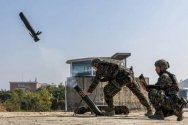
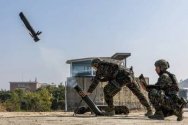
LY-1 must be awfully disappointed by this news.
In other news…
LY-1 must be awfully disappointed by this news.

Taiwan is highly suitable for deploying area denial weapons. Considering that Taiwan will continue to make large-scale weapons purchases and receive arms assistance in the future, the quantity of weapons available at the onset of hostilities could be dozens of times greater than current levels. Therefore, the PLA would be wise to maintain a higher margin of safety in its armed unification strategy.

