Miscellaneous News

jli88

Junior Member
Registered Member
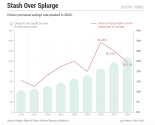
what? saving rate had always been ~45% gdp recently
ironically increasing the most from 2000 to 2010, where china had the greatest gdp growth and outlook should be the brightest
Please, Log in or Register to view URLs content!

This is gross savings rate, it is not the savings people are making from their wages. It is (nominal gdp - consumption)/nominal gdp
 

gcc

New Member
Registered Member
Implement labor laws brutally, (except in cases of national strategic importance like Huawei).

Give holidays.
i agree with you but not every one will
i had a roommate who straight up refuse to rest and wanted to keep his second job a secret (my man you are washing two sets of work cloths daily you aint fooling anyone)
there are people who will riot if they cant OT, and this is more true amongst older generations

Increase minimum wages by a LOT. the base is very low right now.
i think this got raised recently, hebei gone up by quite a lot. But is anyone actually paid this with no bonuses/ benefits /etc ? like seriously are they gonna find anyone willing to work in beijing for ~2K?
 

jli88

Junior Member
Registered Member
i think this got raised recently, hebei gone up by quite a lot. But is anyone actually paid this with no bonuses/ benefits /etc ? like seriously are they gonna find anyone willing to work in beijing for ~2K?

That's the problem. The minimum wage levels in most places are meaningless. In the US, the minimum wage is usually what a lot of people earn and hence a raise in minimum wage is straight forward raise in people's wages.

In China, minimum wage levels is lower than what even store clerks or restaurant waiters would get, so it is meaningless. They should all undergo one time adjustment to levels that give a decent life, where people can rent out a decent place, afford a car, raise 3 kids etc.
 

gcc

New Member
Registered Member
This is gross savings rate, it is not the savings people are making from their wages. It is (nominal gdp - consumption)/nominal gdp
i would argue it is indicative, considering most reports and articles are using this measurement
i'm no economist but if money sure isn't spent, surely it is saved or invested?

weirdly Urban Household Savings didn't give any concrete numbers either, only sentiment
Please, Log in or Register to view URLs content!

but by eyeballing:

2004 q3 (awful formatting)
32.3 percent of the surveyedconsidered consumption (including through borrowing) the “most sensible”choice,
33.4 percent surveyedconsidered "to save more" the most sensible choice,
7.9 percent surveyed considered"to buy stocks or mutual funds

2010
At the current price, interest rate and income level, 45.2 percent of respondents preferred “more investment” (such as purchases of bonds, shares and mutual fund units), 37.6 percent chose “more savings deposits” and 17.3 percent were in favor of “more consumption”.

2011
82.8 percent of respondents preferred to save money, with 39.7 percent went for bond, stock and fund investments as an alternative to deposits and 43.1 percent for deposits. About 17.2 percent were in favour of “more consumption”

2018
26.0% of respondents were in favor of “more consumption”, up 1.3 percentage points from the previous quarter; 44.3% preferred “more savings”, up 0.7 percentage point from the previous quarter; 29.7% tended to make “more investment”,

2019
27.7 percent preferred more consumption, up 1.3 percentage points from the previous quarter; 44.5 percent were in favor of more savings deposits, down 1.0 percentage point quarter on quarter; and 27.8 percent were inclined to make more investment, down 0.4

2023
21.9 percent preferred more consumption, down 2.6 percentage points quarter on quarter; 62.2 percent were in favor of more savings deposits, up 4.2 percentage points quarter on quarter; and 15.9 percent were inclined to make more investment,

2024
24.4 percent preferred more consumption, down 0.8 per- centage points quarter on quarter; 64.0 percent were in favor of more savings deposits, up 2.5 percentage points quarter on quarter; and 11.6 percent were inclined to make more investment,

2025
19.2 percent preferred more consumption, down 4.1 per- centage points quarter on quarter; 62.3 percent were in favor of more savings deposits, down 1.5 percentage points quarter on quarter; and 18.5 percent were inclined to make more investments,

TLDR
i suppose you have a point, though major shift seems to be from investment to saving
however, no distinction between the 2 is not cited and only sentiments are tracked so i would take it with a grain of salt
 

gcc

New Member
Registered Member
That's the problem. The minimum wage levels in most places are meaningless. In the US, the minimum wage is usually what a lot of people earn and hence a raise in minimum wage is straight forward raise in people's wages.

In China, minimum wage levels is lower than what even store clerks or restaurant waiters would get, so it is meaningless. They should all undergo one time adjustment to levels that give a decent life, where people can rent out a decent place, afford a car, raise 3 kids etc.
In cities, yes, meaningless. but poor places like hebei? i reckon it might be useful
 

jli88

Junior Member
Registered Member
i would argue it is indicative, considering most reports and articles are using this measurement
i'm no economist but if money sure isn't spent, surely it is saved or invested?

weirdly Urban Household Savings didn't give any concrete numbers either, only sentiment
Please, Log in or Register to view URLs content!

but by eyeballing:

2004 q3 (awful formatting)
32.3 percent of the surveyedconsidered consumption (including through borrowing) the “most sensible”choice,
33.4 percent surveyedconsidered "to save more" the most sensible choice,
7.9 percent surveyed considered"to buy stocks or mutual funds

2010
At the current price, interest rate and income level, 45.2 percent of respondents preferred “more investment” (such as purchases of bonds, shares and mutual fund units), 37.6 percent chose “more savings deposits” and 17.3 percent were in favor of “more consumption”.

2011
82.8 percent of respondents preferred to save money, with 39.7 percent went for bond, stock and fund investments as an alternative to deposits and 43.1 percent for deposits. About 17.2 percent were in favour of “more consumption”

2018
26.0% of respondents were in favor of “more consumption”, up 1.3 percentage points from the previous quarter; 44.3% preferred “more savings”, up 0.7 percentage point from the previous quarter; 29.7% tended to make “more investment”,

2019
27.7 percent preferred more consumption, up 1.3 percentage points from the previous quarter; 44.5 percent were in favor of more savings deposits, down 1.0 percentage point quarter on quarter; and 27.8 percent were inclined to make more investment, down 0.4

2023
21.9 percent preferred more consumption, down 2.6 percentage points quarter on quarter; 62.2 percent were in favor of more savings deposits, up 4.2 percentage points quarter on quarter; and 15.9 percent were inclined to make more investment,

2024
24.4 percent preferred more consumption, down 0.8 per- centage points quarter on quarter; 64.0 percent were in favor of more savings deposits, up 2.5 percentage points quarter on quarter; and 11.6 percent were inclined to make more investment,

2025
19.2 percent preferred more consumption, down 4.1 per- centage points quarter on quarter; 62.3 percent were in favor of more savings deposits, down 1.5 percentage points quarter on quarter; and 18.5 percent were inclined to make more investments,

TLDR
i suppose you have a point, though major shift seems to be from investment to saving
though no distinction between the 2 is cites and only sentiments are track i would take it with a grain of salt

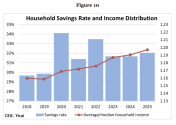
What you are looking for is household savings rate. The gross savings rate is a statistical/economic measure that has nothing to do with what a normal person thinks of as "savings"

This is the figure for household savings rate. It has increased since pandemic.

1769744722102.png

One more chart from Sixth Tone

1769745038710.png

Please, Log in or Register to view URLs content!
 

manqiangrexue

Brigadier
At China's stage of growth, these numbers should easily be:
9-10% nominal
6-7% real gdp
10% nominal wage growth rates
5% youth unemployment
Based on what should they be those numbers? What stage of growth are we in? Where does it say that when your country is about to overtake the sitting superpower, engaged in trade and tech wars with it, in this phase, your numbers should be in this range? Lemme see your source.
That's what will satisfy me.
That's baby numbers, nothing near China's unlimited potential. How do you get 6-10% from endless potential??? Limitless, infinite, comprende? You know what percent growth will satisfy me?
1769745336450.png
 

jli88

Junior Member
Registered Member
Based on what should they be those numbers?

All economies that have transitioned from the middle income to developed status, South Korea, Taiwan for instance, were growing at these rates at an equivalent per capita GDP level.

What stage of growth are we in?

middle income transition phase, where either you get stuck in middle income forever, or sustain high growth to become a developed country.

Where does it say that when your country is about to overtake the sitting superpower, in this phase, your numbers should be in this range?

Who said China is going to overtake US for sure? It's economy as a fraction of US GDP is actually declining. There's a high level of talent exodus, many sectors where US has much higher market share, various other issues. It's competing yes, but far from confirmed to have overtaken the US.

Don't be so uncharacteristically complacent. Paranoia and Humility have served China well in the past, they will do so in the future as well.

Lemme see your source.

Look at GDP numbers published from any source for South Korea, Taiwan, Japan and you can draw the conclusion.
 
Top