Ultra-Precision Embedded Fiber-Optic Microprobe Interferometry and Instrumentation
Abstract
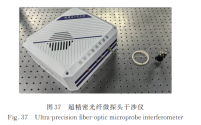
Achieving accurate and high-speed measurement of dynamic motion remains a major technical challenge for both scientific research and industrial applications. Ultra-precision laser interferometry, which utilizes the optical wavelength as an intrinsic metric, is established as the most precise method for displacement measurement. It plays a pivotal role in diverse applications such as the online monitoring of complex surfaces in high-end equipment manufacturing, mirror displacement detection in gravitational wave observation, geophysical measurement in fundamental research, and nanometer-scale stage positioning in precision lithography. However, traditional ultra-precision laser interferometers rely on complex bulk-optic mirror configurations, leading to a bulky overall structure that fails to meet the growing demand for measurement in limited spaces. To overcome these limitations, the fiber-optic microprobe interferometer (FMI) has emerged as a highly promising solution, offering unparalleled flexibility and an ultra-compact structure.
Despite these significant advantages, this technology still faces three core challenges: 1) signal undetectability, stemming from the lack of a comprehensive optical-field propagation model for fiber-optic microprobes; 2) measurement inaccuracy, caused by the severe degradation or loss of frequency lock in laser frequency stabilization during dynamic modulation; 3) precision limitations, resulting from the failure of error compensation mechanisms when complex nonlinear characteristics deviate from standard elliptical trajectories. Consequently, a systematic review of the solutions to these bottlenecks, along with a summary of the current research status of fiber-optic microprobe interferometry, will provide crucial theoretical and technical references for researchers in the field of laser metrology.