O'Connor, specializing in memory chip testing equipment, has signed an agreement to establish its headquarters in Wuhan Optics Valley.
O'Connor's headquarters project was signed and settled in Optics Valley. The company will develop domestically produced memory chip testing equipment to serve local integrated circuit companies. O'Connor is a well-known domestic memory chip testing company, and its production base is about to go into operation.
Founded in 2005, O'Connor initially manufactured circuit board testing machines. Since 2011, it has entered the memory testing field, developing testing machines that can replace corresponding models from leading international manufacturers and serving numerous leading memory module companies. Benefiting from the rapid development of the integrated circuit industry, the company's revenue this year is expected to reach 300 million yuan, more than doubling compared to last year.
Memory chip testing, simply put, is like giving storage products a factory "check-up"—comprehensive testing of the product's read/write speed, reliability, lifespan, etc., and those that fail to meet the standards are not allowed to leave the factory, which is equivalent to the "gatekeeper" of memory chips.
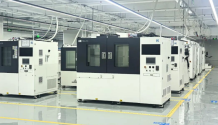
In April of this year, O'Connor started construction on a 3,000-square-meter factory in the Wuhan Chip Optoelectronics Industrial Park, dedicated to the production of memory chip testing equipment. The factory is currently undergoing intensive renovations and will be able to produce hundreds of machines simultaneously once it reaches full capacity by the end of the year.
Optics Valley is one of the four major integrated circuit industry bases in China, gathering over 300 companies across the industry chain. It has formed an industrial layout driven by both silicon-based semiconductors and compound semiconductors, accumulating a comprehensive technological foundation and rich achievements in emerging industries, from chip R&D and materials to manufacturing and packaging. By 2025, the scale of Optics Valley's integrated circuit industry is expected to exceed 100 billion yuan. Currently, a special task force for integrated circuit industry development has been established, and efforts are underway to build two 100-billion-yuan-level industrial innovation blocks for compound semiconductors and memory chips, accelerating the creation of a world-class integrated circuit industry ecosystem.
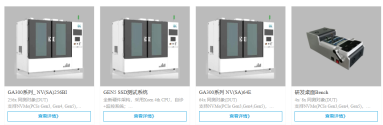
Founded in 2005, O'Connor initially manufactured circuit board testing machines. Since 2011, it has entered the memory testing field, developing testing machines that can replace corresponding models from leading international manufacturers and serving numerous leading memory module companies. Benefiting from the rapid development of the integrated circuit industry, the company's revenue this year is expected to reach 300 million yuan, more than doubling compared to last year.
Memory chip testing, simply put, is like giving storage products a factory "check-up"—comprehensive testing of the product's read/write speed, reliability, lifespan, etc., and those that fail to meet the standards are not allowed to leave the factory, which is equivalent to the "gatekeeper" of memory chips.
In April of this year, O'Connor started construction on a 3,000-square-meter factory in the Wuhan Chip Optoelectronics Industrial Park, dedicated to the production of memory chip testing equipment. The factory is currently undergoing intensive renovations and will be able to produce hundreds of machines simultaneously once it reaches full capacity by the end of the year.
Optics Valley is one of the four major integrated circuit industry bases in China, gathering over 300 companies across the industry chain. It has formed an industrial layout driven by both silicon-based semiconductors and compound semiconductors, accumulating a comprehensive technological foundation and rich achievements in emerging industries, from chip R&D and materials to manufacturing and packaging. By 2025, the scale of Optics Valley's integrated circuit industry is expected to exceed 100 billion yuan. Currently, a special task force for integrated circuit industry development has been established, and efforts are underway to build two 100-billion-yuan-level industrial innovation blocks for compound semiconductors and memory chips, accelerating the creation of a world-class integrated circuit industry ecosystem.