Chinese semiconductor thread II

tokenanalyst

Lieutenant General
Registered Member

Kangxi Communications' KCT75XXAT successfully passed AEC-Q100 automotive-grade reliability certification, accelerating its expansion in the intelligent automotive RF field.​


Kangxi Communications has successfully passed the AEC-Q100 automotive-grade reliability certification for its self-developed high-performance chip, the KCT75XXAT. This achievement officially marks the company's entry into the mainstream automotive electronics supply chain and validates its qualification to serve leading global automakers.

AEC-Q100 is a globally recognized benchmark for reliability, requiring rigorous testing under extreme temperature, humidity, and long-term stress conditions. Passing this certification demonstrates that the chip meets the stringent requirements for high reliability, stability, and mass production consistency necessary for automotive applications.

Product Highlights: KCT75XXAT Developed to support the trend of intelligent connected vehicles, the KCT75XXAT is a unified RF front-end chip featuring:​
  • Target Frequency: Covers the critical 5.77–5.925GHz band for Vehicle-to-Everything (V2X) communication protocols.​
  • High Integration: Combines Power Amplifiers (PA), Low Noise Amplifiers (LNA), and transceiver switches into a single component.​
  • Performance Capabilities: Offers high linearity, strong anti-interference features, low power consumption, and wide operating temperature range (-40℃ to 105℃).​
  • Flexibility: Includes an external bandpass filter port for expanded R&D design options in transmit modes (supporting both high and low power).​
1780671237637.png
Application Scenarios The chip is designed for diverse smart vehicle applications, including:​
  • Intelligent Vehicle Networking (C-V2X)​
  • In-vehicle High-Speed Wi-Fi​
  • Smart Cockpits​
  • In-vehicle Communication Gateways​
With growing demand for advanced automotive connectivity, Kangxi Communications aims to capitalize on this breakthrough. The company plans to continue optimizing its automotive RF solutions and accelerating the commercialization of these products to contribute significantly to the development of the intelligent vehicle industry.
Please, Log in or Register to view URLs content!
 

tokenanalyst

Lieutenant General
Registered Member

200 million invested to expand into the precision machining of diamond and silicon carbide.​


In response to a slowing consumer electronics market and intensified competition, audio component manufacturer Goertek has strategically announced plans to acquire control over Zhejiang Dijia Precision Technology Co., Ltd. through a capital increase. The deal involves Goertek investing up to 200 million yuan of its own funds alongside investments in the target company's existing shareholders, Hangzhou Disheng and Hangzhou Dirong. By securing more than half of the board of directors and holding significant equity stakes, Goertek aims to establish itself as the general partner with at least a 51% actual controlling interest in Zhejiang Dijia, marking its official entry into the lucrative field of laser precision machining for superhard materials like diamond and silicon carbide.

Zhejiang Dijia possesses core competitiveness rooted in ultrafast laser precision machining technology, which is particularly critical for processing the extreme hardness of materials such as diamond and silicon carbide. As third-generation semiconductors, advanced packaging, and high-end equipment manufacturing expand, the demand for these superhard materials is surging across various industrial applications. For instance, silicon carbide is increasingly used in etching equipment spray heads due to its corrosion and heat resistance, while diamond-coated drill bits are essential for AI servers and high-performance computing due to their superior wear resistance and thermal conductivity.

Despite the rising demand, achieving micron-level precision on these materials remains a significant technical challenge that traditional methods cannot easily address; this is where Zhejiang Dijia's ultrafast laser processing capabilities become vital. Goertek anticipates that acquiring Zhejiang Dijia will create powerful synergies with its existing operations, specifically by enhancing the accuracy and yield of components for acoustic modules and MEMS sensors. Furthermore, the two entities plan to leverage their combined expertise in automation equipment R&D to jointly develop specialized laser processing machinery tailored for both acoustic devices and semiconductor manufacturing sectors.

It is important to note that while this acquisition represents a preliminary intention with final terms yet to be finalized, it signals Goertek's broader strategy of extending into high-value-added advanced manufacturing beyond its core audio business. Industry experts suggest that as diamond and silicon carbide penetrate deeper into semiconductors, AI computing power, and precision manufacturing, the precision machining sector is poised for new growth opportunities. This cross-industry move by Goertek not only mitigates market slowdowns but also positions them to capitalize on the expanding industrial value chain of advanced materials through superior processing technology.

Please, Log in or Register to view URLs content!
 

tokenanalyst

Lieutenant General
Registered Member

The world's first mass-produced silicon-based gallium nitride RF chip for smart terminals has delivered more than five million units.​


The 55th Research Institute of China Electronics Technology Group Corporation (CETC) has delivered over five million units of the world's first mass-produced silicon-based gallium nitride (GaN) radio frequency (RF) chip for smart terminals. This marks the world's first large-scale commercial application of GaN RF chips in smart terminals, providing crucial support for the full coverage and high-speed interconnection of integrated air-space-ground information networks.
1780672158387.png
The integrated air-space-ground information network is the core foundation supporting future 6G communications, commercial aerospace, low-altitude economy, and emergency communications. Low-cost, high-performance power amplifier (PA) chips are the "signal heart" of this network, directly determining the transmission rate, coverage, and stability of the communication system. Currently, my country's commercial aerospace, low-altitude economy, 6G research and development, and information and communication industries are developing rapidly, leading to an explosive growth in demand for low-cost, high-performance radio frequency chips.

To address the contradiction between the exponentially growing production capacity demand and low-cost, high-performance requirements of the next-generation integrated air-space-ground information and communication radio frequency (RF) chip industry, the 55th Research Institute of China Electronics Technology Group Corporation (CETC) and its subsidiary, Nanjing Guobo Electronics Co., Ltd., focused their efforts on tackling key technologies across the entire silicon-based gallium nitride (GaN) chain, targeting major national strategic needs. After years of dedicated research, the team overcame a series of technical bottlenecks, including material epitaxial fabrication, independent chip design, complete process verification, and product reliability testing. They successfully developed a series of products suitable for various scenarios, covering categories such as satellite payload communication subsystems, low-altitude platform communication terminals and data transmission modules, ground gateway stations, and smart terminal RF chips.

It is reported that this series of silicon-based gallium nitride RF chips has outstanding performance such as high power, high efficiency, ultra-wide bandwidth, and high reliability. It can accurately match the stringent technical requirements of integrated air-space-ground communication for RF power amplifier chips in terms of high efficiency and high linearity. It effectively solves the industrialization problem of high-end RF chips, helps to build a global, all-time, and seamless air-space-ground communication network, and promotes the accelerated realization of the industrial vision of seamless global communication and the Internet of Everything.

Please, Log in or Register to view URLs content!
 

tokenanalyst

Lieutenant General
Registered Member

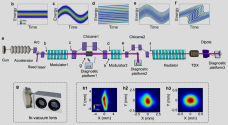
Fully coherent short wavelength free-electron laser driven by a single sub-microjoule seed​

Abstract​

High-repetition-rate, fully coherent extreme-ultraviolet (EUV) and X-ray free-electron lasers (FELs) are essential for advanced time-resolved ultrafast spectroscopies. While external seeding serves as the standard technique to achieve precise temporal coherence, conventional methods demand hundred-megawatt peak-power laser systems. Furthermore, advanced configurations like echo-enabled harmonic generation (EEHG) introduce the severe complexities of dual-laser synchronization. Together, these requirements fundamentally restrict operations to kilohertz repetition rates and compromise overall system stability. Here, we experimentally demonstrate a fully coherent EEHG-FEL driven by a single, sub-microjoule seed laser. By employing a direct-amplification enabled harmonic generation technique, we utilize an initial 0.4 µJ (2 MW peak power) ultraviolet seed to directly drive coherent lasing at nanometer wavelengths. By eliminating the need for extreme peak powers and multiple synchronized lasers, this approach significantly simplifies the seeding architecture and provides a practical and robust pathway toward megahertz-class, fully coherent EUV and X-ray light sources.
1780672320095.png


Please, Log in or Register to view URLs content!
 

tokenanalyst

Lieutenant General
Registered Member

Domestic NanoImprint Lithography Find Its Footing In Photonic ICs. Bringing Costs Reductions.​


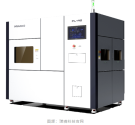
Prin Technology (referred to as Pulin/Printech) delivered its PL-AS vacuum pressure wafer-level nanoimprint lithography machine to Licheng Technology. This partnership marked a historic milestone: the successful verification of mass-producing 8-inch optical chip wafers without using traditional Deep Ultraviolet (DUV) lithography.

The new process reduces the manufacturing cost of a single chip to roughly one-tenth of the cost associated with DUV solutions, addressing the economic bottlenecks of current miniaturization trends. This development shatters the long-standing foreign monopoly (previously held by companies like Canon) and overcomes export control restrictions on advanced lithography equipment for China. Unlike previous attempts focused solely on research, this machine is a mature production line ready to directly replace DUV equipment in factories, offering a scalable, cost-controllable, and yield-compliant solution.

1780672805912.png

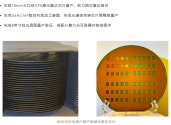
Technological Advantages (The PL-AS Machine) The PL-AS machine solves the inherent trade-offs of traditional nanoimprinting methods:​
  • Overcoming Limitations: It bypasses the "roll-to-roll" method (high speed but poor precision) and the "stepper" method (high precision but low speed). Instead, it uses a unique vacuum surface contact imprinting principle.​
  • Precision & Quality: By applying uniform vacuum pressure across the entire wafer simultaneously, it achieves residual layer thickness deviations of less than 2nm and eliminates bubble defects via its vacuum environment.​
  • Performance: It supports linewidths under 10nm, high-precision alignment, and works on various substrates, meeting international standards for optical chips.​
The technology has been verified across three critical sectors, moving from a "backup" role to the primary production method:
  1. LiDAR Chips: Mass production of large-aperture (18mm) OPA lidar chips, accelerating solid-state lidar adoption in autonomous driving.​
  2. Optical Communication Sensors: High-precision mass production on brittle substrates like GaAs/InP, overcoming fabrication challenges previously faced by DUV processes.​
  3. AI Optical Interconnects: Verification of 8-inch silicon photonics wafers, which are essential for the high-speed data links driving artificial intelligence computing power.​
1780672832872.png

Prin Technology has built a fully independent closed-loop system encompassing equipment, self-developed printing adhesives, and processes. This strategy provides China with an alternative path to semiconductor manufacturing that avoids the escalating costs of EUV/DUV lithography, creating a distinct advantage in cost-effective mass production for optical chips driven by AI growth.

Please, Log in or Register to view URLs content!
 

tokenanalyst

Lieutenant General
Registered Member

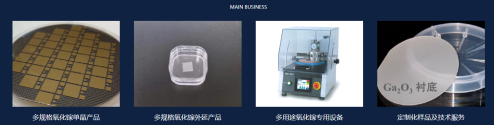
Shandong Guojia Crystal Valley has successfully fabricated a 6-inch zero-twin (001) gallium oxide single crystal on the master plane.​


According to the official WeChat account of Shandong Guojia Crystal Valley Semiconductor Technology Co., Ltd., Shandong Guojia Crystal Valley recently successfully fabricated a 6-inch 0-twin (001) gallium oxide single crystal with a master face using an optimized guiding method, based on two core independently developed technologies: gallium oxide twinning and typical defect suppression technology and AI-based automated crystal growth mass production technology. Verified by a leading domestic third-party testing institution, the high-resolution XRD rocking curve of this single crystal has a full width at half maximum (FWHM) of 64.8 arcsec, indicating that the crystal quality has reached an internationally leading level.

1780673841363.png

Gallium oxide, as a core material of fourth-generation ultra-wide bandgap semiconductors, has broad application prospects in data centers, ultra-high voltage power transmission and transformation, new energy vehicles and other fields due to its excellent high voltage resistance, high current, low loss and radiation resistance.

It is understood that this breakthrough in gallium oxide single crystal preparation technology is not simply a scaling up of size, but a complete overcoming of the dual limitations of "twin defects" and "single crystal plane", marking it as one of the few companies in the world to master the preparation technology of 2-6 inch full range of zero-twin gallium oxide single crystals.

Please, Log in or Register to view URLs content!
 

tokenanalyst

Lieutenant General
Registered Member

Dongxin Technology: WiFi 7 chip completes testing​


On June 3, Dongxin Technology disclosed its latest investor relations activity record, officially announcing that its WiFi7 chip development has made key progress.

Dongxin Technology stated that it established a subsidiary in 2024 focusing on the research and development of Wi-Fi 7 chips. The R&D team members possess R&D experience from leading international and domestic communication chip manufacturers. Currently, the R&D and industrialization of the Wi-Fi 7 wireless communication chip are progressing smoothly. The company completed prototype testing in 2025, and its core performance meets design goals.

The company is actively advancing the research and development of related products. As these products are gradually adopted by customers and enter mass production, they are expected to bring a new revenue growth curve to the company. The specific revenue recognition time depends on the progress of customer adoption and the pace of mass production.

Please, Log in or Register to view URLs content!
 

tokenanalyst

Lieutenant General
Registered Member

Lanrui Intelligent Equipment Technology Delivers Ceramic substrate AOI products​


Wuhan Lanrui Intelligent Equipment Technology Co., Ltd. has successfully completed the delivery of three independently developed Automated Optical Inspection (AOI) and laser repair equipment specifically designed for ceramic substrates to customers in Central China. This significant milestone, achieved on May 27, marks the transition of these high-end devices from phases of technology verification, pilot production, and small-batch trials into the window for large-scale commercial distribution. As a company founded in 2023 with over 20 independent intellectual property rights covering core processes like laser processing and precision measurement, Lanrui's achievement signifies a major step forward in domestic semiconductor equipment manufacturing, aligning with national strategies regarding technological self-reliance.

1780675292719.png

Ceramic substrates serve as critical electronic circuit carriers that combine the high thermal conductivity and mechanical strength of ceramics such as alumina or aluminum nitride with the electrical properties of copper foil, effectively acting as a superior alternative to traditional organic PCBs for power semiconductors and RF front-ends. The delivered equipment addresses key bottlenecks in this field, which were previously limited by international suppliers from Japan and Germany due to challenges in optical signal-to-noise ratios, sub-pixel defect recognition accuracy, and minimizing heat-affected zones during laser repair. Lanrui's technology has already surpassed these thresholds, having successfully launched a demo unit in 2023 and expanding its capabilities through strategic university collaborations since then.

The practical success of the new equipment is validated by widespread adoption across industry leaders, including three domestic power semiconductor Integrated Device Manufacturers (IDMs), two automotive-grade module companies, and one 5G RF manufacturer. Feedback from these partners confirms that the systems meet rigorous mass production standards regarding testing stability, repair consistency, and long-term reliability. By effectively improving yields in LTCC multilayer wiring and shortening rework cycles for AMB substrates, Lanrui's AOI and laser repair solutions have demonstrated their indispensable value in ensuring high-quality output for critical electronic applications where traditional materials cannot suffice.

Please, Log in or Register to view URLs content!
 

tokenanalyst

Lieutenant General
Registered Member

Semitronix Launches New Generation DATAEXP Platform and AI Products​


Semitronix successfully held its DE User Forum and New Product Launch, marking a significant milestone in the industry's digital transformation. The event introduced the next-generation DATAEXP Platform and three major autonomous AI products (SemiClaw, MuseLab, and INF-TPC). The core philosophy of this new era is "data-driven, AI-enabled," aiming to break down silos across the semiconductor supply chain—from design and manufacturing to packaging and testing—to transform fragmented experience into intelligent, reusable analytical capabilities.

The DATAEXP Platform Upgrade (v4.0 & New Modules)
The platform now features deep integration of AI agents, predictive modeling, and automated diagnostic tools across five critical scenarios:

1780678532312.png1780678587769.png
  1. Yield Management (DE-G 4.0):
    • Introduces a complete Six Sigma Toolkit with dynamic data exploration, advanced Design of Experiments (DOE), and AI-powered predictive analytics.​
  2. Advanced Packaging & Root Cause Analysis (DE-YMS 4.0):
    • First to offer comprehensive support for 3D packaging analysis. Key features include wafer stacking yield preview, smart pairing, and full traceability for multi-die sealing processes.​
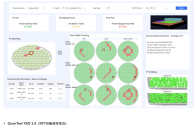
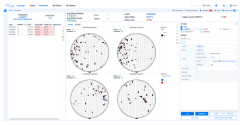
  3. Die-Failure Testing (QuanTest YAD 2.0):
    • The industry's first software integrating DFT (Die Failure Test) diagnosis with YMS analysis. It can process over 500,000 diagnostic reports in a single session, outputting results in just 30 minutes and improving root cause localization efficiency by 4X.​
  4. Automotive Quality Control (AutoInk 4.0):
    • Designed specifically for automotive chips, featuring data health verification, multi-stage ink loss tracing, and defect handling for advanced packaging scenarios.​
  5. Silicon Photonics (Photonix 1.0):
    • A one-stop solution capable of parsing petabyte-scale data and building custom models with a single click to manage yield data for photonic chips.​
Beyond the platform, Quanta launched three strategic AI agents developed by its subsidiary, Guangli Micro:​
  • SemiClaw 1.0 (Enterprise Agent): An autonomous intelligent agent that allows users to "build digital engineers." It enables natural language-driven analysis for root cause identification and report generation via simple text prompts.​
  • MuseLab 1.0 (R&D Expert): Designed for semiconductor R&D, this agent handles full-process analysis (CP/FT/WAT) and retains business knowledge, allowing departments to continuously accumulate institutional know-how.​
  • INF-TPC 1.0 (Real-Time Anomaly Detection): Uses dual algorithm engines (unsupervised learning + supervised training) to monitor Factory Data Collection (FDC) in real-time, predicting machine malfunctions before they cause wafer scrap.​
The launch was bolstered by testimonials from key partners demonstrating practical value: Jiangyuan Technology: Showcased how DE-YMS and SemiClaw enable localized AI deployment for high-performance computing chips, utilizing multivariate fitting and aging analysis. Silicon Labs: Highlighted the DE-YMS ALARM system's ability to predict abnormal fluctuations in multi-die packaging, significantly shortening response times for yield issues. Kashou Wanhui: Emphasized how DE-G Six Sigma tools are shifting corporate culture from reliance on individual "Green Belt" expertise to a data-driven, quantifiable organizational standard.

Semitronix is positioning the DATAEXP ecosystem as the central hub connecting technology and business decisions in the semiconductor industry. The company plans to further invest in AI algorithms and knowledge graphs to deepen platformization, aiming to move the sector from single-point tool usage to a comprehensive, intelligent digital environment.
Please, Log in or Register to view URLs content!
 
Top