
You are using an out of date browser. It may not display this or other websites correctly.
You should upgrade or use an alternative browser.
You should upgrade or use an alternative browser.
Chinese semiconductor thread II
- Thread starter vincent
- Start date
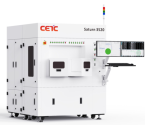
CETC Fenghua's Saturn 3520 wafer defect inspection equipment was delivered to a leading domestic SiC company.
On June 1st, CETC Fenghua's Saturn 3520 wafer defect inspection equipment was shipped to a leading domestic SiC company. To date, this model has been shipped in batches to multiple customers, and has passed benchmarking verification and acceptance by several domestic clients. Its key indicators, such as functionality and performance, have reached or even surpassed those of foreign counterparts, accelerating the localization process.
The Saturn 3520 employs a laser point confocal rotating scanning technology architecture, equipped with multiple simultaneous detection channels including bright field (reflection), bright field (phase), dark field (oblique incidence), dark field (normal incidence), morphology (radial shear), morphology (tangential shear), photoluminescence (ultraviolet), and photoluminescence (visible). It can acquire complete multi-dimensional defect information of the wafer in a single scan, possessing industry-leading detection accuracy and sensitivity. It is the best solution in the field of third-generation wafer inspection in China, and the equipment has been verified and accepted by multiple domestic customers.
The series offers three customizable models tailored to different testing requirements:
The Saturn 3520 employs a laser point confocal rotating scanning technology architecture, equipped with multiple simultaneous detection channels including bright field (reflection), bright field (phase), dark field (oblique incidence), dark field (normal incidence), morphology (radial shear), morphology (tangential shear), photoluminescence (ultraviolet), and photoluminescence (visible). It can acquire complete multi-dimensional defect information of the wafer in a single scan, possessing industry-leading detection accuracy and sensitivity. It is the best solution in the field of third-generation wafer inspection in China, and the equipment has been verified and accepted by multiple domestic customers.
The series offers three customizable models tailored to different testing requirements:
- Saturn 3500 (Comparable to SP1): High-efficiency model designed for basic particle and scratch detection.
- Saturn 3510 (Comparable to 8720): Balanced configuration offering high penetration depth, combining efficiency and accuracy.
- Saturn 3520 (Comparable to 8520): The flagship high-precision model featuring a wide range of detection channels for various advanced materials.
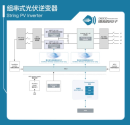
Focusing on high-voltage power electronic systems for photovoltaics and energy storage, DEKMicro showcased its millimeter-wave wireless isolation solution at SNEC 2026.
At the 19th SNEC International Photovoltaic Power Generation and Smart Energy Conference & Exhibition held in Shanghai in June 2026, DEK Microelectronics showcased its advanced millimeter-wave wireless isolation chips and modules designed specifically for high-voltage power electronic systems. As the industry accelerates toward higher voltages, power densities, and efficiency through the adoption of third-generation semiconductors like GaN and SiC, these systems face increasingly complex electromagnetic environments with rapid switching frequencies and severe common-mode interference. DEK Micro's solution addresses these challenges by utilizing an ultra-short-range contactless transmission architecture to wirelessly traverse isolation barriers, ensuring high-speed signal integrity while maintaining low latency and robust performance against strong electrical noise.
The showcased products demonstrated exceptional reliability, achieving zero failures in four months of continuous 10 kVrms TDDB testing and passing rigorous surge and withstand voltage tests up to 30 kVrms, with a CMTI measurement reaching 400 kV/μs. These capabilities make the chips critical for driving GaN high-frequency applications (supporting 1–2 MHz+) and ensuring safe isolation in SiC-based medium- and high-voltage power devices. DEK Micro highlighted its focus on parasitic parameter control, partial discharge reliability, and long-term stability through various application topologies, including photovoltaic inverters, energy storage converters, charging modules, high-frequency converters, and SST solid-state transformers, offering a new chip-level pathway for building safer and more stable next-generation energy systems.
Shaoguang Core Materials has secured its Series C+ funding round, with SAIC Financial Holdings and Shangqi Capital leading the
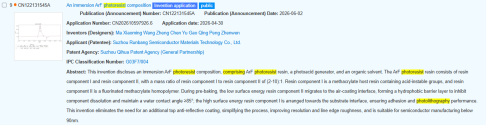
Recently, Changsha Shaoguang Core Material Technology Co., Ltd., a domestic photomask substrate company, successfully completed its C+ round of equity financing. This round of financing brought together multiple industrial and financial investment institutions. SAIC Group's SAIC Financial Holdings and Shangqi Capital were the main investors, and Yuanhe Holdings, Jinpu Investment, Xicheng Jinrui, Qianhai Fund of Funds, Huafu Jiaye, Hengkun New Material and Shengang Investment participated in the investment. The amount of this round of financing was not disclosed to the public.
Changsha Shaoguang Core Materials Co., Ltd. was registered and established in Changsha in 2003. The company's predecessor can be traced back to the national integrated circuit supporting special project in 1980. It is one of the earliest domestic manufacturers to lay out the R&D and mass production of photomask substrates. It has been rated as a national-level specialized and innovative "little giant" and Hunan Province manufacturing single champion. At the same time, it undertakes a number of national-level advanced process photomask substrate key R&D special projects.
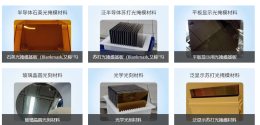
The company's main business is semiconductor quartz photomask substrates, photomask substrates for general displays, and ultra-precision micro-nano optical components. It has now established a complete chain of self-developed processes for quartz substrate grinding and polishing, magnetron sputtering coating, and photoresist coating. Its products can cover multiple generations of photolithography processes such as I/G-line, KrF, and ArF, achieving full-spectrum domestic mass production of products. Related products have been supplied in batches to leading domestic wafer manufacturing and photomask production companies.
SAIC Financial Holdings is the industrial investment platform directly under SAIC Group, and Shangqi Capital belongs to SAIC's industrial capital system. Both have long focused on the automotive semiconductor and high-end new materials sectors, and their asset management scale ranks among the top in the industry. Other investors include national-level fund of funds, leading market-oriented venture capital firms, and industrial chain entities. The simultaneous landing of diversified capital further improves the company's capital structure.
Since its inception, Shaoguang Core Materials has undergone multiple rounds of equity financing. Its previous Series C financing round attracted investment from institutions such as China National Building Materials, CICC Capital, Jiantou Huawen, and Dachen Capital. Leveraging the support of these past financings, the company has successively established a wholly-owned subsidiary in Shanghai to develop its precision optical module business, and acquired a stake in Gaoguang Micro Semiconductor to enter the upstream segment of photomask protective films, forming a business structure that synergistically develops photomask substrates, supporting auxiliary materials, and precision optical components.

the counterpart article on NAND that YMTC news came from
revenue is up 445% YoY as market share rose from 8 to 13%. If whole market is $46B then 13% of that is $5.8B, which is much higher than we previously thought. That is not too far from the $7B+ reported for CXMT. Both of these guys are now so much larger than SMIC
revenue is up 445% YoY as market share rose from 8 to 13%. If whole market is $46B then 13% of that is $5.8B, which is much higher than we previously thought. That is not too far from the $7B+ reported for CXMT. Both of these guys are now so much larger than SMIC
Hubei Province: Building a MEMS sensor pilot platform by relying on leading enterprises.
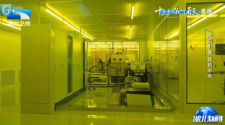
The sensor industry in China is characterized by a dual-engine strategy that leverages Wuhan's research capabilities with Xiaogan's manufacturing prowess. This collaboration bridges the gap between high-level R&D and intelligent production, creating an ecosystem where over 100 companies operate across a chain spanning home appliances, automobiles, and energy storage. A prime example of this synergy is seen in the partnership between Wuhan headquarters and local manufacturers like Xiaogan Feien Microelectronics. In this model, technical expertise flows from the research centers to the factories, where skilled teams are trained step-by-step on operational details. This knowledge transfer has significantly shortened production cycles and improved quality, allowing companies to meet urgent demand for instance, submitting samples for testing every two or three days while benefiting from Xiaogan's efficient government execution and favorable working environment.
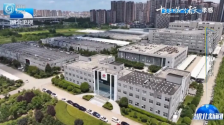
In terms of product innovation and market performance, leading enterprises in the region are achieving remarkable growth and technological advancements. HGTECH (Xiaogan Huagong Gaoli Electronics), a dominant force with temperature sensors equipping seven out of ten global home appliances, has seen its second flagship product sales surge by over 700% year-on-year. The company continues to push boundaries with next-generation refrigerant gas sensors that act as "electronic noses," capable of detecting leaks and providing early warnings within just 7 to 8 seconds. Beyond traditional sensors, the industry is tackling core material bottlenecks; notably,
Hubei Yuanzhen Microelectronics has established China's first production line for magnetoresistive (xMR) quantum magnetic sensing wafer materials. This move addresses critical supply chain constraints and allows top-tier international technology teams to settle locally due to Xiaogan's high efficiency, contrasting sharply with longer review processes elsewhere.
Looking toward the future, strategic planning aims to solidify Xiaogan as the core carrier for Hubei Province's optoelectronic information industry. The government is actively driving this transformation through targeted policies, including the establishment of an intelligent sensor industry alliance involving 40 companies and a dedicated 2 billion yuan investment fund for cutting-edge technologies. Infrastructure development is accelerating, with the first phase of a 5.5-square-kilometer sensor industrial park nearing completion. Over the course of the 15th Five-Year Plan, the region plans to expand five specific industrial chains covering temperature, fiber optics, laser, pressure, and magnetic sensors to serve applications in automobiles, low-altitude economy, robotics, and smart manufacturing. The ultimate goal is ambitious yet clear: achieve a core sensor industry scale of 50 billion yuan and drive the entire cluster to exceed 100 billion yuan by leveraging its unique "R&D + Production" model.
Last edited:
soon to be number 3rd in the world..

That chart is revenue market share. YMTC is potentially already 3rd or maybe even 2nd by shipment market share based on this data.
In 2025 Q3, they had 13% shipment share and 11% revenue share, so their shipment share in 2026 Q1 could be up to 15 or 16%
Skull chart time babythe counterpart article on NAND that YMTC news came from
revenue is up 445% YoY as market share rose from 8 to 13%. If whole market is $46B then 13% of that is $5.8B, which is much higher than we previously thought. That is not too far from the $7B+ reported for CXMT. Both of these guys are now so much larger than SMIC