Fred is more a semiconductor scientist with knowledge in patterning than just some money guy on twitter. I think he is more or less trustworthy. So would be expecting this to fall between N6 and N5honestly, I think there is just too much speculations on this and I wouldn't trust just random twitter posts. Let's wait for the actual details to come out.
I've been expecting around N6.

You are using an out of date browser. It may not display this or other websites correctly.
You should upgrade or use an alternative browser.
You should upgrade or use an alternative browser.
Chinese semiconductor thread II
- Thread starter vincent
- Start date

Korean media here complaining that China's domestic SME drive means Korean equipments are left out.The Chinese government's overt push to "promote domestic semiconductor equipment companies" has dealt a direct blow to the domestic equipment industry. This is because the so-called "50% rule" is effectively being applied to Chinese semiconductor companies, which stipulates that "for every foreign-made piece of equipment imported, one domestically produced piece of equipment must be purchased."
According to alternative data platform Hankyung Aicel on the 11th, South Korea's semiconductor equipment exports to China through October this year amounted to $963 million, a 17.8% decrease from the same period last year. This represents a 50% decrease compared to 2021 ($2.26 billion), when China embarked on a large-scale fab (semiconductor factory) expansion. In contrast, China's total semiconductor equipment imports from January to October this year amounted to $28.4 billion, a 6.7% increase from last year.
That would be SiCarrier and Laura. I actually didn't hear about SMEE lithography machine been displayed.Semicon China 2025, a semiconductor exhibition held in Shanghai last March, was a place where Korean companies could see for themselves that Chinese semiconductor equipment companies, previously considered inferior, were now catching up. CyCarrier, a startup with full support from Huawei, was one such example. This four-year-old company surprised visiting Korean equipment industry officials by unveiling over 30 different types of diffusion, deposition, optical inspection, and measurement equipment.
Shanghai Microelectronics (SMEE) was no exception. It exhibited 28-nanometer (nm; 1nm = one billionth of a meter) deep ultraviolet (DUV) lithography equipment, previously the domain of only a handful of companies, including ASML in the Netherlands. Nowra, China's largest equipment company, showcased ion implantation equipment, a field previously dominated by the United States. These are all pieces of equipment that Korea cannot even begin to touch. The concern that Korean equipment manufacturers would be sandwiched between the US, Japan, and Europe, which have overwhelming technological prowess, and China, which enjoys government support, has become a reality.

Transistor density along with the TSMC 6nm process...I suspect Techinsight is exaggerating it.1.)SMIC achieved a 5-nm-class N+3 node.
2.)SMIC pushed single-exposure DUV resolution from ~38 nm to roughly 35 nm.
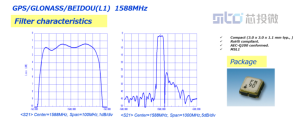
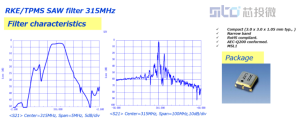
Chip-Invest's automotive-grade filters: the choice for high-end smart cars.
ChiptoMicro’s high-performance automotive-grade RF filters are now powering the GPS navigation systems in NIO’s L60 and L90 models (under the Ledao brand), contributing to their strong market performance. Backed by rigorous automotive-grade standards exceeding those of consumer electronics ChiptoMicro’s filters ensure stable operation under extreme temperatures, vibrations, and long-term use. The company, a global leader in SAW filter technology, has earned full automotive-grade certifications and supplies its products to top international automakers. Its key offerings include the 3030 series (ceramic-packaged) and miniaturized 1511/1411 series filters, widely used in GNSS, RKE/TPMS, BLE, and DAB systems. With full-process automotive management from R&D and manufacturing to quality control and supply chain ChiptoMicro provides reliable, scalable support for intelligent vehicle connectivity.
GigaDevice's innovative storage and multi-product line collaboration builds a domestically produced chip foundation for high-speed network communication.
At ICCAD-Expo 2025, GigaDevice showcased its multi-product synergy as a cornerstone for building a domestically produced, high-performance chip foundation in China’s high-speed network communication ecosystem. Through deep collaboration across Flash, MCUs, analog chips, and sensors, the company offers end-to-end solutions spanning cloud computing, network infrastructure, and endpoint devices—supporting critical transitions from 5G to 5G-Advanced (5G-A) and toward 6G.
- Full-chain coverage: From AI servers to optical modules and home terminals, GigaDevice’s diversified product portfolio addresses performance, reliability, and power efficiency demands across the entire network stack.
- Core market opportunities:
- 5G-A/6G base stations: High-reliability NOR/NAND Flash enables stable operation in extreme environments, supporting new constructions and trials.
- AI servers: Rapid growth (projected to reach 2.5M units by 2026) drives demand for high-capacity, secure storage in BIOS, RAID, SSD controllers, and PCIe switching.
- High-speed switches & optical modules: Demand expected to hit 480B yuan by 2030; GigaDevice’s 32-bit MCU with SPI NOR Flash firmware and analog chips breaks supply chain bottlenecks via advanced signal control and power management.
- Home terminals: 50G PON and Wi-Fi 8 adoption boost demand for compact, reliable storage (e.g., GD5F1GM9 SPI NAND), especially in smart gateways.
- Innovation breakthroughs:
- GD25NX xSPI NOR Flash: Designed for wearables, edge AI, automotive. Operates at 1.2V I/O, supports up to 400MB/s throughput, low power (sleep: 0.8µA), ECC/CRC protection, and 20-year data retention.
- GD5F1GM9 QSPI NAND Flash: Enables fast startup in industrial/IoT applications; achieves 2–3x faster read speeds than traditional SPI NAND via parallel ECC processing, with up to 83MB/s (3V) or 66MB/s (1.8V).
Difficult to know, ASML doesn't disclose that but I can bet everyone single D.C. Stooge is scratching their heads on how they are maintaining them.How many NXT:2000i and the NXT:2050i SMIC have ? is there any other company outside SMIC have those ?
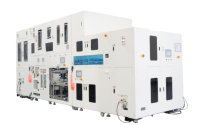
Huayu Semiconductor | Receives Repeat Orders from Leading Packaging and Testing Companies for Fully Automated Packaging Machines.
Huayu Semiconductor has secured repeat orders from leading domestic packaging and testing companies for its fully automated packaging machines signaling strong customer trust and validation of its technological superiority. These are not mere replenishments but strategic capacity expansions driven by real-world performance.
Challenges Addressed:
- Efficiency bottlenecks: Manual/semi-automatic methods struggle to keep pace with complex, high-volume chip packaging demands.
- Quality risks: Human errors (static electricity, misalignment) threaten yield and reliability of sensitive chips.
- Poor traceability: Lack of data integration hinders batch tracking and quality control in smart manufacturing environments.
- Labor costs & turnover: Rising expenses and instability impact long-term production sustainability.
Huayu’s Competitive Advantages:
Technological Self-Reliance: Full independent R&D from hardware to software; complete control over core technologies and system integration.
Flexible Design: Supports diverse packaging formats (Reel, Tray, Tube, FOUP, FOSB, waffle boxes) and chip sizes—applicable across FAB, OSAT, CP, and FT processes.
Intelligent Capabilities:
Technological Self-Reliance: Full independent R&D from hardware to software; complete control over core technologies and system integration.
Flexible Design: Supports diverse packaging formats (Reel, Tray, Tube, FOUP, FOSB, waffle boxes) and chip sizes—applicable across FAB, OSAT, CP, and FT processes.
Intelligent Capabilities:
- Full traceability via RFID/QR codes ("one chip, one file").
- Real-time visual inspection to detect defects early.
- Seamless integration with AMHS, MES, and AGV systems for data-driven decision-making.
High Reliability: Proven stable in 7x24-hour operations with low failure rates (high MTBF) and industry-leading OEE.
Customer Validation:
Customer Validation:
- One production director noted a 30%+ output increase, reduced labor needs, improved yield (lower DPPM), and near-zero customer complaints about packaging quality.
- The user-friendly data interface enhanced traceability and process transparency.
- Reliable technical support ensures rapid response during downtime critical in high-cost semiconductor operations.
Huayu’s success lies not just in automating tasks but in delivering a comprehensive, intelligent, and sustainable production solution that enhances efficiency, quality, and operational agility. This has earned it a trusted first-choice partner status for future facility expansions.
Jingyi Equipment: Successfully adapted to the most advanced 192-layer 3D NAND manufacturing line in China
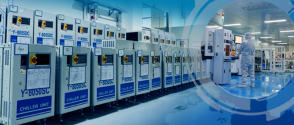
Jingyi Equipment, officially known as Beijing Jingyi Automation Equipment Technology Co., Ltd., successfully listed on the Shanghai Stock Exchange's Science and Technology Innovation Board on November 29, 2025. It is a leading enterprise in the domestic semiconductor equipment sub-sector. The company revealed to investors on its interactive platform that it has successfully adapted to the most advanced 192-layer 3D NAND memory chip manufacturing line in China. This technological breakthrough not only marks the progress of Jingyi Equipment in technology, but also provides a solid guarantee for the large-scale mass production of multi-layer stacked 3D NAND chips ranging from 64 layers to 192 layers.
Jingyi Equipment's semiconductor-specific temperature control equipment is widely used by major domestic IC manufacturing companies such as Yangtze Memory Technologies, SMIC, Huahong Group, and Intel Dalian, covering the 90nm to 14nm process nodes of logic chip manufacturing. As the number of layers in 3D NAND memory chips increases to 192 layers or even more than 200 layers, higher requirements are placed on equipment for etching, thin film deposition, and temperature control. The equipment adapted by Jingyi Equipment meets the precision and stability requirements of these advanced processes.
This breakthrough not only demonstrates the company's technological strength but also accelerates the domestic substitution process for semiconductor equipment, contributing to the improvement of the semiconductor industry chain's self-reliance and market competitiveness. According to its prospectus and recent stock price performance, Beijing Instrument Equipment Co., Ltd. (京仪设备) has achieved steady growth in the second half of the year, and market recognition of its products' compatibility with high-end 3D NAND manufacturing lines has increased.
Jingyi Equipment's semiconductor-specific temperature control equipment is widely used by major domestic IC manufacturing companies such as Yangtze Memory Technologies, SMIC, Huahong Group, and Intel Dalian, covering the 90nm to 14nm process nodes of logic chip manufacturing. As the number of layers in 3D NAND memory chips increases to 192 layers or even more than 200 layers, higher requirements are placed on equipment for etching, thin film deposition, and temperature control. The equipment adapted by Jingyi Equipment meets the precision and stability requirements of these advanced processes.
This breakthrough not only demonstrates the company's technological strength but also accelerates the domestic substitution process for semiconductor equipment, contributing to the improvement of the semiconductor industry chain's self-reliance and market competitiveness. According to its prospectus and recent stock price performance, Beijing Instrument Equipment Co., Ltd. (京仪设备) has achieved steady growth in the second half of the year, and market recognition of its products' compatibility with high-end 3D NAND manufacturing lines has increased.