Chinese semiconductor thread II

tokenanalyst

Lieutenant General
Registered Member

Peking University develops first neurodynamic chip: 478 times faster than Nvidia GPUs​


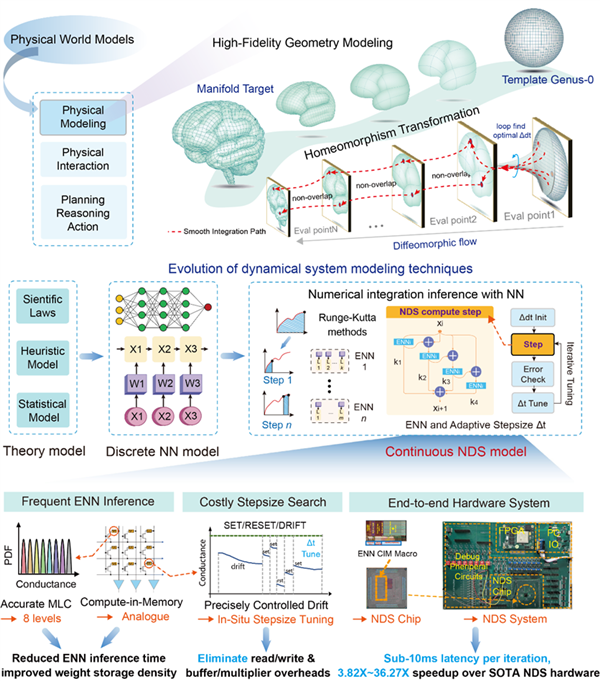
Professor Yang Yuchao's team at Peking University, in collaboration with the Chinese Academy of Sciences, has developed the world's first memristor neurodynamic chip, and the relevant research results have been published in the journal Science.

In the past, when computers processed neural-related calculations, storage and processing units were separate, and data was moved back and forth, which was slow and power-consuming. For half a century, it has been impossible to achieve high-precision real-time calculations.

This time, the team used the conductance change of the phase-change memristor itself for calculation, combining storage and operation into one, saving a lot of data transmission steps, and directly solving this long-standing bottleneck.

This chip is manufactured using a 40-nanometer process, with a core computing array area of only 0.28 square millimeters and a single operation time of only 2.12 milliseconds, officially bringing this type of computing into the millisecond level.
Peking University develops first neurodynamic chip: 478 times faster than Nvidia GPUs


Millisecond-level neurodynamic system based on phase-change memristor

The actual test data is impressive, showing a speed increase of up to 36 times compared to dedicated acceleration chips, while reducing power consumption to 1/24. In cerebral cortex reconstruction, it achieves speed improvements of 50-478 times compared to the NVIDIA A100 GPU.

Please, Log in or Register to view URLs content!
 

tokenanalyst

Lieutenant General
Registered Member

Taihe Technology: The company is focusing its efforts on electronic chemicals such as photoresist resins and high-purity solvents.​

Taihe Technology disclosed a clear business transformation roadmap on its interactive platform. The company stated that it is currently focusing on advancing electronic chemical projects such as sodium iron pyrophosphate (NFPP) sodium electrode materials, photoresist resins, and high-purity solvents. After the production of the above products stabilizes, it will then advance projects such as vinylene carbonate (VC) and fluoroethylene carbonate (FEC) electrolyte additives.

The company's statement reveals a clear "phased approach" strategy: the primary task at present is to conduct mass production verification and market introduction of the two new businesses, sodium cathode materials and electronic chemicals. Once the new production lines are running smoothly and the processes are mature, resources will be concentrated on advancing the electrolyte additive project.

Sodium iron pyrophosphate (NFPP) is one of the cathode material routes for sodium-ion batteries. Due to its cost advantage and structural stability, NFPP is considered a strong competitor in the fields of energy storage and low-end power batteries. Photoresist resins and high-purity solvents are key upstream materials for semiconductor and display panel manufacturing, belonging to the category of electronic chemicals with high technological barriers, offering broad prospects for domestic substitution.

VC (ethylene carbonate) and FEC (fluoroethylene carbonate) are core additives in lithium-ion battery electrolytes, indispensable for improving battery cycle life, high and low temperature performance, and safety. Currently, the lithium battery industry chain has a consistently strong demand for high-performance additives, providing the company with an important growth direction for the future.

Please, Log in or Register to view URLs content!
 

tokenanalyst

Lieutenant General
Registered Member

Huazhuo Precision Technology has diversified its wafer bonding equipment layout, building a matrix of domestically produced HBM and advanced packaging equipment.​


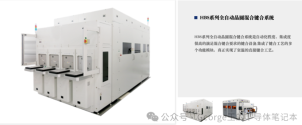
Huazhuo Precision has successfully expanded its product matrix to cover multiple technical directions in wafer bonding, specifically targeting the growing markets for HBM (High-Bandwidth Memory), advanced packaging, and 3D IC integration. The company aims to reduce reliance on foreign equipment by establishing a robust lineup of domestically produced solutions.

The company leverages its heritage from Tsinghua University and over 20 years of experience in ultra-precision motion control (achieving positioning accuracy of ±0.5 µm and repeatability of ±0.1 µm) to support the following product series:​
  • Wafer-to-Wafer (W2W) Bonding:
    • UP-UMA® HB300: For hybrid bonding in HBM manufacturing (atomic-level fusion).​
    • UP-UMA® FB300: For wafer-level fused bonding, enabling 3D IC vertical stacking and chiplet integration.​
  • Die-to-Wafer (D2W) Bonding:
    • UP-D2W-HB: Specifically designed for HBM manufacturing and chiplet heterogeneous integration in die-to-wafer scenarios.​
  • Universal Platforms & Specialized Applications:
    • WB Series: A general-purpose platform supporting organic adhesive, metal eutectic, and diffusion bonding with high pressure/temperature/vacuum options (including self-adjusting pressure plates).​
    • Temporary Bonding: Fully automated equipment for 3D ICs, MEMS, LEDs, etc., capable of pressures up to 100KN and temperatures up to 550°C on 8-inch and 12-inch wafers.​
    • Heterogeneous Bonding: Delivered in August 2024 for POI substrates used in 5G SAW filters, utilizing low-temperature plasma activation to solve material mismatch issues.​
1783189348079.png

The company experienced a significant delivery surge concentrated in the first half of 2026. In February 4, 2026: Delivered UP-D2W-HB core-particle bonding equipment to a customer in Wuhan, marking its entry into industrial application for D2W scenarios. In June 10, 2026: Announced the successful delivery of independently developed W2W fusion bonding equipment (UP-UMA® FB300). This equipment meets strict requirements: alignment accuracy within 200 nanometers and process temperatures between 200°C–400°C.

Huazhuo Precision's move represents a critical step in China's semiconductor self-sufficiency efforts. By mastering the alignment and process control required for HBM and 3D stacking areas where foreign vendors (like EV Group) often hold dominance—the company is positioning itself as a key alternative supplier for advanced packaging supply chains.

Please, Log in or Register to view URLs content!
 
Top