Chinese semiconductor thread II

tokenanalyst

Lieutenant General
Registered Member

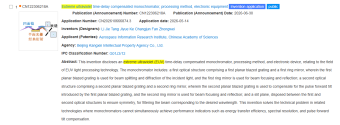
Pioneer Precision Technology: The R&D project for precision components for lithography machines has completed process development.​


On July 1, Pioneer Precision Technology disclosed in an investor relations event that the company initiated an internal R&D project for "Development of Precision Components for Semiconductor Lithography Equipment" in 2025. Currently, process development is complete, and prototype size verification is underway. The company also stated that it will incentivize key management and R&D personnel through employee stock ownership and equity incentives at an appropriate time, thereby deeply aligning the interests of the core team with those of the company and its shareholders.

1783004792652.png

Please, Log in or Register to view URLs content!
 

tokenanalyst

Lieutenant General
Registered Member

ZTE Microelectronics Establishes Nanjing Semiconductor Subsidiary with 100 Million RMB Investment​


Nanjing Kris Semiconductor Technology Co., Ltd. was registered on June 29, 2026, with He Zhiqiang as the legal representative. The company is wholly owned by Shenzhen ZTE Microelectronics (a subsidiary of ZTE Corp) and carries a registered capital of 100 million RMB. The subsidiary aims to develop core chips for future technologies, specifically:​
  • 5G-A and 6G evolution chips.​
  • Computing power DPUs (specifically the Dinghai series).​
  • Automotive-grade MCUs (already in batch production for domestic automakers)​
By setting up a regional design hub in Nanjing, ZTE intends to shorten the R&D-to-production cycle by better connecting with upstream manufacturing, packaging, and testing resources. This move supports the industry's trend toward deep network-computing integration and accelerates product iteration.

ZTE Microelectronics, founded in 1996, is one of China's earliest IC design firms with over 8,000 patent applications. It has already achieved full self-developed mass production for its 5G base station core and bearer network chips.

Please, Log in or Register to view URLs content!
 

tokenanalyst

Lieutenant General
Registered Member

Illumination coherence-controlled power-spectral-density of roughness-induced scattering determines the detectability of phase defects in EUV lithography​

Abstract​

Phase-defect inspection is crucial in EUV (Extreme ultraviolet) lithography for achieving high semiconductor-chip yields. While at-wavelength inspection can detect phase defects, inspecting entire masks in a practical timeframe was once a showstopper. This challenge was solved by using a pixel size of 500 nanometers or larger to detect defects tens of nanometers in size. The focus then shifted to reducing the background signal, Rpix, from large pixels. Rpix is greatly reduced in the dark-field configuration and controlling the angular distribution of roughness-induced scattering is essential for defect detection. This paper reports a detailed analysis of the power spectral density (PSD) of surface-roughness-induced scattering using a developed rigorous numerical code. The study concludes that coherence strongly affects PSD, thereby controlling the detectability of phase defects and that the illumination coherence length  and the blocking inner numerical aperture NAd are the decisive parameters in the phase-defect inspection.

Please, Log in or Register to view URLs content!
 

tokenanalyst

Lieutenant General
Registered Member

Thermally Stable Ultra-Thin Niobium Silicide Contacts for Advanced DRAM Peripheral Transistors: Phase Transformation and Interfacial Modulation​

Abstract​

Reducing the specific contact resistivity (ρc) under high thermal budgets is a critical challenge for advanced-node DRAM peripheral transistors. In this work, the high-temperature silicidation behavior of ultra-thin niobium (Nb) films on heavily doped n-type Si is systematically investigated. By modulating PVD pressure, the electrical performance of ultra-thin Nb films on heavily doped n-type silicon is effectively optimized. By tuning the sputtering pressure from 3 to 20 mTorr, the initial film density and nanoscale surface roughness were modulated to guide the silicidation pathway. Experimental results demonstrate that the 3 mTorr Nb film, characterized by a relatively low initial density and a protrusion-rich surface morphology, provides abundant heterogeneous nucleation sites and efficient diffusion pathways. These features promote the formation of the low-resistance hexagonal NbSi2 phase and help maintain a continuous silicide/Si interface after prolonged annealing at 750 ℃ for 30 min. Using refined transmission-line model (RTLM) structures, a low ρc of 6.8×10⁻⁹ Ω·cm2 was achieved. In contrast, higher-density films (e.g., 5 mTorr) favor the formation of resistive metal-rich Nb3Si phases and suffer from severe agglomeration driven by high interfacial energy. Furthermore, a representative 14 nm FinFET TCAD simulation suggests that the optimized 3 mTorr Nb contact can improve Ion by approximately 18% compared with the high-resistance 5 mTorr Nb contact condition. This study provides a thermally stable solution for advanced DRAM peripheral transistors.

Please, Log in or Register to view URLs content!
 

tphuang

General
Staff member
Super Moderator
VIP Professional
Registered Member
story here on 领开半导体 and its HBF+ product which it thinks will be used for inference framework in the future. it uses a 3D stacking of NOR Flash. Compared to NAND flash, NOR flash has lower density per die, so higher cost per bit. But it can last more program/erase cycles.

Please, Log in or Register to view URLs content!
 

tokenanalyst

Lieutenant General
Registered Member

Shengmei Shanghai ECP Electroplating Equipment Achieve large-scale batch delivery of 2000 chambers

ACM Research Semiconductor Equipment (Shanghai) Co., Ltd. (ACM Research Shanghai, 688082) announced today that the company has reached an important milestone - the ACM Research Shanghai ECP electroplating equipment with 2000 chambers has been officially shipped and delivered in batches .

1783030977317.png

Since the first Ultra ECP application equipment entered advanced packaging customer verification in 2017, and successfully entered the front-end IC manufacturing market in 2019, Shengmei Shanghai's electroplating business has steadily accelerated, successively breaking through the 500-cavity delivery scale in 2022 and the 1500-cavity delivery scale in 2025, and officially entering a new stage of 2000-cavity mass production and delivery in June 2026. From technology verification to large-scale commercialization, every piece of equipment and every batch delivery embodies the continuous efforts and collaborative dedication of the R&D, manufacturing, quality, procurement, marketing, and after-sales teams.

For a long time, the world's high-end semiconductor electroplating equipment and core processes have been monopolized by overseas companies, and China's advanced electroplating processes are highly dependent on imports. Faced with stringent technical barriers, ACM Shanghai has adhered to independent innovation, relying on the support of major national projects, and has successively overcome industry challenges such as pattern super-preservation filling, high-precision film thickness uniformity control, and cavity contamination control. With its world-first multi-anode electroplating core technology , it has achieved a technological breakthrough and built a completely independent and controllable core technology system.

ACM Shanghai boasts a comprehensive integrated circuit electroplating product matrix, fully covering four major application scenarios: front-end copper interconnect, advanced packaging, compound semiconductors, and panel-level advanced packaging, adapting to the full process requirements of 6/8/12-inch wafers and large-size panels.

With its superior technology and stable mass production capabilities, the company's electroplating business has demonstrated significant market advantages: ranking second globally in market share by 2025, and maintaining its leading position in the domestic market for 12-inch copper interconnect electroplating equipment; its products have been awarded the "Manufacturing Single Champion" title by the Ministry of Industry and Information Technology, and its panel-level electroplating equipment won the international 3D InCites Technology Innovation Award, with core performance indicators surpassing those of overseas competitors. The large-scale delivery of 2000 cells fully demonstrates the superior performance, reliable mass production capabilities, and high industry recognition of the company's products.​

Please, Log in or Register to view URLs content!
 

tokenanalyst

Lieutenant General
Registered Member

BOE and BOE-HC SemiTek accelerate Micro LED ecosystem development​


BOE Technology Group and its subsidiary HC SemiTek recently held joint investor events in Shanghai, revealing significant advancements in their Micro LED and optical interconnect businesses. BOE announced the formation of a specialized project team to develop key technologies for Micro LED optical interconnect systems and glass substrate Co-Packaged Optics (CPO). Leveraging expertise in glass substrate processing and Through Glass Via (TGV) technology, BOE completed the development of large-size, high-layer glass substrate samples in 2025. The company views glass substrates as the next-generation foundation for CPO integration due to their scalability, low thermal deformation, and signal loss advantages, and has partnered with Corning to enhance manufacturing capabilities and yield in this emerging AI data center market.

In the display sector, BOE Huacan reported stable mass production of MPD products in 2025 with continued market growth in 2026, while COW products are maturing for adoption in watch and large-screen industries. Significant progress was highlighted in AR near-eye displays, where monochrome micro-screens have achieved small-batch delivery and optical engine mass production is underway. The company aims to debut a full-color Micro LED AR demo by December 2026 to further consolidate its near-eye display capabilities. Additionally, ADB products for automotive applications have begun small-batch deliveries, with broader customer adoption expected throughout the year.

Beyond traditional displays, BOE Huacan is expanding into non-display growth areas, particularly in communication and power electronics. The company has already delivered Micro LED communication application chips to overseas customers and plans to expand its offerings to include high-speed epitaxy, chips, and light-emitting modules for communication systems. This initiative is supported by a strategic partnership with Shanghai Xinxiang Microelectronics launched earlier this year to develop Micro LED optical modules. Furthermore, BOE Huacan has delivered its second-generation 700V GaN power devices and plans to begin mass production of 100V low-voltage products next year, signaling a diversified push into advanced semiconductor applications.​

Please, Log in or Register to view URLs content!
 

tokenanalyst

Lieutenant General
Registered Member

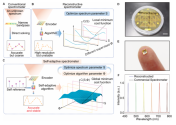
Fudan University develops an adaptive miniature spectrometer compatible with CMOS technology​


The research team proposed a novel miniaturized reconstruction spectrometer design that combines the advantages of traditional spectrometers and computational reconstruction spectrometers. Through an integrated self-referenced narrowband filter channel, artificial intelligence (AI) algorithms can simultaneously search for spectra and algorithm parameters in a higher-dimensional parameter space ). Furthermore, this spectrometer can be manufactured at the wafer level using mature integrated circuit technology (Figure 1D) and has a millimeter-scale size, sufficient to meet most miniaturized spectral testing needs (Figure 1E). The spectrometer exhibits accurate spectral reconstruction capabilities across the entire visible light spectrum (400-800 nm) (Figure 1F). This miniaturized spectrometer achieves a resolution of approximately 2.5 nm, an average wavelength deviation of approximately 0.27 nm, a resolution of up to 5806, and a resolution-to-bandwidth ratio of approximately 0.46%, performance approaching that of commercial fiber optic spectrometers, but with significantly reduced cost and size.

The research team further demonstrated the performance of this adaptive miniature spectrometer in common laboratory applications such as transmission, absorption, and photoluminescence spectroscopy measurements when combined with a microfluidic and mechanical scanning system. The results were nearly consistent with those of commercial fiber optic spectrometers. Furthermore, the team showcased the potential applications of the adaptive miniature spectrometer in hyperspectral imaging, laying the foundation for further exploring its CMOS process compatibility and positioning it as a single pixel for hyperspectral cameras.​

1783089012849.png
Please, Log in or Register to view URLs content!
 
Top