Chinese semiconductor thread II

gotodistance

Junior Member
Registered Member
AI bubbles are breaking down existing supply chains, raising prices not only for memory chips but also for MCUs and power semiconductors.

Block AI chip investment from being circulated -> Dedicating existing chip supply for AI -> Reducing existing supply chain semiconductor chip supply -> Demand other than AI remains unchanged, but prices soar due to lack of supply (memory chip)

HBM demand from AI chips accounts for only 10% of the total memory.
(Google: Accelerators for Generative AI (GPU, etc.) account for less than 0.2% of total semiconductor shipments)
(10%) is the share of high-bandwidth memory (HBM) in the overall DRAM market

However, this loach is destroying all semiconductor supply chains, causing prices to skyrocket.


Therefore, AI bubbles are fraudulent such as circular trading, artificial bias in supply, and price unity, and memory semiconductor price manipulation.

What will happen if the AI bubble collapses?
 

tokenanalyst

Lieutenant General
Registered Member

Surface error map interpolation based on generative adversarial networks for ultra-precision optical fabrication​

Abstract​

High-precision complex curved optical components are crucial in fields such as laser fusion and large-scale telescopes, where their surface error quality performance has a decisive impact. Computer Numerical Control (CNC) sub-aperture processing technology relies on high-precision measurement data to guide iterative correction. However, existing measurement methods like interferometers are susceptible to interference from factors such as background diffraction rings and insufficient dynamic range, leading to data noise and gaps. Traditional interpolation methods (e.g., Gaussian extrapolation[1], minimum curvature method[5]) struggle to handle complex surface error structures and easily induce "blind polishing" or "incorrect polishing" errors. To address this problem, this study proposes a Surface Error Map Interpolation method based on Generative Adversarial Networks (GAN). This approach adaptively learns complex surface error features through a deep learning framework, generating physically plausible and spatially continuous missing data. It provides a new intelligent solution for optical ultra-precision manufacturing, promising to overcome current limitations in fabrication accuracy and efficiency. The research explores the application potential of machine learning in optical manufacturing, opening new avenues for processing high-precision components.​

Please, Log in or Register to view URLs content!
 

tokenanalyst

Lieutenant General
Registered Member

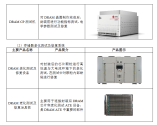
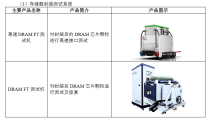
Jingzhida plans to raise 2.959 billion yuan through private placement to further invest in high-end semiconductor testing equipment and prepare for emerging sectors such as HBM.​


On February 28, 2024, Jingzhida announced plans to conduct a private placement offering, raising no more than 2.959 billion yuan through issuing shares to specific targets. This funding initiative marks a significant expansion move for the domestic semiconductor testing equipment manufacturer as it seeks to accelerate its entry into the high-end market segment. The capital raised will be primarily allocated toward research and development plus industrialization of semiconductor memory testing equipment, development of high-end chip testing equipment with cutting-edge technologies, and supplementation of working capital.

Jingzhida operates as an innovative company specializing in semiconductor testing and inspection equipment along with system solutions, with its core mission centered on achieving independent control over key equipment technologies. The company has been deeply engaged in the semiconductor memory testing field for many years, maintaining a comprehensive product line that covers critical aspects ranging from wafer testing and aging repair to high-speed FT testing and MEMS probe cards. It stands out as one of the few domestic companies capable of providing testing equipment across the entire industry chain. Through its deep technological expertise, Jingzhida has successfully replaced foreign suppliers on certain production lines, establishing itself as a major supplier of related products while taking concrete steps toward achieving independent control over key production processes.
1772302697276.png1772302726549.png
The semiconductor industry is currently undergoing profound changes driven by explosive growth in emerging fields such as artificial intelligence and high-bandwidth memory (HBM) chips. These developments are propelling rapid advancement in advanced packaging technologies including 2.5D/3D packaging and chiplets. More importantly, HBM—a critical component of AI and HPC chips—has undergone fundamental changes in testing logic. Due to the high number of stacking layers and deep integration with GPUs, the testing model has shifted from traditional "sampling testing" to "full-depth testing," meaning every chip now requires comprehensive testing. This shift significantly extends testing time and directly increases demand for testing equipment. Jingzhida's large-scale fundraising is precisely designed to seize this historic window of opportunity by enhancing industrialization capabilities of high-end semiconductor testing equipment, thereby strengthening its comprehensive service capabilities and consolidating its competitiveness in the semiconductor testing equipment market.

Please, Log in or Register to view URLs content!
 

tinrobert

Junior Member
Registered Member

Huahai Qingke ranks among the top 30 equipment manufacturers globally​


According to a recent report by Nikkei Asia, citing data from the Japanese research firm Global Net, Chinese companies will historically occupy five spots in the 2025 ranking of the world's top 30 chip equipment manufacturers: Naura Technology Group jumped from eighth to fifth globally in 2022; AMEC and Shanghai Microelectronics successfully entered the top 20; and ACM Research and Huahai Technology entered the top 30. Data from the Japanese research firm Techno Systems Research shows that China's domestic manufacturing rate for semiconductor equipment has reached 20%-30%, more than doubling from 10% three years ago.

Huahai Qingke is a high-end semiconductor equipment manufacturer with core independent intellectual property rights. The company's main products include CMP equipment, thinning equipment, dicing equipment, wet processing equipment, ion implantation equipment, edge polishing equipment, wafer regeneration, key consumables, and maintenance services, creating a platform-based strategic layout of "equipment + services." The company's main products and services are widely used in manufacturing processes such as integrated circuits, advanced packaging, large silicon wafers, third-generation semiconductors, MEMS, and Micro LED. In 2024, the company achieved a 35.82% year-on-year increase in operating revenue to RMB 3.406 billion, a 41.40% year-on-year increase in net profit attributable to the parent company to RMB 1.023 billion, and a 40.79% year-on-year increase in net profit attributable to the parent company excluding non-recurring items to RMB 856 million.

The global CMP equipment market was once highly monopolized, with Applied Materials (USA) and Ebara (Japan) dominating the majority of the market share. Huahai Qingke, a domestic 12-inch CMP equipment manufacturer with independent intellectual property rights, has steadily increased its market share in the domestic CMP equipment field thanks to its technological and product strength. It has essentially covered all 12-inch advanced integrated circuit production lines in China, placing it in a leading position domestically.

Furthermore, Huahai Qingke's CMP equipment can synergize with the company's thinning equipment, dicing equipment, and edge polishing equipment, providing complete cutting, grinding, and polishing solutions for advanced packaging and chip stacking. The application scenarios for these products will continue to expand, further opening up market growth potential. Simultaneously, as the company's CMP equipment inventory continues to rise, the synergistic effects of its "equipment + service" platform strategy will be significantly released, and the volume of key consumables and maintenance services will also increase rapidly, contributing a sustained and stable profit growth point for the company.

In December 2025, Huahai Qingke issued an announcement stating that its chemical mechanical polishing (CMP) equipment had been shipped to a cumulative total of over 800 units, covering multiple main models and the latest models of the company, including Universal-H300 and Universal-S300. It not only fully covers mainstream product lines such as logic, 3D NAND memory, and DRAM memory, but has also successfully entered the supply chains of leading customers in the fields of large silicon wafers, third-generation semiconductors, CIS, MEMS, MicroLED, and advanced packaging, achieving full coverage and mass application of mainstream integrated circuit manufacturing production lines in China.
View attachment 170335

Please, Log in or Register to view URLs content!
I calculated the top 10 companies, in my annual analysis showing ASML continued to be #1 over AMAT despite AMAT changing its business structure to gain share, like it id in 2019 when it took $331 million from 2018 to 2019. You can read it here:
Please, Log in or Register to view URLs content!
 

Alb

Junior Member
Registered Member

Huawei is promoting its Atlas 950 SuperPoD in MWC 2026. So, just how is China still exporting AI chips if it is so short of them according to the blob?

Was China doing this in 2024 or 2025?
According to Nikkei the Ascend 950 is built on SMIC n+3.

"The latest Ascend chips will be built using Semiconductor Manufacturing International Corp.'s latest process tech known as N+3, an enhanced version of its domestically built cutting-edge chip production, sources told Nikkei Asia."

Please, Log in or Register to view URLs content!
 

huemens

Junior Member
Registered Member
According to Nikkei the Ascend 950 is built on SMIC n+3.

"The latest Ascend chips will be built using Semiconductor Manufacturing International Corp.'s latest process tech known as N+3, an enhanced version of its domestically built cutting-edge chip production, sources told Nikkei Asia."

Please, Log in or Register to view URLs content!

Several months ago there were alleged pictures of Ascend 950 with physical dimensions stated as two chiplets of half-reticle size each. If that is accurate then the performance-per-chip-area works out to be the same as that of Ascend 910C (7nm). So 950 is more likely to be N+2 (7nm).
 

tokenanalyst

Lieutenant General
Registered Member
Interesting video as it specifically states that SMEE 28nm DUVi can go down to 11nm with multipatterning and nata ArF can cover 14nm and 7nm. Its hard to randomly made up some specs
Japan lithography industry is literally over and that is a understatement, Nikon lost badly the EUV race against ASML and barely is selling DUV lithography machines, their last hope was trying to conquer the Chinese market with advanced immersion machines when the relations between China and the US started to become sour back in 2019, with Japanese salesmen going to Chinese managers to trash ASML and US tools, but that was trashed when the Japan government matched Holland export controls, forced by the US. Even then ASML is so deeply integrated in China semiconductor industry that most fab managers usually default to ASML.

Yeah, Nikon advanced lithography machines sales are in the single digits now. Canon is stuck in KrF machines and hoping that NIL become relevant. I wont be surprised if SMEE is secretly outselling them in DUV and DUVi machines.

Is difficult situation for fabs outside China because with ASML becoming the default monopoly prices are just going to keep rising.
 
Top