Chinese semiconductor thread II

tokenanalyst

Lieutenant General
Registered Member

Breakthrough! Qinghe Epistar, in collaboration with Xi'an University of Electronic Science and Technology, has successfully achieved bonding and transfer of diamond single-crystal thin films.​


Qinghe Epistar, in collaboration with Xi'an University of Electronic Science and Technology, has achieved a landmark breakthrough in diamond semiconductor technology by successfully developing a high-quality diamond thin film transfer process based on room-temperature bonding and H-Cut technology. This advancement overcomes longstanding barriers to industrial adoption, enabling the integration of ultra-high-performance diamond films into conventional semiconductor manufacturing workflows. The innovation leverages precise ion implantation stripping combined with low-temperature wafer bonding, allowing for efficient peeling and transfer of single-crystal diamond films from donor substrates to cost-effective, larger acceptor materials such as silicon or gallium nitride paving the way for scalable production.

1770735551776.png

The core challenge in diamond semiconductor integration lies in five critical pain points: excessive surface roughness (typically ~1.0 nm), high-temperature stripping requirements (>1300°C), sensitivity to implantation parameters, weak bonding strength due to diamond’s chemical inertness, and post-transfer surface damage requiring complex cleanup. Qinghe Epistar's joint team addressed these issues through proprietary technologies. By employing a superatom beam polishing system, they reduced diamond surface roughness to an ultra-smooth 0.2 nm, five times better than conventional methods ensuring atomically clean interfaces ideal for high-strength bonding. Meanwhile, their room-temperature bonding equipment enables robust hetero-bonding between dissimilar materials like diamond and GaN without thermal stress or warping.
1770735664397.png


Key technical milestones include a transfer success rate exceeding 90% over large areas, effective stripping temperatures reduced below 1000°C (significantly improving compatibility with standard semiconductor processes), preservation of the transferred film’s single-crystal quality and intrinsic properties, and reusability of donor substrates. These improvements deliver substantial cost advantages while maintaining performance integrity. The breakthrough is underpinned by two independently developed core devices: a superatom beam polishing system capable of sub-0.5 nm surface finishing across 2–12 inch wafers, and a room-temperature bonding platform that creates defect-free, high-strength interfaces without intermediate layers critical for superior thermal and electrical performance.

This innovation unlocks transformative potential across industries, enabling next-generation devices in high-power electronics, advanced thermal management, X-ray detection, and quantum sensing. It reduces costs via larger substrate utilization and material recycling, simplifies integration into existing fabrication lines, and empowers manufacturers to achieve unprecedented device performance. As a strategic step toward realizing the full promise of diamond semiconductors, Qinghe Epistar’s achievement marks a pivotal advancement in China’s semiconductor innovation ecosystem accelerating the transition from lab-scale research to mass production and solidifying its role as a leader in wide-bandgap material integration for future technologies.

Please, Log in or Register to view URLs content!
 

tphuang

General
Staff member
Super Moderator
VIP Professional
Registered Member
Please, Log in or Register to view URLs content!

Please, Log in or Register to view URLs content!

Axera has IPO'd on HKSE with symbol 0600. It is also showcasing new flagship ADAS chip M97. It's smart auto division had gross profit margin of 49.5% thru first 3 quarters.

Axera estimates to have delivered 1m smart car chips by end of last year. Its M55H chip has seen 100k deliveries. M57 is another one getting orders.

Overall, it has 165 million deliveries in edge AI inference market. Mostly to Meituan, Tencent and such. It had 24% market share in vision edge AI inference market in 2024.

It cooperates with 7 fabs and 26 packaging factories. Top 5 customers accounted for 75% of its revenue in 2025.
 

sunnymaxi

Colonel
Registered Member
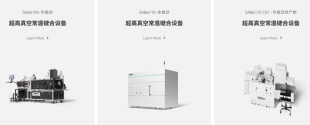
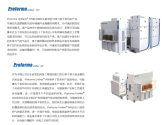
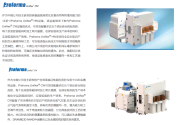
Looks like AMEC has secretly completed and launched their Performa deposition tools for Titanium Aluminide, Tantalum Nitride, TiN, and multiple Tungsten modes (forming,infill, 3D filling, so on). All compounds necessary for next gen logic devices, DRAM and 3DNAND.

View attachment 169459View attachment 169460
View attachment 169461
Please, Log in or Register to view URLs content!
literally every single Chinese SME firm currently is in expansion mode.

Sicarrier's largest and most advanced Shanghai production plant coming online in next few months. they will only produce cutting edge tools there.
 

tokenanalyst

Lieutenant General
Registered Member

At CSEAC, the composed presence of Chinese equipment manufacturers always helps alleviate the anxiety of Chinese people facing external blockades, supply disruptions, and suppression .​


AMEC's 5nm etching equipment has passed certification by major domestic memory chip manufacturers; its HBM- specific equipment has been delivered to SK Hynix's Wuxi plant. By 2025 , AMEC's 3nm etching machines will not only be adopted by TSMC but also secure orders from Samsung. More importantly, the localization rate of AMEC's etching equipment components has increased from less than 30% in the early stages to 80% , and is expected to achieve 100% self-sufficiency in the future. Since the beginning of this year , AMEC has obtained 149 new patent authorizations , an increase of 49% compared to the same period last year . Currently, after its rapid expansion, AMEC has invested in about 30 companies.

ACM Shanghai has established a platform-based semiconductor process equipment layout, with technological capabilities comparable to leading US companies. In the field of integrated circuit wet cleaning equipment, it has achieved comprehensive coverage of over 95% of cleaning processes, becoming the semiconductor equipment company with the most complete cleaning product line globally. More than 100 SAPS machines have been deployed on mass production lines of multiple clients, helping to improve product yield by 5%-10% . In the field of horizontal electroplating, ACM Shanghai is one of the world's three largest manufacturers of mass-produced electroplating equipment, the other two being from the United States. As of June this year, the cumulative shipment of front-end and back-end electroplating machines has reached 1,500 cavities, covering front-end, mid-end, back-end, and 3D processes. With advanced packaging shifting towards large-size panel-level technology, ACM Shanghai's electroplating equipment has innovatively overcome the challenges of the FOPLP process and won the US 3D InCites " Technology Enablement Award ".

Topwin Technology's PECVD equipment, as the company's core product, has achieved full coverage of PECVD dielectric thin film materials. Its 14nm SACVD equipment has successfully replaced Application Materials at SMIC, achieving a breakthrough for domestically produced material equipment from "having" to "excellent." The company's thin film equipment product matrix includes PECVD , ALD , SACVD , HDPCVD , and Flowable CVD series.

Yitang Semiconductor has established three core equipment product lines : etching, thin film deposition, and rapid thermal processing. It is an integrated circuit equipment company capable of mass-producing single-wafer rapid thermal processing equipment . In the dry etching field, it ranks among the top ten globally in market share. Its core technologies related to plasma sources and wafer surface treatment have also sparked a legal dispute with Applied Materials regarding the illegal acquisition and use of these technologies. Yitang has provided evidence demonstrating that it possesses leading original technological capabilities in this field and owns related trade secrets.

In terms of materials , Shanghai Silicon Industry's 300mm silicon wafers have reached nearly 40 % usage among leading domestic wafer manufacturers , with a yield rate exceeding 90% , and a matching rate of over 75% with Shanghai Microelectronics' lithography machines . Nanda Optoelectronics' photoresist has secured 40% of orders from top domestic production lines , and its capacity is expected to expand to 650,000 wafers / month by 2025 , meeting 22% of domestic demand.

There are countless domestic equipment and material suppliers to mention. For example, the global high-end wafer flatness measurement market, long dominated by American and Japanese manufacturers, has been broken by the first wafer flatness measurement equipment independently developed by Zhongke Feice . This equipment has already been officially shipped to HBM (High Bandwidth Memory) clients . In addition, JCET and Tongfu Microelectronics are also installing domestically produced high-speed flip chip placement machines in large quantities on their HBM packaging production lines . However, they are usually too low-key, doing more and saying less, leading the industry to mistakenly believe that domestic forces have little to show for themselves and have made no achievements, summarizing them all as "backward" domestic manufacturers. Data shows that the localization rate of equipment in China's top wafer fabs has reached an average of about 20% , and the localization rate of memory production lines has even reached 45% .

China has always been an important market for major international semiconductor equipment manufacturers . However, due to the rapid growth of domestically produced equipment, the seller's market in which Chinese fabs competed to purchase foreign equipment has essentially come to an end. Screen President Toshio Hiroe commented on the Chinese market, saying, "Chinese domestic suppliers are indeed rising, currently mainly concentrated in the memory and power semiconductor fields," and "the technological gap will gradually narrow in the future." In an international industrial environment characterized by high walls and decoupling, nearly 200 overseas companies and visitors from 22 countries and regions around the world competed to participate in and visit CSEAC , an increase of over 40% year-on-year . This fully confirms the wise saying , " The more Chinese it is , the more international it becomes .

While achieving technological breakthroughs, emerging domestic players have also moved from individual efforts to a virtuous cycle of complementary strengths and win-win cooperation. Suzhou Vigon's acquisition of a 51% stake in Changzhou Weipu , focusing on the domestic lithography machine sector, was initially seen as a complementary and mutually beneficial integration, yet some have interpreted it as a forced sale due to unsustainable circumstances. Changzhou Weipu's photomask defect detection equipment boasts independently developed core algorithms with proprietary intellectual property rights, and its core components are fully domestically produced and mass-produced, entering the mass production lines of leading domestic and international wafer foundries and photomask manufacturers. Suzhou Vigon possesses the optical systems and precision motion control platform technology required for laser direct-write lithography machines, but is weaker in core algorithms and software systems. Isn't this kind of integrated , mutually beneficial, and complementary approach appealing?

Currently , the entire mature semiconductor process supply chain in China is operating smoothly, and advanced processes are constantly making breakthroughs . It's difficult to find a reason . Faced with blockades, we cannot be omnipotent . Although Chinese-made equipment is currently artificially excluded from the international supply chain and even deprived of the right to participate in international exhibitions, historical experience shows that China can overcome any suppression ! We welcome more international semiconductor companies and professionals to gather in Wuxi next June to engage in dialogue and exchange with the leading players in China's semiconductor industry chain. The expanded CSEAC 2026 , spanning tens of thousands of square meters, will once again showcase our strengths—strengthening Chinese chips and embracing the world of chips !

Please, Log in or Register to view URLs content!
 

tokenanalyst

Lieutenant General
Registered Member
Stooges at the clown show of the "See See Pee" Committee are pressuring the "Cuban" secretary of state Marco Rubio to implement country wide export controls on SME, software, materials and components on China.
1770762504415.png

They will succeed convincing Trump? No and yes. as I predicted, Trump is more pro-business than previous administrations, the dude likes money, gold and shiny things, also his mind is sharper than Biden's, he is also surrounded by a lot of pro-money guys. But Rubio is one of the national security mega stooges and close to the senate republicans, so his is under huge bipartisan pressure to do something.

Do they will get outside support?
Difficult to know. The Europeans are getting closer to China to diversify their economic risk, so I don't think they have a lot appetite to restrict more trade with China.
The wild card now is Japan and the current administration, but I think there is a reason why Japan hasn't use the photoresist card...yet, and I think is because that they are at risk losing their monopoly inside China, given that, as I posted, multiple companies are accelerating their resist development. I think there is pressure from Japan industrialists is not to accelerate that.

Even If. Does matter? Probably not. I think China semiconductor supply chain has reached critical mass. Like AMEC, the big equipment makers are supplying a big percentage of their components locally. Local component makers are growing double digits or faster. Material companies are also growing fast. Even domestic EDA companies establishing long term partnerships with domestic design companies.
More export controls or even the threat of export controls will only accelerate the trend and diminish the little remain good faith that Chinese companies have in US produced semiconductor goods and services.

------
Is also fair to remember that US export control, as currently exist, are not normal commercial export controls where you summit an application and in a month you receive a import license. Is a "ban" tool, a blacklist, that once a company is in that list they have a presumption of denial by default and getting licenses are extremely difficult and cumbersome compared to other countries export controls. That is one the reason why the US want other nations to "harmonize" their "export controls" laws to theirs.
 
Last edited:

tokenanalyst

Lieutenant General
Registered Member

Measurement of coefficient of thermal expansion in fused quartz using Fizeau interference technology​


Abstract​

The rapid advancement in the EUV field demands the thermal stability of optical systems. Because EUV performance is highly sensitive, materials must exhibit an exceptionally low Coefficient of Thermal Expansion (CTE). However, the precision of traditional CTE measurement methods is no longer sufficient for current ultra-low expansion materials. This paper proposes an improved Fizeau interference CTE measurement method and establishes an integrated CTE detection system. First, we created a combined mirror structure comprising a test mirror and a reference mirror. We used cryogenic chemical bonding technology to bond the combined mirror directly, ensuring sample stability. Second, we optimized the phase compensation method. This eliminates the phase ambiguity caused by the measurement mirror length. Third, we designed a vacuum cavity structure with phase-shifting capabilities to significantly reduce environmental interference. In our experiments, we guaranteed a stable environment: temperature fluctuations in the vacuum chamber were ≤ 0.05°C, and pressure was around 100 Pa. Using this setup, we measured the CTE of fused quartz between 15°C and 63°C. Single-temperature phase testing showed a fluctuation ≤ 0.75 nm, proving the system’s exceptional stability. To verify the system’s reliability, we compared our results against the push-rod. The results show our method achieves a maximum measurement error of 3.8% and an equipment uncertainty of 2.4 × 10-9. These experiments fully demonstrate the high precision and reliability of our proposed method. The technique provides a new, robust pathway for the precise detection of CTE in ultra-low expansion materials.​

Please, Log in or Register to view URLs content!
 

latenlazy

Brigadier

Measurement of coefficient of thermal expansion in fused quartz using Fizeau interference technology​


Abstract​

The rapid advancement in the EUV field demands the thermal stability of optical systems. Because EUV performance is highly sensitive, materials must exhibit an exceptionally low Coefficient of Thermal Expansion (CTE). However, the precision of traditional CTE measurement methods is no longer sufficient for current ultra-low expansion materials. This paper proposes an improved Fizeau interference CTE measurement method and establishes an integrated CTE detection system. First, we created a combined mirror structure comprising a test mirror and a reference mirror. We used cryogenic chemical bonding technology to bond the combined mirror directly, ensuring sample stability. Second, we optimized the phase compensation method. This eliminates the phase ambiguity caused by the measurement mirror length. Third, we designed a vacuum cavity structure with phase-shifting capabilities to significantly reduce environmental interference. In our experiments, we guaranteed a stable environment: temperature fluctuations in the vacuum chamber were ≤ 0.05°C, and pressure was around 100 Pa. Using this setup, we measured the CTE of fused quartz between 15°C and 63°C. Single-temperature phase testing showed a fluctuation ≤ 0.75 nm, proving the system’s exceptional stability. To verify the system’s reliability, we compared our results against the push-rod. The results show our method achieves a maximum measurement error of 3.8% and an equipment uncertainty of 2.4 × 10-9. These experiments fully demonstrate the high precision and reliability of our proposed method. The technique provides a new, robust pathway for the precise detection of CTE in ultra-low expansion materials.​

Please, Log in or Register to view URLs content!
Damn so much good metrological methods are going to come out of this semiconductor equipment push.
 

tokenanalyst

Lieutenant General
Registered Member

The main structure of the Suzhou Kaixin Semiconductor Materials project was successfully capped.​


On February 11, 2026, the main structure of the Suzhou Kaixin Semiconductor Materials Project was successfully capped, marking a major milestone in its construction. The project, undertaken by Xinxing Construction No. 2 Company (Key Project Construction Division), spans 39,000 square meters and includes production workshops, warehouses, a comprehensive building, and underground water tanks. It will become a green, intelligent, high-tech industrial base supporting regional economic growth and semiconductor industry upgrading.

Suzhou Kaixin, a wholly-owned subsidiary of Shanghai Feikai Materials Technology Co., Ltd., covers 55 mu (about 3 hectares) and is expected to produce 30,000 tons of semiconductor-specific materials and 13,500 tons of supporting materials annually. It will serve as Feikai Group’s largest semiconductor materials production base, offering products like photoresists, ultra-high purity solvents, wet-process chemicals, and specialty solutions (e.g., PI, TARC, BARC, nano-fluorinated solutions) for advanced packaging and manufacturing.

With a total investment of 410 million yuan and an additional 54.89 mu of land, the project is projected to generate over 600 million yuan in annual sales and contribute more than 60 million yuan in taxes upon full operation.

Feikai Materials highlights its strong performance in semiconductor photoresists particularly i-line and KrF-compatible BARC materials and has recently verified a thick-film negative photoresist for 2.5D/3D packaging, which offers high resolution and advanced performance. The company expects full-year 2025 net profit (including non-recurring items) to reach RMB 350–455 million (+42.07% to +84.69%), driven by rising demand in the semiconductor sector.

This development underscores Feikai’s strategic expansion and technological advancement in high-value semiconductor materials production.

Please, Log in or Register to view URLs content!
 
Top