China has been making CRT TV tubes since the 70s. I don´t think was even an issue for military stuff who volume is WAY LESS than civilian electronics, and you need to make that distinction. And semiconductors in the 90s China logic nodes was pretty close to other countries, believe it or not, maybe lagged in yield and commercialization which again is not an issue for military production. And more given since the invention of the personal computer military electronics started to lag the commercial sector, most of the military electronics in the 1991 Gulf War was already outdated compared to the commercial sector. So CETC was able to fill the gaps and they manage to punch above their weight despite China being a developing country.China could already popularize in the 1980s–90s? Especially in the short-range tactical ballistic missile sector (these were all 1980s–early-90s Chinese tech—back then China couldn't even make CRT TV tubes or air conditioners properly. In the 80s, how many defense electronics factories switched to civilian production, even had factory directors defect to the West). Where would the money come from for new tech and new equipment? Just keeping the troops' combat readiness going was already something. Those years the military was even running commercial sidelines—you forgot?

You are using an out of date browser. It may not display this or other websites correctly.
You should upgrade or use an alternative browser.
You should upgrade or use an alternative browser.
Chinese Hypersonic Developments (HGVs/HCMs)
- Thread starter A.Man
- Start date
"200 KM" Yes is a bit dramatic and defy logic, even using inertial navigation and astral navigation, a missile like the DF-4 would be in the range 2.5 and 1 KM in CEP which for a 4 megaton warhead would be an overkill.China probably began developing new guidance schemes for tactical ballistic missiles around 1992 as well. The literature I've seen on using GPS for ascent-phase guidance likely dates from that development period. The missiles used for deterrence in the 1995–1996 Taiwan Strait crisis were probably this improved variant of the DF-15—I remember news reports at the time saying so. For that generation of DF-15, GPS solved the ascent-phase trajectory correction problem (since the inertial navigation base was still likely an improved version of the DF-2A's). GPS replaced the role of ground stations, because the goal was to reduce the number of launch support vehicles. Only this version of the DF-15 would exhibit the phenomenon the Taiwanese side described—that turning off GPS caused the missile's accuracy to degrade, with errors as large as 200 km. Of course, I think this might be a dramatization on the Taiwanese side.

Please don’t use AI to argue with me; relying on AI to respond only proves that you don’t know what you’re talking about.First, you need to be clear: we're talking about equipment used on launch vehicles and ICBMs. Is that the same as the tracking, telemetry and control (TT&C) used on short-range surface-to-surface missiles in the Taiwan Strait scenario?
Moreover, strictly speaking, these devices are not actually issued to standard Second Artillery Corps or Rocket Force combat units. These are technical support equipment for R&D, not systems configured for combat units. When they are fielded to operational units, a DF-5 launch primarily relies on high-precision floated-platform inertial navigation, combined with early precision surveying of the ground launch site. For the ascent phase, it canrely on such radio telemetry beaconing—or it can do without.
The cost and accuracy of an ICBM's guidance equipment are two entirely different things from those of a short-range tactical ballistic missile with a range of a few hundred kilometers. Placing two radio beacon transmitters behind and to the side of the launch site is actually a very simple and low-cost technical solution, and the equipment support requirements are relatively straightforward.
Accuracy isn't actually that hard a problem. The electronics technology of the WWII era and that of the 1960s–70s are vastly different. With some modern radio technology improvements, plus the application of transistors and integrated circuits, the sensitivity of the receiver becomes much better. The ability to receive, process, and identify radio signal differences also becomes far more precise.
This is much easier and simpler than Doppler radar technology—there's no complicated signal processing involved. In essence, the technical principle is: the onboard receiver picks up encoded information from two radio beacons. Simply decode it, compare the phase difference, and you know whether the missile has deviated from its ascent trajectory. The onboard flight controller then commands the rocket to correct its attitude, ensuring the missile keeps flying along the correct ballistic parabolic trajectory—that's all it takes.
Additionally, I just fed this issue and some related information to the GLM 5.2 model for verification. After a rigorous technical timeline analysis, it confirmed that what my source (the Inertial Worldeditor) told me is likely accurate (actually, if you search CNKI for relevant papers on tactical missile guidance systems from the 1990s, you'll get a pretty clear picture—I happened to study this topic back in the 2000s).
In the early stages of the DF-11 and DF-15, they probably inherited the inertial navigation system from the DF-2A, and they did require guidance radar radio correction (not the V-2-style beam riding—my wording on that point might have been off). This radar was likely a product similar to what the HQ-2 used.
Attached is the GLM 5.2 Chinese-language analysis.
And what’s most ridiculous is that the AI’s response actually proves my point: “You’re deliberately misleading people by quietly changing what you originally said from ‘GPS guidance’ to ‘GPS-assisted measuring’” —you’re still trying to wriggle out of it.
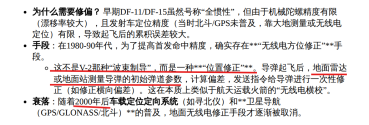
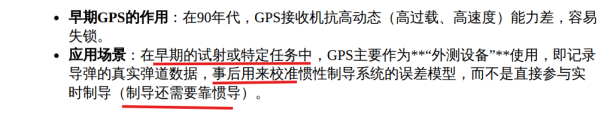
Furthermore, the AI has already clearly told you that ground-based radar measurements were used before 2000, and it was only afterward that in-vehicle positioning and navigation systems replaced ground-based radar measurements.
In the end, the AI even told you that GPS-assisted launch vehicle positioning was introduced for China’s SRBM in the late 1990s. In this scenario, even if the GPS signal is lost, it will simply take longer before launch to use mechanical gyroscopes to provide north-pointing information.
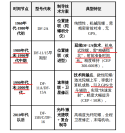
These statements by AI have fully demonstrated the flaws in your claims that I pointed out in my original post.
Back then, people in Taiwan did not believe China had the capability for GPS-guided systems (during the 1996 Taiwan Strait exercises, the U.S. shut down regional GPS guidance, causing missile test failures).
Finally, I must repeat the question: Where is the evidence proving that the United States once shut down GPS signals in the Taiwan Strait region, thereby causing China’s missile test to fail?
Last edited:
Please don't let his nonsense distract you. His usual tactic is to pile on more irrelevant fallacies to divert attention once his errors are pointed out, and most people simply don't have the patience to read through all his nonsense.China has been making CRT TV tubes since the 70s. I don´t think was even an issue for military stuff who volume is WAY LESS than civilian electronics, and you need to make that distinction. And semiconductors in the 90s China logic nodes was pretty close to other countries, believe it or not, maybe lagged in yield and commercialization which again is not an issue for military production. And more given since the invention of the personal computer military electronics started to lag the commercial sector, most of the military electronics in the 1991 Gulf War was already outdated compared to the commercial sector. So CETC was able to fill the gaps and they manage to punch above their weight despite China being a developing country.
You are correct, GPS guidance is not a thing, GPS navigation is thing (like a Garmin). GPS Assisted Guidance is a thing. Where you use GPS to correct for the drift of others sensors like the Inertia Navigation Systems, TERCOM and DSMAC (in the case of cruise missiles)Please don’t use AI to argue with me; relying on AI to respond only proves that you don’t know what you’re talking about.
And what’s most ridiculous is that the AI’s response actually proves my point: “You’re deliberately misleading people by quietly changing what you originally said from ‘GPS guidance’ to ‘GPS-assisted measuring’” —you’re still trying to wriggle out of it.
View attachment 178084
View attachment 178085
Furthermore, the AI has already clearly told you that ground-based radar measurements were used before 2000, and it was only afterward that in-vehicle positioning and navigation systems replaced ground-based radar measurements.
In the end, the AI even told you that GPS-assisted launch vehicle positioning was introduced for China’s SRBM in the late 1990s.
View attachment 178086
These statements by AI have fully demonstrated the flaws in your claims that I pointed out in my original post.
Finally, I must repeat the question: Where is the evidence proving that the United States once shut down GPS signals in the Taiwan Strait region, thereby causing China’s missile test to fail?
Just stop it. All your arguments go something like, “a friend of mine…,” “at a private gathering…,” “I remember…,” “as far as I recall…” The truth is, you have no idea what you’re talking about—even when you use AI, you don’t even understand its responses.The claim that turning off GPS over the Taiwan Strait caused problems for short-range ballistic missiles is impossible to verify—mainly because this information comes from the Taiwanese side.
From what I learned years ago, an older friend of mine had been working with GPS/GIS-related tasks in the military as early as 1992. Through him, I got to know many of the actual realities of early domestic GPS usage in China (mostly the big pitfalls encountered in applications).
Secondly, there is a wealth of information in CNKI literature about the inertial navigation technology challenges of that era. Before 2000, many advanced INS technologies were still under R&D.
China probably began developing new guidance schemes for tactical ballistic missiles around 1992 as well. The literature I've seen on using GPS for ascent-phase guidance likely dates from that development period. The missiles used for deterrence in the 1995–1996 Taiwan Strait crisis were probably this improved variant of the DF-15—I remember news reports at the time saying so. For that generation of DF-15, GPS solved the ascent-phase trajectory correction problem (since the inertial navigation base was still likely an improved version of the DF-2A's). GPS replaced the role of ground stations, because the goal was to reduce the number of launch support vehicles. Only this version of the DF-15 would exhibit the phenomenon the Taiwanese side described—that turning off GPS caused the missile's accuracy to degrade, with errors as large as 200 km. Of course, I think this might be a dramatization on the Taiwanese side.
I'm more inclined to believe that if such a situation actually occurred, it might have been because a sudden GPS outage or anomalous data caused an error in the rocket's ascent-phase data, triggering premature self-destruction. Back then, onboard missile computers were not advanced (many of these computers were programmed in assembly language, so abnormal data could easily cause logic errors in the program—and chronologically, the GPS installation on the DF-11/DF-15 was experimental, not standard production equipment). Therefore, I don't rule out the possibility that the GPS shutdown could have seriously disrupted the launches, as the claim suggests.

Another thing is, I don´t think you can use the commercial version of GPS with ballistic missiles, the thing has a speed limit below Match 1. Most ballistic missiles go at Match 10+. I don´t how would work, maybe to catch a short position to calibrate the Inertial drift, maybe, I don´t know.