China has been making CRT TV tubes since the 70s. I don´t think was even an issue for military stuff who volume is WAY LESS than civilian electronics, and you need to make that distinction. And semiconductors in the 90s China logic nodes was pretty close to other countries, believe it or not, maybe lagged in yield and commercialization which again is not an issue for military production. And more given since the invention of the personal computer military electronics started to lag the commercial sector, most of the military electronics in the 1991 Gulf War was already outdated compared to the commercial sector. So CETC was able to fill the gaps and they manage to punch above their weight despite China being a developing country.China could already popularize in the 1980s–90s? Especially in the short-range tactical ballistic missile sector (these were all 1980s–early-90s Chinese tech—back then China couldn't even make CRT TV tubes or air conditioners properly. In the 80s, how many defense electronics factories switched to civilian production, even had factory directors defect to the West). Where would the money come from for new tech and new equipment? Just keeping the troops' combat readiness going was already something. Those years the military was even running commercial sidelines—you forgot?

You are using an out of date browser. It may not display this or other websites correctly.
You should upgrade or use an alternative browser.
You should upgrade or use an alternative browser.
Chinese Hypersonic Developments (HGVs/HCMs)
- Thread starter A.Man
- Start date
"200 KM" Yes is a bit dramatic and defy logic, even using inertial navigation and astral navigation, a missile like the DF-4 would be in the range 2.5 and 1 KM in CEP which for a 4 megaton warhead would be an overkill.China probably began developing new guidance schemes for tactical ballistic missiles around 1992 as well. The literature I've seen on using GPS for ascent-phase guidance likely dates from that development period. The missiles used for deterrence in the 1995–1996 Taiwan Strait crisis were probably this improved variant of the DF-15—I remember news reports at the time saying so. For that generation of DF-15, GPS solved the ascent-phase trajectory correction problem (since the inertial navigation base was still likely an improved version of the DF-2A's). GPS replaced the role of ground stations, because the goal was to reduce the number of launch support vehicles. Only this version of the DF-15 would exhibit the phenomenon the Taiwanese side described—that turning off GPS caused the missile's accuracy to degrade, with errors as large as 200 km. Of course, I think this might be a dramatization on the Taiwanese side.

Please don’t use AI to argue with me; relying on AI to respond only proves that you don’t know what you’re talking about.First, you need to be clear: we're talking about equipment used on launch vehicles and ICBMs. Is that the same as the tracking, telemetry and control (TT&C) used on short-range surface-to-surface missiles in the Taiwan Strait scenario?
Moreover, strictly speaking, these devices are not actually issued to standard Second Artillery Corps or Rocket Force combat units. These are technical support equipment for R&D, not systems configured for combat units. When they are fielded to operational units, a DF-5 launch primarily relies on high-precision floated-platform inertial navigation, combined with early precision surveying of the ground launch site. For the ascent phase, it canrely on such radio telemetry beaconing—or it can do without.
The cost and accuracy of an ICBM's guidance equipment are two entirely different things from those of a short-range tactical ballistic missile with a range of a few hundred kilometers. Placing two radio beacon transmitters behind and to the side of the launch site is actually a very simple and low-cost technical solution, and the equipment support requirements are relatively straightforward.
Accuracy isn't actually that hard a problem. The electronics technology of the WWII era and that of the 1960s–70s are vastly different. With some modern radio technology improvements, plus the application of transistors and integrated circuits, the sensitivity of the receiver becomes much better. The ability to receive, process, and identify radio signal differences also becomes far more precise.
This is much easier and simpler than Doppler radar technology—there's no complicated signal processing involved. In essence, the technical principle is: the onboard receiver picks up encoded information from two radio beacons. Simply decode it, compare the phase difference, and you know whether the missile has deviated from its ascent trajectory. The onboard flight controller then commands the rocket to correct its attitude, ensuring the missile keeps flying along the correct ballistic parabolic trajectory—that's all it takes.
Additionally, I just fed this issue and some related information to the GLM 5.2 model for verification. After a rigorous technical timeline analysis, it confirmed that what my source (the Inertial Worldeditor) told me is likely accurate (actually, if you search CNKI for relevant papers on tactical missile guidance systems from the 1990s, you'll get a pretty clear picture—I happened to study this topic back in the 2000s).
In the early stages of the DF-11 and DF-15, they probably inherited the inertial navigation system from the DF-2A, and they did require guidance radar radio correction (not the V-2-style beam riding—my wording on that point might have been off). This radar was likely a product similar to what the HQ-2 used.
Attached is the GLM 5.2 Chinese-language analysis.
And what’s most ridiculous is that the AI’s response actually proves my point: “You’re deliberately misleading people by quietly changing what you originally said from ‘GPS guidance’ to ‘GPS-assisted measuring’” —you’re still trying to wriggle out of it.
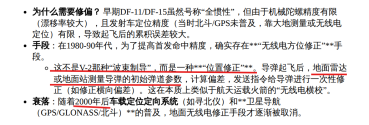
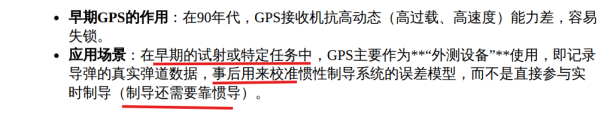
Furthermore, the AI has already clearly told you that ground-based radar measurements were used before 2000, and it was only afterward that in-vehicle positioning and navigation systems replaced ground-based radar measurements.
In the end, the AI even told you that GPS-assisted launch vehicle positioning was introduced for China’s SRBM in the late 1990s. In this scenario, even if the GPS signal is lost, it will simply take longer before launch to use mechanical gyroscopes to provide north-pointing information.
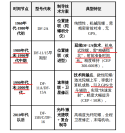
These statements by AI have fully demonstrated the flaws in your claims that I pointed out in my original post.
Back then, people in Taiwan did not believe China had the capability for GPS-guided systems (during the 1996 Taiwan Strait exercises, the U.S. shut down regional GPS guidance, causing missile test failures).
Finally, I must repeat the question: Where is the evidence proving that the United States once shut down GPS signals in the Taiwan Strait region, thereby causing China’s missile test to fail?
Last edited:
Another thing is, I don´t think you can use the commercial version of GPS with ballistic missiles, the thing has a speed limit below Match 1. Most ballistic missiles go at Match 10+. I don´t how would work, maybe to catch a short position to calibrate the Inertial drift, maybe, I don´t know.
Military-grade CRTs made in China and civilian CRTs are two entirely different things. You'd know if you looked up the materials. Military radar CRTs mainly display a small number of bright dots, monochrome, round screen—and the core technology lies in the persistence (display delay) of the phosphor material. (Think about why—through the 1980s and 90s, they kept improving this phosphor material, and there were even awards for it.) That's completely different from the displays with character generators that actual radar or airborne systems need. From the 1970s to the 80s, military displays and the emergence of personal computers both required corresponding hardware support. All of that only landed in practice once integrated circuits saw widespread use.China has been making CRT TV tubes since the 70s. I don´t think was even an issue for military stuff who volume is WAY LESS than civilian electronics, and you need to make that distinction. And semiconductors in the 90s China logic nodes was pretty close to other countries, believe it or not, maybe lagged in yield and commercialization which again is not an issue for military production. And more given since the invention of the personal computer military electronics started to lag the commercial sector, most of the military electronics in the 1991 Gulf War was already outdated compared to the commercial sector. So CETC was able to fill the gaps and they manage to punch above their weight despite China being a developing country.
Why did China import Japan's obsolete CRT technology back then? Because China simply couldn't do it domestically. (My grandfather's house already had an imported large-screen color TV in the late 70s to early 80s—and the State Administration of Radio, Film and Television hadn't even been founded yet.) If China had had comparable technology, why wouldn't it have used its own? Anything halfway decent in China back then was indeed homegrown. I personally witnessed, back in the earliest days, how China forced Chinese-character display and processing onto 8-bit microcomputers (Apple II's 6502 and the Z80 single-chip) — the Z80 required hardware circuit modifications — this was the era beforethe Chinese Character Card (汉卡). Domestic literature right up to the late 90s was all about finding new technical schemes to make a domestically-substitutable (pingti / "flat replacement") version of the F-16's display — the core requirement being compatibility with that整套 character generator and hardware drawing functions (displaying English characters and some basic drawing instructions). By that point in the PC world, the Voodoo 3D accelerator card and NVIDIA's first-generation TNT graphics card had already come out.
Early application of GPS for ballistic missile targeting was for ascent-phase deviation correction. During the ascent phase, speed isn't high, so the Doppler effect isn't significant (I recall that once you exceed around 1.x Mach, the Doppler issue with GPS signals kicks in). For short-range tactical missiles like the DF-11 and DF-15, their top speed is at most around Mach 4, so acceleration through the ascent phase is relatively gradual—civilian GPS with some added measures (algorithmic compensation) works fine. There's relevant literature on CNKI that I read over twenty years ago. Go look it up—the papers lay out the related issues quite clearly.Another thing is, I don´t think you can use the commercial version of GPS with ballistic missiles, the thing has a speed limit below Match 1. Most ballistic missiles go at Match 10+. I don´t how would work, maybe to catch a short position to calibrate the Inertial drift, maybe, I don´t know.
You are confusing things. One thing is military production and another is civilian production, Civilian production require that the product is sold at a cost that normal consumers can afford. Military costumers are willing to pay more for a lower volume. Those are two kind of assembly lines. China was able to do from transistors in 50s to ICs in 70s. So the Chinese military was able to get military electronics from computers to guidance systems from the electronic CETC institutes. I had read papers from the 80s and 90s on analog to digital converters for this kind of applications. Even the homegrown lithography machines at the time was good enough military production something that got better for the military with the introduction of SMEE ILine, KrF and ArF step-scan machines, even without the yield these scanners are a god send for the military as they are able to make chips outside the mainstream fabs like SMIC and HHGrace who usually were packed full of foreigners.Military-grade CRTs made in China and civilian CRTs are two entirely different things. You'd know if you looked up the materials. Military radar CRTs mainly display a small number of bright dots, monochrome, round screen—and the core technology lies in the persistence (display delay) of the phosphor material. (Think about why—through the 1980s and 90s, they kept improving this phosphor material, and there were even awards for it.) That's completely different from the displays with character generators that actual radar or airborne systems need. From the 1970s to the 80s, military displays and the emergence of personal computers both required corresponding hardware support. All of that only landed in practice once integrated circuits saw widespread use.
Why did China import Japan's obsolete CRT technology back then? Because China simply couldn't do it domestically. (My grandfather's house already had an imported large-screen color TV in the late 70s to early 80s—and the State Administration of Radio, Film and Television hadn't even been founded yet.) If China had had comparable technology, why wouldn't it have used its own? Anything halfway decent in China back then was indeed homegrown. I personally witnessed, back in the earliest days, how China forced Chinese-character display and processing onto 8-bit microcomputers (Apple II's 6502 and the Z80 single-chip) — the Z80 required hardware circuit modifications — this was the era beforethe Chinese Character Card (汉卡). Domestic literature right up to the late 90s was all about finding new technical schemes to make a domestically-substitutable (pingti / "flat replacement") version of the F-16's display — the core requirement being compatibility with that整套 character generator and hardware drawing functions (displaying English characters and some basic drawing instructions). By that point in the PC world, the Voodoo 3D accelerator card and NVIDIA's first-generation TNT graphics card had already come out.
The boost phase only last a a few minutes and I think the critical parts is in the descent phase and terminal phase before hitting the target when the missile reach its max speed. Without access to military satellite timing and normal GPS will send the missile way off the target and at the point you are better off using inertial navigation alone. For cruise missiles alone is probably ok even thought is easy to jam so you have to rely more on TERCOM and DSMAC for guidance. Early DF-11 relied more on inertial guidance With a CEP good enough to destroy military bases. until China develop their GNSS network in the early 2000s.Early application of GPS for ballistic missile targeting was for ascent-phase deviation correction. During the ascent phase, speed isn't high, so the Doppler effect isn't significant (I recall that once you exceed around 1.x Mach, the Doppler issue with GPS signals kicks in). For short-range tactical missiles like the DF-11 and DF-15, their top speed is at most around Mach 4, so acceleration through the ascent phase is relatively gradual—civilian GPS with some added measures (algorithmic compensation) works fine. There's relevant literature on CNKI that I read over twenty years ago. Go look it up—the papers lay out the related issues quite clearly.
The entire AI analysis confirms that what I said is correct, yet you claim I know nothing?Please don’t use AI to argue with me; relying on AI to respond only proves that you don’t know what you’re talking about.
You need to get this straight: what I was actually talking about was information from the Inertial Worldeditor — he's the real source. What he described was the standard launch procedure for China's medium and short-range tactical ballistic missiles back then. Ground-based correction assistance was still required. I'm recounting the technical principle he explained.And what’s most ridiculous is that the AI’s response actually proves my point: “You’re deliberately misleading people by quietly changing what you originally said from ‘GPS guidance’ to ‘GPS-assisted measuring’” —you’re still trying to wriggle out of it.
View attachment 178084
View attachment 178085
Furthermore, the AI has already clearly told you that ground-based radar measurements were used before 2000, and it was only afterward that in-vehicle positioning and navigation systems replaced ground-based radar measurements.
Because it's been a long time (2000–2004), a lot of detail is fuzzy in my memory. In his original wording, he might have referenced even earlier technical details or principles of ground-based correction for ballistic missile launches (possibly also for confidentiality reasons), but he didn't go into it. The listeners were all amateur enthusiasts — let's be honest, in his eyes we were just a bunch of military-obsessed kids, and he was giving us a basic science-popularization session in his own field. Did it need to be deeply professional?
You talk as if I don't understand radar at all. I wasn't frontline personnel in the Second Artillery (though I do actually know people who were), and I visited a few times in middle school, but how would I know the specific equipment details and what they did?
But even back then, radar types and costs came in many varieties. China's electronics industry in those years was nowhere near what it is now — many advanced radars existed only in single digits, or even just as prototypes. In the DF-2A / DF-3 era, these missiles were actually strategic-weapon class, with only a handful in inventory. They all carried nuclear warheads, prepared for confronting the USSR. Equipping them with radar was no problem.
But by the 1990s, the DF-11 and DF-15 were short-range tactical ballistic missiles — did they needto be equipped with radar? You should first understand the types and levels of radar back then. How many Doppler radars did China produce in total in those years? Why do I say it might've used a modified HQ-2配套 radar? Because the HQ-2 had high production volume and large stockpiles of radars. But what operating architecture did the early HQ-2 radar use? My father's unit participated in the deployment for shooting down the U-2 — when my father was in service, he even trained on repairing radars (he was a radar soldier himself). So for a tactical missile like this, if it used radar at all, it probably wasn't the fancy advanced-architecture kind you're imagining. (In the 1990s, various Doppler radars werethe "advanced architecture" domestically — the state was trying to export them to earn foreign exchange; for example, read up on how Academician Wang Xiaomo "pitched" Egypt and developed the JW-9 surveillance radar.) It was roughly at the level of Western radars approaching obsolescence from the 1950s–70s. So the early DF-11/DF-15 couldn't possibly have used the kind of advanced radar you're talking about. Also, don't forget the famous M-7 is itself a surface-to-surface ballistic missile converted from the HQ-2 — so along the HQ-2 technical line, phasing out obsolete products to provide ground-guidance assistance for the DF-11/DF-15 is entirely plausible.
You have to understand what China's technical state was in those years. Don't just force-fit a few buzzwords. I have confidence in China's current tech, but I won't sugarcoat or downplay China's past capabilities. In the DF-11/DF-15 R&D years (mid-1980s to late 1990s — the hardest period for China's defense industry, with the least military-budget support), the technical combination I described is the most reasonable, the one that fits the historical context best. I'm not going to take the R&D testbed equipment prepared for launch vehicle launches and force-fit it onto the standard-issue equipment of short-range tactical missiles.
Get this straight — all of this is what Isaid. Because what the AI initially retrieves all comes from Baidu Baike entries. Go look at what the original web pages actually say yourself.In the end, the AI even told you that GPS-assisted launch vehicle positioning was introduced for China’s SRBM in the late 1990s. In this scenario, even if the GPS signal is lost, it will simply take longer before launch to use mechanical gyroscopes to provide north-pointing information.
I spent ages explaining to the AI the events of those years, what the Inertial Worldeditor told us, and the technical background of that era — the AI then cross-checked against the technical conditions of those years, verified point by point, and thenagreed with my view.
What have you said in your whole reply? What sources did you produce? You just went on about "China had radar technology back then." Well, duh — as if I didn't know China had radar technology back then.
Here's what I actually said, at core:
- There's long been a claim outside China that during the 1996 Taiwan Strait test launches, the US turned off GPS, causing the test launches to fail. The Taiwanese side put out stories that the missiles had a 200 km error, and has mocked the mainland over it for years. I'm taking a neutral stance — neither blindly affirming nor denying. Instead, I'm analyzing which parts of these claims are plausible and which aren't. Because, as everyone knows, during that exercise a senior PLA officer turned traitor (Liu Liankun [sic: commonly Liu Liankun, the 1996 leak case]), leaking China's exercise secrets — extremely damaging, and that's universally acknowledged by later historians. So it's reasonable to think anythingis possible, just that it's wrapped in mistaken perceptions.
- I analyzed, from a technical level, how GPS technology was actually used in those short-range ballistic missiles back then — factoring in the technical tier (civilian), the unreliability of the technology at the time, and the conclusions in professional literature.
- What I recounted was the Inertial Worldeditor's account from after 2000, popular-science-ing the pre-DF-11/15 launch procedure — there's some ambiguity in this (the radar vs. radio-signal "beam riding" bit — PS: beam riding itself is also a radio-guidance technique; it also appeared on early fire-control radars, just that ballistic missiles need a simpler version: no target illumination needed, no mechanical gimbal to track a target, fixed angle is enough. So calling it under the broad "radar" umbrella isn't wrong either).
- Because GPS waspresent during the ascent phase, the apparent "200 km error" scenario istechnically possible (my earlier analysis suggested it was more likely premature self-destruction). Why? Because if it weren't for the cause I analyzed, a pure ballistic missile — even a V-2 — couldn't possibly have a 200 km error. At worst it'd be 1 to a few km. Because the INS is still there — INS can't be jammed or affected (though wiring misconnection is possible). Only if ascent-phase guidance data went anomalous (with GPS participation) would self-destruction become a possibility.
I'm just objectively analyzing the possibilities in this historical episode. What are you doing?
View attachment 178086
These statements by AI have fully demonstrated the flaws in your claims that I pointed out in my original post.
Didn't you read the AI analysis? The GPS-cutoff scenario is hard to verify, but electronic warfare jamming can easily block GPS signals — that's the most likely possibility.Finally, I must repeat the question: Where is the evidence proving that the United States once shut down GPS signals in the Taiwan Strait region, thereby causing China’s missile test to fail?
Everything you said — I already understand it.You are confusing things. One thing is military production and another is civilian production, Civilian production require that the product is sold at a cost that normal consumers can afford. Military costumers are willing to pay more for a lower volume. Those are two kind of assembly lines. China was able to do from transistors in 50s to ICs in 70s. So the Chinese military was able to get military electronics from computers to guidance systems from the electronic CETC institutes. I had read papers from the 80s and 90s on analog to digital converters for this kind of applications. Even the homegrown lithography machines at the time was good enough military production something that got better for the military with the introduction of SMEE ILine, KrF and ArF step-scan machines, even without the yield these scanners are a god send for the military as they are able to make chips outside the mainstream fabs like SMIC and HHGrace who usually were packed full of foreigners.
The problem is that back then, China's equipment-upgrade system lagged far behind the civilian sector. Many products developed by domestic research institutes could not be scaled into production. They only reached very small-scale experimental deployment — many were intended for export rather than domestic use. It's hard to say how many DF-11s and DF-15s were actually fielded. The key point is that once standard-issue equipment is type-certified (定型), it's not adjusted lightly — because it involves massive amounts of training. You have to understand that the quality of Second Artillery personnel back then wasn't very high either. Learning and becoming familiar with a piece of equipment took a long time (including maintenance training). You can't change equipment parameters every few days. Typically, a few specialized units would follow the R&D institutes in conducting improvements. As for those small-batch, experimentally validated pieces of equipment — even if suitable domestic components or instruments weren't available, imports could be used for preliminary technical validation. But those were just a handful of exceptions.
You still don't get it. What I'm saying is that back in 1996, the issue was about GPS being applied during the ascent phase of ballistic missiles. There is research literature on this. At that time, neither the GPS satellite system nor the ground receiver solutions supported GPS application on high-speed terminals. Because when the GPS receiver experiences high velocity, signal reception suffers from the Doppler effect, causing positional inaccuracy. As I recall, the limitation was that it could only be used in airborne applications up to about Mach 2, and generally civil and military aviation stayed below Mach 1.5. Higher speeds caused problems, so dedicated research was needed for algorithm compensation.The boost phase only last a a few minutes and I think the critical parts is in the descent phase and terminal phase before hitting the target when the missile reach its max speed. Without access to military satellite timing and normal GPS will send the missile way off the target and at the point you are better off using inertial navigation alone. For cruise missiles alone is probably ok even thought is easy to jam so you have to rely more on TERCOM and DSMAC for guidance. Early DF-11 relied more on inertial guidance With a CEP good enough to destroy military bases. until China develop their GNSS network in the early 2000s.
Back then, China hadn't solved the issues with strapdown inertial navigation, fiber-optic gyros, or laser gyros — they were probably still at the prototype or small-scale technical validation stage. Looking at the literature, most of these were finalized and fielded after 2000.
You don´t seem understand, Is ALWAYS LIKE THAT, the military doesn´t consume a lot of stuff and usually are willing to pay more for stuff they consume. Military procurement is slower than the civilian stuff. Even the US military suffer from that, in the 1991 Gulf War, the most technological war ever, most of the US electronics was already obsolete by commercial standards. So a CETC 500nm line was probably good enough for military production even if commercially China already had 250nm lines. Is like engines, China has been making jets since the 60s, some are even flying today and they were use in combat like in Pakistan and Indian war, but civilian engines are different from military ones and the military is willing to do tradeoff than the civilian sector is not.The problem is that back then, China's equipment-upgrade system lagged far behind the civilian sector.
You are talking hogwash they used inertial navigation assisted with stellar navigation until they have the first BD1 Network.You still don't get it. What I'm saying is that back in 1996, the issue was about GPS being applied during the ascent phase of ballistic missiles. There is research literature on this. At that time, neither the GPS satellite system nor the ground receiver solutions supported GPS application on high-speed terminals. Because when the GPS receiver experiences high velocity, signal reception suffers from the Doppler effect, causing positional inaccuracy. As I recall, the limitation was that it could only be used in airborne applications up to about Mach 2, and generally civil and military aviation stayed below Mach 1.5. Higher speeds caused problems, so dedicated research was needed for algorithm compensation.
Looking at the literature and China has making these inertial sensors since the 70s and 80s,or they won´t had a missile program, just using logic. they even uses analog computers in the 80s to compensate, Of course they are getting better and better with time. That is what happen when you continuously do research and development. The same with engines and others thing.Back then, China hadn't solved the issues with strapdown inertial navigation, fiber-optic gyros, or laser gyros — they were probably still at the prototype or small-scale technical validation stage. Looking at the literature, most of these were finalized and fielded after 2000.