But Western expats said HK was "finished" because they weren't seen as special any more, how can this be!?
Quick! Someone post the School Bus meme with a link to that Chinese journalist's twitter post about how "Hong Kong is finished".

But Western expats said HK was "finished" because they weren't seen as special any more, how can this be!?

In total, 68% of respondents said they were either staying or expanding operations in China. By comparison, only 7% said they were moving factory sourcing outside the country or setting up alternative manufacturing bases elsewhere, the report said. “We don’t see sort of de-risking becoming a theme,” said Jens Eskelund, President of the EU Chamber of Commerce in China. “If anything it would indicate that European companies continue to be more dependent on China as a sourcing and manufacturing location for their products,” he said.
About three-fourths of EU companies in China said their production facilities in the country were more efficient than operations elsewhere, the chamber’s survey found. “In most industries today, you have at least one Chinese competitor, or an international competitor, that are leveraging Chinese supply chains,” Eskelund said. “So I think in many industries, if you are able to compete on price and quality, you simply need to become a part of Chinese supply chains,” he said. “It’s not necessarily because you want to onshore on [to] China.”
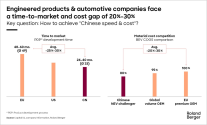
Chinese companies are redefining the rules of industrial competition. Their advantage is no longer limited to cost: across sectors, they have compressed product-development cycles from years into months while sustaining a cost edge of 20 to 30 percent. This combination has set a new global benchmark, leaving Western manufacturers exposed to a disruptive performance gap. Chinese competitors are now entering European and US markets with high-quality products and increasingly local value chains, including R&D and production. Western firms still lead in quality, trust and breakthrough innovation, but these strengths are under growing pressure as the cost and speed gap widens.

If the Swiss didn’t break neutrality and confiscate Russian money post Ukraine War maybe some more wealth would’ve stayed there.But Western expats said HK was "finished" because they weren't seen as special any more, how can this be!?

??

One 小吃 cost 68RMB?
一份小吃 is not a meal, just one dish.RMB68 for a meal is close to upper end. Normal meal cost is about 1/3 or 1/4 of that.
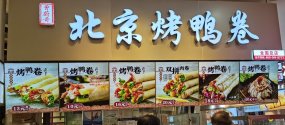
Prices of food in a shopping mall in Xi'an city center, eg. Half of a roasted duck sold for RMB40. I was there.