Chinese Economics Thread

bsdnf

Senior Member
Registered Member
View attachment 175306
Unfortunately, it seems domestic public consumption has dropped hard to 0.2 percent YoY in Apirl, lowest yet in the past year.
There are three main drags on demand:

1. Automobiles: A wait-and-see attitude remains strong.

2. Electronic devices: The exorbitant price of memory chips is making everyone hesitant to buy phones.

3. Home appliances: Last year's government subsidies have already exhausted a significant portion of demand.

And of course, oil.
 

TOKYO DRIFT ABC

Junior Member
Registered Member

Hagerty features a detailed report by photojournalist Larry Chen on his visit to the sprawling production facilities of Junchen Vehicle Co. in Jiangsu, China. His coverage explores a groundbreaking reproduction business with the potential to fundamentally reshape the automotive restoration and custom car markets.

Backed by a robust infrastructure originally dedicated to manufacturing aftermarket parts for major OEMs, the company maintains a 95% in-house production rate. This exceptional vertical integration allows them to supply complete body-in-white chassis for iconic legacy vehicles at an astonishingly low starting price of around 9,500 USD. Their catalog includes the Land Rover Defender, the Ford Bronco, and legendary JDM classics like the Toyota AE86 and the Nissan 240Z.

The manufacturing workflow utilizes highly rigorous, modern industrial processes. The company sources straight, unmodified donor vehicles and strips them down to create flawless 3D scans for digital blueprints. From this data, they use CNC machining centers to carve high-strength steel blanks into stamping dies, which are then hand-polished by craftsmen to a mirror finish. This self-contained setup produces between 300 and over 1,200 precise dies per model. Once the raw sheet metal is stamped, robot-arm plasma cutters accurately trim the panels. The components are then fully submerged in an advanced electrodeposition coating line, providing a level of rust prevention far superior to 1980s factory standards. Combined with the use of modern galvanized steel, the finished products offer exceptional durability. Workers then secure these panels onto custom jigs and weld them by hand, producing a chassis that matches original OEM specs in both weight and structural dimensions.

However, the venture has faced some scrutiny. Early AE86 prototypes showcased and sold at the SEMA Show sparked controversy when prominent automotive influencers, including the YouTube channel Big Time, reported issues like misaligned bolt holes and coarse weld quality. Addressing these flaws, Chen explains that local engineers who had never driven or even seen the physical cars in their lifetime were forced to rush the first prototypes to meet strict SEMA deadlines using nothing but raw digital data. He notes that while the factory has perfected the Bronco line after a production run of over 600 units, the AE86 was only on its fourth chassis during his visit, and the company is already implementing rapid quality improvements.

Beyond the technical achievements, the report addresses the complex ethical and legal grey areas inherent to this business model. By omitting manufacturer emblems and marketing the products strictly as replacement body panels for classic cars over 25 years old, the company legally circumvents IP infringement. Nevertheless, removing the VIN plates or firewall sections from a rotted, unsalvageable donor car and welding them onto a brand-new chassis blurs the line between legitimate restoration and illegal vehicle cloning. Furthermore, because no regulatory framework allows these brand-new shells to be registered as new production cars, builders must rely on the legal loopholes of restomod registration using an existing vehicle identity.

Despite these systemic hurdles, the report concludes that such a venture remains commercially infeasible anywhere in Japan, Europe, or the US due to prohibitive land and labor costs. With future expansion plans targeting the Porsche 964, the Nissan S-chassis (Silvia), and the iconic Mercedes-Benz 300SL Gullwing, this manufacturing shift represents a vital lifeline for automotive enthusiasts, offering a sustainable way to keep vintage car culture alive on the road for generations to come.
 
Last edited:

horse

Brigadier
Registered Member
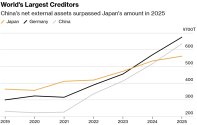
Didn’t know Germany has so much assets overseas . For a country their size (80million) it’s impressive

Germany warns on trade imbalance as economy minister visits China​


Beijing (AFP) – Germany's economy minister began a visit to China on Wednesday with Berlin saying it wanted to boost cooperation with a key partner while also warning of worsening trade imbalances.

Katherina Reiche stressed the importance of fair competition and greater predictability in a meeting with Chinese Vice Premier He Lifeng, her ministry said.

Reiche underlined that "Germany’s interest in balanced, reciprocal, and mutually beneficial trade relations, as well as the potential of the Chinese market", the ministry said in a statement.

Reiche also held talks with Commerce Minister Wang Wentao about potential cooperation between German and Chinese companies on the first day of her three-day trip, the ministry said.

The minister is the latest senior German official to head to Berlin's top trading partner as they seek to navigate increasingly complex ties.

China -- long a reliable market for German exports, from cars to factory machinery -- has in recent years become a fierce competitor in many industries, turning the relationship on its head.

In a statement ahead of the visit, Reiche, accompanied by a business delegation and German MPs, said that China and Germany "are linked by one of the most significant economic relationships in the world".

"In times of global uncertainty, we need dialogue, trust and robust partnerships. I will therefore advocate on the ground for modern cooperation -- based on openness, competition and mutual benefit," she said.

As well as Beijing, Reiche will visit the southern Chinese city of Guangzhou.

But there are many areas where Beijing and Berlin disagree, from trade practices to human rights.

The economy ministry noted that in particular there was now a "clear trade imbalance" between the world's number two and number three economies.

German exports fell by around 10 percent in 2025, to roughly 80 billion euros ($93 billion), while imports from China rose to around 170 billion euros, it said.

Increasing competition for German businesses in China has been one factor weighing on Europe's top economy, which has stagnated in recent years.

Chancellor Friedrich Merz visited China in February, and the widening trade gap was also a key focus.

Still, both Berlin and Beijing are keen to strengthen ties at a time of global uncertainty sparked by US President Donald Trump's often erratic policies.

Please, Log in or Register to view URLs content!


1. The European powers had the better technology that produced better weapons so they got rich in the Age of Imperialism by growing their economies internally, and stealing all the gold from the colonies.

2. Germany lost everything, but with hard work and trade surpluses in the post war era, they rebuilt their wealth through trade. They were leaders in many industries, particularly autos and chemicals, and anything related to machinery.

3. A few European countries are still very rich, because they still have all that gold they stole. Look at gold holding tables. Generally most European countries produce no gold basically, but they own a lot of it. That was the colonization.

4. German was hard working and they feel they are the leader of the world in industry and felt very proud of themselves. That was back in the day. The word overcapacity never existed until recently to describe a country with a trade surplus. The Germans never had any overcapacity in their heyday building up large trade surpluses.

5. The Chinese probably believe that the great majority of European leaders like 90% of them are all clowns. Cannot take someone who acts like a buffoon seriously. That is how it goes.

6. What is going to happen next, is too obvious I feel, because it is already happening. You know how the industrial strength of German, lead to a situation where the rest of Western Europe hitched onto the German economic machine. That was a few decades ago. Now, the German industrial machine, is like a small European country, and China is now the industrial machine magnitudes bigger than what Germany ever was in its heyday. It is already happening, German companies their best ones increasing their involvement inside China.

7. German political leaders say one thing, then German companies do the exact opposite, when it comes to China. And the German government does not lift a finger to stop that. They won't even wag a finger at them. It is really all about the money. If the Germans, who are better at this industry thing than most other European nations, establish their presence in China first, then they probably can have that market to themselves. No one in Europe can compete with them there. That is what the Germans probably want, regards of what any German politician says in public. Back in the days of imperialism and colonization, it was every country for itself.

:p
 

sunnymaxi

Colonel
Registered Member

Hong kong overtakes Switzerland as world's top cross-border wealth hub on China ties, report shows​


Hong Kong has overtaken Switzerland as the top global booking centre for cross-border wealth, ‌a first that is unlikely to be reversed as hubs in Asia grow faster than the European safe-haven, Boston Consulting Group said on Wednesday.

Wealth from China and an IPO boom in 2025 helped Hong Kong rise to a $2.95 trillion offshore behemoth for the world's rich, narrowly surpassing Switzerland's $2.94 trillion in cross-border wealth, according to BCG's 2026 Global Wealth ⁠Report.

Hong Kong is now the top global hub for cross-border wealth management, according to BCG


Please, Log in or Register to view URLs content!
 

BoronCarbide

New Member
Registered Member

Hong kong overtakes Switzerland as world's top cross-border wealth hub on China ties, report shows​


Hong Kong has overtaken Switzerland as the top global booking centre for cross-border wealth, ‌a first that is unlikely to be reversed as hubs in Asia grow faster than the European safe-haven, Boston Consulting Group said on Wednesday.

Wealth from China and an IPO boom in 2025 helped Hong Kong rise to a $2.95 trillion offshore behemoth for the world's rich, narrowly surpassing Switzerland's $2.94 trillion in cross-border wealth, according to BCG's 2026 Global Wealth ⁠Report.

Hong Kong is now the top global hub for cross-border wealth management, according to BCG


Please, Log in or Register to view URLs content!
But Western expats said HK was "finished" because they weren't seen as special any more, how can this be!?
 
Top