You are using an out of date browser. It may not display this or other websites correctly.
You should upgrade or use an alternative browser.
You should upgrade or use an alternative browser.
Chinese Economics Thread
- Thread starter Norfolk
- Start date
the only way usd loses its dominance is if china's stock mkt starts booming , if that does not happen , usd remains dominant regardless of bubbles burstingWhat if we will see another great recession like 2008 with the AI bubble bursting and US dollar dominance at risk. It is prudent to keep the powder dry.

Yesterday, global dollar debt yields surged, showing signs of a potential liquidity crisis for the dollar.What if we will see another great recession like 2008 with the AI bubble bursting and US dollar dominance at risk. It is prudent to keep the powder dry.

Yesterday, global dollar debt yields surged, showing signs of a potential liquidity crisis for the dollar.
Fun fact, which I tend to forget, and others too.
Interest payments for the US government on its debt is well over $1 trillion USD, as it has been like that for a couple of years now. I actually forget, because this is not new. (Was watching a video that mentioned that, so might as well remind ourselves.)
That is the debt payment, $1 trillion alone on the interest, not even the principle. Haha!
So, we know what the conclusion is here for those Twitter economic students or economist - China is collapsing!
No doubt about it! Haha!

The point of the comment is to point out precisely that a stimulus is needed, desirable, and feasible.
1. People like stability. That stability extends to such things as growth rates in the economy.
2. The idea of keeping economic growth stable, is kind of new. Everyone assumed the business cycle. But, going my memory now. it was either in the Obama era or with Helicopter Ben that era, that era or maybe under Clinton, that people started thinking that the central bank was smart enough to adjust the monetary policy to avoid the business cycle.
That is an interesting idea, and that is what those really smart people will try to pursue, economic stability in America. Under President Clinton, that is what they had, economic stability. All Greenspan did was adjust rates once in a while.
So what you are saying, really is so out of date, for a couple generations now, no one will want to listen to that. The world has changed.
3. Let's suppose, the CCP does stimulate, and goes back to creating boom bust cycles. That is what a stimulus package is suppose to do. Kick off a boom, or at least avoid a bust.
Everyone can handle the boom. But what about the bust? ASEAN went bust a couple of times not that long ago.
Rock the boat too much, then all those BRI projections could be at risk.
To conclude, this discussion about the CCP should stimulate the Chinese more, should stop. People would prefer the stability. The boom bust way of doing things in the economy seem to be archaic nowadays.
Let's face the fact.
Most of the time, it is a soft landing. Those hard landings are becoming more and more rare.
What does that tell us? Those policy tools flatten out the business cycle. Now with the Terminator T-800 coming online, that could be terminated completely.
However, I think I am an anarchist! Aren't we all?!
So another financial crisis probably is brewing.
Most of the time, it is a soft landing. Those hard landings are becoming more and more rare.
What does that tell us? Those policy tools flatten out the business cycle. Now with the Terminator T-800 coming online, that could be terminated completely.
However, I think I am an anarchist! Aren't we all?!
So another financial crisis probably is brewing.
The strange thing to me is that you believe the Chinese government isn't doing these things already? or at least are attempting to accomplish the spirit of this list? Breaking it down point-by-point
- Capitalize industry funds and VCs so that they can put more risk money in China's tech ecosystem
- Launch major industrial policy akin to the New Energy industrial policy that ran from 2005-2020 which made China a world leader in EV, batteries, solar, etc.
- Money for supporting childcare and births to mothers to handle the births crisis
- Put a floor to property collapse, buy property at scale and distribute it to mothers/families who are giving births
- Launch new age SOEs that cover missing niches in the industry. Like you need a firm to compete with Thermofischer for example.
- Improve pay massively for employees
Chinese state run funds are the leading contributor to new VC funding. In fact, , and the top investors are almost all state backed. China has also launched in late 2025 where the government explicitly puts in the initial funding to shoulder some of the risk and incentivize private actors or SOEs to fill the remaining funding.
- Capitalize industry funds and VCs so that they can put more risk money in China's tech ecosystem
Basically half of the 15th five year plan is about industrial policy centered around the "new productive forces".
- Launch major industrial policy akin to the New Energy industrial policy that ran from 2005-2020 which made China a world leader in EV, batteries, solar, etc.
China has
- Money for supporting childcare and births to mothers to handle the births crisis
- y, which they will most likely adjust and increase depending on the outcomes of the policy
- maintained local government regulations which add on to recent national legislation to channel money and preferential policy treatment to families, such ass and . Shenyang, Hohhot, Changsha, Tianmen, etc are still providing local level childcare subsidies to families.
They already have funding and investment schemes in place (directed by local governments) , which effectively puts a floor on the price of housing in that locality. But like I mentioned before, the property collapse is deliberate as housing was in an overvalued bubble state before, so the drop in housing investment and pricing and that it will eventually stabilize around a non-bubble equilibrium is the expected outcome.
- Put a floor to property collapse, buy property at scale and distribute it to mothers/families who are giving births
China's strategy is to cultivate smaller private players which can compete and iterate quickly to advance innovation in industries that they are global laggards in. This strategy has basically worked for the AI industry, EV industry, battery industry, etc. Life science, bio medicine, life equipment are no different, so they don't need a large SOE to handle innovation in an industry like this (there is no large umbrella SOE or EV manufacturer, so why would there be one for lab equipment or bio medicine?).
- Launch new age SOEs that cover missing niches in the industry. Like you need a firm to compete with Thermofischer for example.
Regarding Thermo Fisher since this a life science company, we can look at how China's life science and bio medicine industry has developed recently. and has grown by a factor of 10 since 2021, number of clinical trials has tripled between 2017 and 2023, and the growth of domestic Chinese suppliers of lab and medical equipment has grown from a >2% market share in China a decade ago to around 15-20% now.
China government policy as directed affected this process, with regulations requiring consumers to buy locally produced equipment like mass spectrometers has forced companies . Once domestic production is established, it's basically a matter of time before domestic brands use the knowledge gained from foreign companies localizing to develop their own alternatives.
, which is the first time a five year plan has explicitly mentioned increasing incomes as a developmental priority.
- Improve pay massively for employees
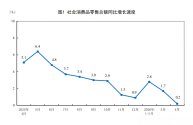
So I don't understand what your complaints are, the Chinese government seem like they are doing everything you just listed but without massive stimulus and are trying to keep local government finances solvent since they will be the primary creditors for any kind of stimulus measure. They are achieving their stated goals (which is 5% GDP growth, around 5% unemployment, around 5% disposable income growth annually) in a sustainable fashion without massive amount of debt or financial contagion. Cherry-picking a literal month's data read (and ignoring positive statistics like 5.6% growth in service consumption in the same period) after a massive war disrupting 20% of the world's oil supply is kind of illogical.
Frankly speaking, I haven't seen any measures implemented under "The Urban and Rural Residents' Income Growth Plan" so farThe strange thing to me is that you believe the Chinese government isn't doing these things already? or at least are attempting to accomplish the spirit of this list? Breaking it down point-by-point
Chinese state run funds are the leading contributor to new VC funding. In fact, , and the top investors are almost all state backed. China has also launched in late 2025 where the government explicitly puts in the initial funding to shoulder some of the risk and incentivize private actors or SOEs to fill the remaining funding.
Basically half of the 15th five year plan is about industrial policy centered around the "new productive forces".
China has
- y, which they will most likely adjust and increase depending on the outcomes of the policy
- maintained local government regulations which add on to recent national legislation to channel money and preferential policy treatment to families, such ass and . Shenyang, Hohhot, Changsha, Tianmen, etc are still providing local level childcare subsidies to families.
They already have funding and investment schemes in place (directed by local governments) , which effectively puts a floor on the price of housing in that locality. But like I mentioned before, the property collapse is deliberate as housing was in an overvalued bubble state before, so the drop in housing investment and pricing and that it will eventually stabilize around a non-bubble equilibrium is the expected outcome.
China's strategy is to cultivate smaller private players which can compete and iterate quickly to advance innovation in industries that they are global laggards in. This strategy has basically worked for the AI industry, EV industry, battery industry, etc. Life science, bio medicine, life equipment are no different, so they don't need a large SOE to handle innovation in an industry like this (there is no large umbrella SOE or EV manufacturer, so why would there be one for lab equipment or bio medicine?).
Regarding Thermo Fisher since this a life science company, we can look at how China's life science and bio medicine industry has developed recently. and has grown by a factor of 10 since 2021, number of clinical trials has tripled between 2017 and 2023, and the growth of domestic Chinese suppliers of lab and medical equipment has grown from a >2% market share in China a decade ago to around 15-20% now.
China government policy as directed affected this process, with regulations requiring consumers to buy locally produced equipment like mass spectrometers has forced companies . Once domestic production is established, it's basically a matter of time before domestic brands use the knowledge gained from foreign companies localizing to develop their own alternatives.
, which is the first time a five year plan has explicitly mentioned increasing incomes as a developmental priority.
So I don't understand what your complaints are, the Chinese government seem like they are doing everything you just listed but without massive stimulus and are trying to keep local government finances solvent since they will be the primary creditors for any kind of stimulus measure. They are achieving their stated goals (which is 5% GDP growth, around 5% unemployment, around 5% disposable income growth annually) in a sustainable fashion without massive amount of debt or financial contagion. Cherry-picking a literal month's data read (and ignoring positive statistics like 5.6% growth in service consumption in the same period) after a massive war disrupting 20% of the world's oil supply is kind of illogical.
does building more inland navigatable canals inline with it, i mean upon opening, barges can transport goods from "far inland" places to major ocean ports, so more factories there in future?Frankly speaking, I haven't seen any measures implemented under "The Urban and Rural Residents' Income Growth Plan" so far