
Why are solar batteries down? That seems weird
my thread on China's current base block for the plastics and chemical industry. How much comes from which feedstock and how much they import for these chemicals.

Why are solar batteries down? That seems weird
my thread on China's current base block for the plastics and chemical industry. How much comes from which feedstock and how much they import for these chemicals.

my thread on China's current base block for the plastics and chemical industry. How much comes from which feedstock and how much they import for these chemicals.
There is a constant and endless critisism of China not consuming enough. When people don't consume they save more and those savings turn in to capital. That capital is than used for investments like infrastructure, industry, technology and R&D. China is able to pay for all of its investments in all these area's through the savings from the public and the corporations. Its also the high savings rate that enable China to avoid a financial crisis after the bursting of the housing bubble as the banks have ample capital to deal with the losses.Actually, the data from January-February are exceptions. Because of the Chinese New Year, the numbers for these two months are usually the lowest over the year, so overestimation of the annual output is unlikely to occur.
Why Michael Pettis is wrong:

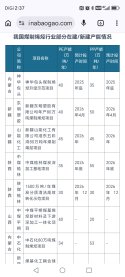
where do you see that it will replace 20 million ton of oil import?Around 4 million tons of coal to olefin capacity coming online this year. Will reduce 20 million tons of crude oil import.
View attachment 171738
AIwhere do you see that it will replace 20 million ton of oil import?
I mean I haven't looked into this, but is coal 5x more efficient in produce methanol than crude cracking?


This "savings" thing is the source of endless confusion. As national economy is concerned it should be national savings but there is constant talk about private savings. National is calculated as Profits + PrivateSavings. Anyway from Kalecki profit equation we know that Profits equals Investments + StateDeficit + TradeSurplus – PrivateSaving. For most part in China its Investments. Further on we should know that banks and other financial institutions are able to create account money when there is proper trust on repayment. The loan taker promises to pay it back and that promise is an asset to the bank. The bank promises to provide the money and that promise is an asset to the lender. Assets can't be created from thin air whereas liabilities are created all the time. To the counterparty those are assets. In a well functioning economy it's possible to create the necessary funds for sound investments. That results in large "savings" in statistics.There is a constant and endless critisism of China not consuming enough. When people don't consume they save more and those savings turn in to capital. That capital is than used for investments like infrastructure, industry, technology and R&D. China is able to pay for all of its investments in all these area's through the savings from the public and the corporations. Its also the high savings rate that enable China to avoid a financial crisis after the bursting of the housing bubble as the banks have ample capital to deal with the losses.
In America and Europe they don't save enough and there for they don't have money to invest in things like infrastructure and industry and that is why they are falling behind.

The expansion reflects a continuation of structural advantages that have favored Chinese carriers since Russia’s full-scale invasion of Ukraine in February 2022. While European airlines remain barred from Russian airspace and must operate longer routings to Asia, Chinese airlines retain access to more direct flightpaths, reducing both flight times and operating costs. As a result, Chinese carriers now control about 83% of China-Europe capacity excluding Russia, up from roughly two-thirds in 2019, according to OAG data. Overall, there will be around 12.1 million two-way China-Europe seats (excluding Russia) in summer 2026, up from 10.4 million a year ago.
Airspace closures, missile and drone activity, and direct impacts on infrastructure in parts of the Gulf have led to flight cancellations and reduced capacity by major hub carriers. Airlines including Emirates, Etihad Airways and Qatar Airways continue to face operational disruption. This disruption is limiting one-stop options via the Gulf, especially on flows between Europe and Asia-Pacific, driving a shift toward nonstop routings. This development, combined with continued access to Russian airspace, is strengthening Chinese carriers’ competitive position.

