Chinese air to ground weapons (missiles, PGMs, etc)

siegecrossbow

Field Marshall
Staff member
Super Moderator
Most cruise missiles cannot take off at sea level under their own power either, and have a booster stage.
In theory, an air launched powered glide bomb with a booster can be surface launched.

The reality is that the distinction between the two are fairly small and there is no clear line.
Boosted glider bombs used by Russia literally use hobby RC jet engines. With a legitimate cruise missile you’d get way more range with serious propulsion unit.
 

Blitzo

General
Staff member
Super Moderator
Registered Member
Boosted glider bombs used by Russia literally use hobby RC jet engines. With a legitimate cruise missile you’d get way more range with serious propulsion unit.

I'm not sure how this addresses my previous post. It just reinforces that there is no clear cut distinction between a powered guided bomb versus a cruise missile.
 

Totoro

Major
VIP Professional
Ground launched glide bombs are already in use, for example in ukraine - the glsdb system.

And here is another head scratcher.
The french hammer bombs.
Not only does the base variant have
A rocket motor which provides 70 km range at altitude.
But now xlr variant is in development, where the same bomb, still without wings, gets a turbojet engine instead of the rocket motor. Extending the range to 140 km. While still clearly being an unwinged bomb. That likely can't really gain altitude and is simply trading altitude for just enough speed sustainment to glide for a long distance. so just like a regular bomb, even though it has a turbojet.
 

Blitzo

General
Staff member
Super Moderator
Registered Member
If you remove the engine from a powered guided bomb, it can still hit targets but at shorter range. Take the engine off a cruise missile and it is no longer functional.

Again, that depends on the extent to which the powered guided bomb has been modified to have a propulsion unit. If the propulsion unit is integrated into the bomb's guidance kit/fuselage, then removing it will likely make it unable to function (simply due to weight distribution alone).

The best way to view the distinction of "powered guided bombs" and "cruise missiles" is to see it as a spectrum where there is overlap, and that while there are examples on the extremes of that spectrum that most people would agree is a "powered guided bomb" on one end or a "cruise missile" on the other end, there is a chunk in the middle of that spectrum where it can go either way.
 

Squadson

Junior Member
Registered Member
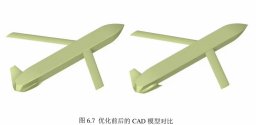
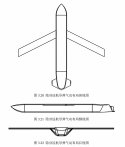
An academic paper indicates that China is currently developing a stealth cruise missile designed to be carried in the internal weapons bays of the J-20 and J-35.

Via: @兰墨飞花_星海入梦日出烟燧 on Weibo.

If anyone is interested in the details, please check out his Weibo account and sorry, I can't share the link.
1000040606.jpg
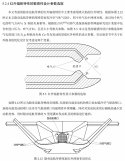
1000040607.jpg1000040608.jpg1000040609.jpg
 
Last edited:

ACuriousPLAFan

Lieutenant General
Registered Member
An academic paper indicates that China is currently developing a stealth cruise missile designed to be carried in the internal weapons bays of the J-20 and J-35.

Via: @兰墨飞花_星海入梦日出烟燧 on Weibo.

If anyone is interested in the details, please check out his Weibo account and sorry, I can't share the link.
View attachment 174234
View attachment 174233View attachment 174235View attachment 174236

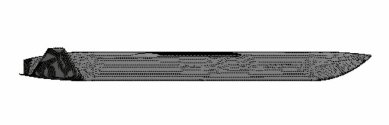
Additional information from the academic paper:

Length < 4 meters
Diameter < 0.85 meters
Mass < 1300 kilograms
Top speed = ~Mach 0.73
Cruise speed = ~Mach 0.70
Range = ~1330 kilometers

FB_IMG_1777566725358.jpg
 

Totoro

Major
VIP Professional
1. How is an academic paper indication that pla will actually get such a weapon?

2. as j20 is now some 8 years in service , one would think such or a similar weapon would already be in service as well. Not just in development.

3. Curious that design would call for less than 4m in length. Both j20 and j35 have a bay of similar length, and both could fit longer weapons.
That said, 1300 km range would be pretty good, given dimensions. Jassm cant get that far in its more compact variant. (Though it's
lighter and less volumenous)
 

siegecrossbow

Field Marshall
Staff member
Super Moderator
1. How is an academic paper indication that pla will actually get such a weapon?

2. as j20 is now some 8 years in service , one would think such or a similar weapon would already be in service as well. Not just in development.

3. Curious that design would call for less than 4m in length. Both j20 and j35 have a bay of similar length, and both could fit longer weapons.
That said, 1300 km range would be pretty good, given dimensions. Jassm cant get that far in its more compact variant. (Though it's
lighter and less volumenous)
J-20 does optimize air to air first and foremost. Until J-20S/A the nose mounted EOTS didn’t even have the ability to look backward, which presumably limited the air to surface capabilities.

My guess for less than 4m length is that maybe they wanted to be able to stack them in the bay in such a way that more missiles (AAM or air to surface) can be fitted.
 

Blitzo

General
Staff member
Super Moderator
Registered Member
1. How is an academic paper indication that pla will actually get such a weapon?
2. as j20 is now some 8 years in service , one would think such or a similar weapon would already be in service as well. Not just in development.

What we do know is that such a weapon (IWB compatible ALCM) has long been rumoured to be either in development or (and in recent years, in service) with the PLA.
Whether it is this specific weapon depicted in the study is a different matter. After all, not everything in an academic paper is necessarily representative of what is actively developed for PLA use.... but also, it is true that what we see in academic papers published in a given time period is not necessarily indicative of the stage of development it is at. (E.g. a paper for a system might only be published years after it is in service)


3. Curious that design would call for less than 4m in length. Both j20 and j35 have a bay of similar length, and both could fit longer weapons.
That said, 1300 km range would be pretty good, given dimensions. Jassm cant get that far in its more compact variant. (Though it's
lighter and less volumenous)

Longitudinal clearance is important. In fact I would say a sub-4m length is exactly what one would expect for a ALCM sized for J-20/35 family IWBs.

To be honest if the specifications are accurate and able to be achieved I would be mightily impressed -- a 1.3t weapon, 4m or lesser in length, and 0.85m or lesser in diameter, actually seems somewhat beyond what J-20/35's IWB would be able to accommodate in terms of diameter.
Keep in mind 0.85m is the same diameter of the UVLS canister, and the diameter of an equivalent IWB ALCM like JSM is 0.48m in diameter...


J-20 does optimize air to air first and foremost. Until J-20S/A the nose mounted EOTS didn’t even have the ability to look backward, which presumably limited the air to surface capabilities.

For a weapon of this category, you don't really need something like an A2G sensor capability. This sort of weapon is generally well beyond visual range, well beyond over the horizon, and acquires targeting data from offboard sources and is guided by satellite/INS/midcourse offboard sensors before terminal seeker/s take over.


My guess for less than 4m length is that maybe they wanted to be able to stack them in the bay in such a way that more missiles (AAM or air to surface) can be fitted.

Fitting inside the weapons bay won't have any bearing on a J-20/35 family IWB being able to "stack" more missiles? Longitudinally there obviously won't be any length for any weapons in "front" or "behind" such a weapon, and of course they can't stack weapons vertically above or below it for obvious reasons.

If you mean fitting weapons alongside (horizontally alongside) this ALCM in the IWB, that has no relation to the length of the weapon -- instead it is relevant to its diameter.

 
Top