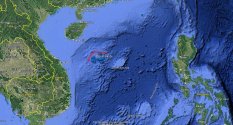
Hope you don't mind. Can you explain on this?
"Fundamentally, the SCS problem is a Taiwan contingency problem, is a WESTPAC HIC problem."
It helps a lot to give more details instead of a short sentence.
Totally fair.
Refer back to this post:
Another article that is actual SCS strategy by the director of SCSPI himself
I'd like to highlight this sentence:
"For China, the conditions for resolving these disputes are not yet in place."
What "conditions" might he be talking about? To me, it's pretty obvious. The remaining SCS (and East China Sea) issues at this stage are a corollary of the greater China-US rivalry. By prevailing in that competition (or making significant progress with it), they will naturally come along as part of the payoff.
The layer deeper than just “The Flying Dutchman” is the broader China-US geopolitical situation in the WESTPAC (including the SCS). It is the overall structure. The Netherlands is part of NATO, operates within a US-led framework, and the ship itself sailed from the Philippines. Even if China ups their tactics in this case, or even against the Philippines (including getting rid of that rust), it does not fundamentally advance the broader China-US geopolitical structure.
A couple of reasons for example (not exhaustive): First, something like the 1IC will still exist. Bases in the Philippines, Taiwan, and the Ryukyus still exist. These are the physical hard power assets that these alliances are built on. Second, showing force against the NL or the PH is not the same as showing force against the US. The Philippines is weak; you need to prove that you can come out ahead in the China-US rivalry, not the "China-Philippines rivalry".
The most obvious "great change" that would affect this geopolitical structure is of course Taiwan. That leads to bigger WESTPAC questions (of course including the SCS). I think many here would agree (though certainly some might not), that the time to fully, wholly, and totally resolve the Taiwan issue will not come for quite a few years.
Some would criticize this as too 下大棋 (too much of a "4D chess"). I think the emotional criticism is valid, but I also think the calculus is logical.
As written in the aforementioned SCSPI article:
China will continue to face maritime provocations in the years ahead, such as actions by the Philippines in the South China Sea and moves by Japan in the East China Sea, which are unlikely to stop. This calls for two things.
First, China must recognise the complexity and long-term nature of the disputes in the East China Sea and the South China Sea, maintain strategic patience, and treat maritime frictions as normal, rather than rushing unilaterally to ease tensions or even to resolve them.
Second, China must have confidence in its own strength and capabilities: stay highly vigilant, but avoid undue anxiety; respond firmly and effectively to provocations by the relevant countries, while doing so calmly without alarmism.