Yes but the heart of the whole thing the vce engines will they be ready by then China should stop this embarrassing loop where the jet is ready way before the engine it needs to stop hopefully j20 and j35 was the last victim of this it would be an embarrassment to have the j36 and j50 production model fly with ws15 a fifth Gen engine for a 6th Gen plane hopefully the curse is brokenYeah, let's be fair, 3rd prototype closes for good any demonstrator talk. This is not a comparative trial, it's a fast paced combat system development program, and we may have to reassess deployment timeline.
Operational status by 2030 is absolutely within realm of possibility. This has huge implications, as we now can count on J-36(and by extension XDS?) to make appearance in any somehow protracted future east Asian conflict. Maybe not on day 1, but it's a factor.

You are using an out of date browser. It may not display this or other websites correctly.
You should upgrade or use an alternative browser.
You should upgrade or use an alternative browser.
Chengdu next gen combat aircraft (?J-36)
- Thread starter Blitzo
- Start date

That's a lot of people though, and they had an argument in how #1 and #2 were rather different.Only the people who thought last year’s flight was a demonstrator need to reassess.
Now it's a moot, it's a question of consequences. J-36 can start combat entry process more or less together with Cancellation class.
Let's be frank, important as they are, VCEs are not an enabler here. It's a long range cruiser first and foremost, as long as subsonic performance is sufficient (while retaining dash) it'll achieve it's tactical effects.Yes but the heart of the whole thing the vce engines will they be ready by then China should stop this embarrassing loop where the jet is ready way before the engine it needs to stop hopefully j20 and j35 was the last victim of this it would be an embarrassment to have the j36 and j50 production model fly with ws15 a fifth Gen engine for a 6th Gen plane hopefully the curse is broken
The key is stealth, size(fuel onboard), aperture size and power generation. VCE are crucial on smaller aircraft trying to sit on all chairs. Larger aircraft with 3 engines can just brute force it.
Last edited:

Y'all need to seriously stop crying like spoiled children. From complaining about a six-gen prototype acting as if it were a final design to complaining about the engine as if China has parity to the US, and not that we've only recently gotten to where we are. You guys need to call your mammaries.
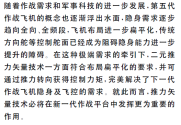
In fact, Chief Engineer Wang Haifeng has long stated in his papers that 2D vectoring is crucial for next-gen supersonic tailless stealth fighters. Vector thrust is not an additional measure, but rather a very important component in flight control.
I believe that even with engines more advanced than the WS-15, the J-36 and J-50 would still utilize 2D vectoring nozzles.

The first prototype clearly also featured a vectoring nozzle. It was not a fixed engine nozzle like that of the YF-23.View attachment 166825
In fact, Chief Engineer Wang Haifeng has long stated in his papers that 2D vectoring is crucial for next-gen supersonic tailless stealth fighters. Vector thrust is not an additional measure, but rather a very important component in flight control.
I believe that even with engines more advanced than the WS-15, the J-36 and J-50 would still utilize 2D vectoring nozzles.

Power generation is directly linked to your engines while aperture size, amount of sensors etc is all indirectly linked to the cooling and power generation. Could WS-15s be good enough to provide sufficient cooling and power for all the sensors and equipment onboard while not sacrificing fuel efficiency (Which we already know is somewhat sacrificed compared to WS-10C for better cooling and power).Let's be frank, important as they are, VCEs are not an enabler here. It's a long range cruiser first and foremost, as long as subsonic performance is sufficient (while retaining dash) it'll achieve it's tactical effects.
The key is stealth, size(fuel onboard), aperture size and power generation. VCE are crucial on smaller aircraft trying to sit on all chairs. Larger aircraft with 3 engines can just brute force it.
J-36 also isn't that large that the addition in fuel capacity can offset the increase in fuel consumption from one additional engine significantly unless said engines are much more efficient in cruise.

since when is there a number 3? What are its differences to 1 and 2?#3 first flight
View attachment 166820
might just be me but it looks like the wing surface area increased slightly. Really glad they went with TVC, but a bit disappointed they didn't substantially reduce wing surface areaView attachment 166823
Basically 0 changes, IDEFK why on Earth are people hyping this up lmfao.
So I guess these nozzles are here to stay...
do you want a fighter or not?So instead of going embedded exhaust like the original for maximum stealth like a 6th Gen should have
It goes sacrifice stealth for Maneuverability
Wow now watch the f47 and faXX have embedded exhaust for max stealth while j36 and j50 are using 2tvc for Maneuverability when the whole theme of 6th Gen is max stealth and drones so disappointinghopefully it changes for the final design
since when is there a number 3?
Since today, if not a couple weeks ago.
What are its differences to 1 and 2?
Externally similar to #2 as of current observation, apart from the lack of air data sensor/pitot tube. Major changes are likely to be inside the airframe, if any.
I agree with everything he said about TVC being essential, but another point he brought up is how next-gen aircrafts should be flat to optimize stealth. I also agree with this, but it's an interesting thing to mention because the J-20, which is made by CAC that wang works for, is pretty thick among all the 5th gens. The J-10 also has a visually girthy fuselage when compared to the rafale or typhoon. I'm not sure if the old CAC planes were thick out of necessity, or if understanding of stealth/next-gen requirements have changed within CAC.View attachment 166825
In fact, Chief Engineer Wang Haifeng has long stated in his papers that 2D vectoring is crucial for next-gen supersonic tailless stealth fighters. Vector thrust is not an additional measure, but rather a very important component in flight control.
I believe that even with engines more advanced than the WS-15, the J-36 and J-50 would still utilize 2D vectoring nozzles.