2026 Iran War Strategy and Analysis

delfer

Junior Member
Registered Member
Which means dedicating military assets to missions that are likely to actually effect military outcomes in a way beneficial to Irans, which does not include searching for downed American pilots in the wilderness.
The point of those defenses wouldn't be to search for downed pilots. It would be to prevent incursions by the enemy who would likely become emboldened after seeing a lack of proper defenses and sluggish response times. We know how the west behaves when they think they have an advantage. What happens if the U.S. decides to do a full invasion through there next time? Should Iran just allow the U.S. to grab a bunch of land in a single day like the Ukrainians did with Kursk? Russia made the same mistake by underestimating their enemy and choosing to be lazy, instead of arming their border region to the teeth. Iran shouldn't make the same mistake.
 
Last edited:
The point of those defenses wouldn't be to search for downed pilots. It would be to prevent incursions by the enemy who would likely become emboldened after seeing a lack of proper defenses and sluggish response times. We know how the west behaves when they think they have an advantage. What happens if the U.S. decides to do a full invasion through there next time? Should Iran just allow the U.S. to grab a bunch of land in a single day like the Ukrainians did with Kursk? Russia made the same mistake by underestimating their enemy and choosing to be lazy, instead of arming their border region to the teeth. Iran shouldn't make the same mistake.
They had sufficient assets in place to hit US assets used in search and rescue, did they not? Istafan is not exactly a border area- their actual ground forces should be positioned to defend along actual potential axis of threat.
 

delfer

Junior Member
Registered Member
They had sufficient assets in place to hit US assets used in search and rescue, did they not? Istafan is not exactly a border area- their actual ground forces should be positioned to defend along actual potential axis of threat.
The fact that those aircraft were able to go in that deep into Iranian territory and wander around for an entire day is the problem. They should've been shot down within the first 12 hours, yet they seemed to have free reign for quite a bit of time. That shows a lack of proper response time on Iran's part, in addition to a lack of pre-existing defenses in those areas. The lack of FPV drone footage is also a problem. They should've had drones all over the place by the time everything was coming to an end, and yet, it seems like the Iranians have no footage whatsoever of what went down before the U.S. fled the scene.
 

enroger

Senior Member
Registered Member
Americans moved quickly. Whole thing was about 36 hours. Fill the area with drones, the lack of cover in an arid environment means local militia would be attacked in the open. Coordinated response is too slow for Iranians, if this took 72 hours, a couple extra ADs would have shown up, a single BM21 would have wrecked/locked down the landing site and would have probably forced additional of casualties.

Rough landing might have wrecked landing gear and prevented take off, but they probably didnt. Probably cant turn the plane around or ground not suitable for takeoff at the acceptable speed/altitudes to avoid AD.

36 hours is still a very long time, enough for some friendly satellites to pinpoint the site, or send in a drone/small team to recon the location. All this should enable them to use something like rocket arty or BM on the site.
 

Puss in Boots

Junior Member
Registered Member
36 hours is still a very long time, enough for some friendly satellites to pinpoint the site, or send in a drone/small team to recon the location. All this should enable them to use something like rocket arty or BM on the site.


1775454068035.png

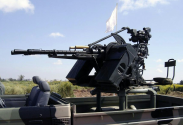
If Iran could ambush the search and rescue team along their likely route with several of these anti-aircraft vehicles, then things would get interesting.

Unfortunately, the Iranian military's response was indeed unexpectedly slow.
 

enroger

Senior Member
Registered Member
View attachment 172968

If Iran could ambush the search and rescue team along their likely route with several of these anti-aircraft vehicles, then things would get interesting.

Unfortunately, the Iranian military's response was indeed unexpectedly slow.

I think that is asking too much from the Iranians. We have to work under the assumption that Iranians cannot relocate their forces in a timely manner due to the air locked out from them. That's why I think recon and long range fire is key to Iranians stopping further incursion of this type.

Also, I suspect their mosaic command structure while helping them to improve survivability it may also hamper their response time.

Edit: Another way is just to spread out their manpads as much as possible hoping they'll have high probability with someone with manpads at the right place and time
 
The fact that those aircraft were able to go in that deep into Iranian territory and wander around for an entire day is the problem. They should've been shot down within the first 12 hours, yet they seemed to have free reign for quite a bit of time. That shows a lack of proper response time on Iran's part, in addition to a lack of pre-existing defenses in those areas. The lack of FPV drone footage is also a problem. They should've had drones all over the place by the time everything was coming to an end, and yet, it seems like the Iranians have no footage whatsoever of what went down before the U.S. fled the scene.
The Iranians have limited AD assets, and the assets they do have are of limited effectiveness. If they did have sufficient AD assets to lock down the search area - then those assets should be deployed to inflict higher attrition on US air assets striking Tehran.
 

TPenglake

Junior Member
Registered Member
Honestly, for the type of operation and the capabilities of both sides, I think people are expecting too much out of Iran and overestimating the importance of this episode. For one having read through the NYTime's account of this, I think its clear. For the US, this was a matter of preserving their military ethos of "No man left behind," while for Iran the benefits of capturing the pilot simply amounted to a potential propaganda win, its not like the Americans were capturing a city or a strategic point. Ie. the Americans in this case were much more determined to see the rescue through than the Iranians were to capture the pilot.

Another thing is the terrain. The terrain being mountainous actually stacked things against Iran in this case despite it being their home turf, since eventhough the pilot was lost he still had his beacon so the US knew where he was the whole time and thus was able to plan and coordinate an exfiltration, while for the Iranians it was basically finding a needle in a haystack.

This whole event also took place in Khuzestan, which has a significant Arab population especially in the countryside and separatist sentiments. Not big enough to threaten the regime, but probably enough to hamper any search efforts.

Also as for the tactical details itself, deception, aerial surveillance, denying area access through fire, the US and Israel put forth their total operational excellence here. Let's not let a few hits on jets drown out the fact that the two countries still have air superiority and any massing of Iranians forces in this area would've gotten lit up in a microsecond. At this point, a ground invasion is basically a question of when, Iran knows this and probably thought the casualties they would've incurred had they gone all out to capture the pilot, especially up against the amount of aerial resources the US had devoted to rescuing him, was not worth it.

In the end, maybe its an embarassment that US spec ops was able to operate so freely in Iranian territory. But a spec ops raid is a different ballpark from an actual ground campaign to seize and hold territory, up against much more determined resistance. So I wouldn't read too much into it and if the Americans think the raid is a sign that invading Iran itself will be easy, then they're welcome to make the Venezuela mistake twice.

 

FairAndUnbiased

Brigadier
Registered Member
@FriedRiceNSpice @plawolf @pevade

Let me talk to you all about some objective history, no mention of any middle eastern stuff.

Please, Log in or Register to view URLs content!
He was a fast growing boy weighing in at 4400 kg at 3 months old, being conceived in February 1942 with parts ordered and being born with everything except HEU in May 1945. His big show was in August 1945.

Little Boy never had a test or rehearsal before his big day. His design's performance was guaranteed by physics. A gun type device would have an almost zero chance of failure. There would be no warning. Fat Man, his cousin, was tested with Trinity because an implosion type device was more complex and had a chance of failure.

Much of his big boy weight came from 1940s steel casing and primitive cordite explosives fired by a literal 3 inch naval gun. The actual HEU portion ranged from 50-89% enriched at an average of 80% enrichment. Active component mass: 56 kg.
 
Top