
You are using an out of date browser. It may not display this or other websites correctly.
You should upgrade or use an alternative browser.
You should upgrade or use an alternative browser.
Indian Military News, Reports, Data, etc.
- Thread starter bd popeye
- Start date

India to supply BrahMos, Astra missiles to Indonesia
I suspect that if the word "will" were to disappear one day, all Indians would become mute.India will supply the BrahMos cruise missile system and the Astra air-to-air missile to Indonesia, an Indian government official said on Tuesday.

Yep, According to wdmma China only has 68 attack helosWDMMA still claim that IAF operates superior helo fleet because they failed to account for the fact that most of the helos are operated by PLAGF
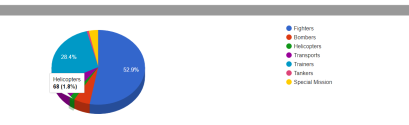

By this logic, PLAAF could publicly reveal they have one gazillion J-20s,KJ-20s, J-36s, J-50s on order and be bumped up to 1st place lmao...
This ranking also takes into account aircraft that are on order. The Indian Air Force's order for 183 Tejas fighter aircraft has been included in the assessment.
Whatever makes you happy

We shouldn't engage with this again, we had it the last time and it was a complete waste of timeBy this logic, PLAAF could publicly reveal they have one gazillion J-20s,KJ-20s, J-36s, J-50s on order and be bumped up to 1st place lmao
Whatever makes you happy
Good, because the PLAAF is larger, more advanced and integrated than the cesspit that is the IAFSuppose there are two air forces. One has a much larger number of fighter jets, while the other has a smaller fighter fleet but a higher aircraft availability rate, more loyal wingman drones, AWACS, aerial refueling tankers, electronic warfare aircraft, and a stronger surface-to-air missile network. It also has all of these systems seamlessly integrated into a single operational framework.
Which air force do you think would be more effective, the one with more fighter jets, or the one with a better overall force structure and a more integrated combat capability?
I'm sure Xi Jinping is scared from the news that the IAF is planning to order 183 Tejas 1A'sBy this logic, PLAAF could publicly reveal they have one gazillion J-20s,KJ-20s, J-36s, J-50s on order and be bumped up to 1st place lmao
Whatever makes you happy
By this logic, PLAAF could publicly reveal they have one gazillion J-20s,KJ-20s, J-36s, J-50s on order and be bumped up to 1st place lmao
Whatever makes you happy
The induction of 183 Tejas fighters and the Netra AWACS is a major advantage for the Indian Air Force, not just because it increases squadron strength, but because it creates an integrated network of AWACS and fighter aircraft armed with Astra-series beyond-visual-range (BVR) missiles. In such a network, a Tejas can launch a missile while a Netra AWACS provides target updates and guides the missile toward its target. Since the electronics and software are indigenous, data exchange between the platforms can be much more seamless.I'm sure Xi Jinping is scared from the news that the IAF is planning to order 183 Tejas 1A's
Another important advantage is that the Uttam AESA radar uses gallium nitride (GaN) technology rather than gallium arsenide (GaAs). Even the current Rafale fleet uses a GaAs-based AESA radar, while France is still developing a GaN radar for future Rafale upgrades.
I am pretty sure that this ranking takes into account the Super Sukhoi upgrade program, under which the Su-30MKI's PESA radar will be replaced with the indigenous GaN-based Uttam AESA radar, along with a more powerful indigenous mission computer. If the order for 114 Rafales under the MMRCA program is eventually placed with indigenous avionics, it would further strengthen this ecosystem.
This growing network of indigenous avionics across fighter aircraft and AWACS will enable seamless information sharing between fighter jets, AWACS, and ground-based air defense systems, including surface-to-air missile batteries. As more platforms adopt indigenous avionics and communication systems, the Indian Air Force will rely less on interoperability solutions such as Vayulink to make aircraft and ground assets communicate with one another.
This level of interoperability already exists in United States, Japan, and NATO members because they operate common platforms and systems. In India's case, achieving this level of seamless integration has been a long-standing objective, and it is now gradually becoming a reality.

This ranking also takes into account aircraft that are on order. The Indian Air Force's order for 183 Tejas fighter aircraft has been included in the assessment.
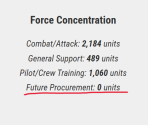
Oh yeah? Then could you explain why this is the case for China's PLAAF in the WDMMA's rankings?
I'm sure that since you fully trust WDMMA and their methodology on creating the rankings, then I'm certain that you should be able to explain why this is the case.
Last edited: