Well at least having some real world use would finally give them valuable data and experience to work with, to what end idk but it beats being stuck in limbo with a giant paperweightYou know how dire the situation is for the Kaveri program that it's developers began developing a variant (the KGMT) for use on naval vessels; clutching straws to keep the program alive.
Well, that bright idea also failed.
It's only a matter of time until another variant is developed for powering freight trains.

You are using an out of date browser. It may not display this or other websites correctly.
You should upgrade or use an alternative browser.
You should upgrade or use an alternative browser.
Indian Military News, Reports, Data, etc.
- Thread starter bd popeye
- Start date
This is true only if the product is something legitimately useful. Otherwise the project should be cancelled so resources can be reallocated more efficiently.If they can at least build Kaveri engine fore something, it build up their engineering and production knowledges even if the end product is not at the level they want.
After that returning on the drawing board and keep trying. They need to make their own jet engine... or just buy blueprint and all tooling for something older that work if they are not able to build on the Kaveri experiences. They need a corner stone.
If the engine can be used in a project, then it needs 100% support even if it is 60% of the capability. Otherwise the project is not taken seriously and manpower is wasted on keeping it alive for the sole purpose of keeping it alive.
I look at something like JH-7 from China, the first generation was quite low in capability, but they continued to develop it seriously and the JH-7A was still something quite behind contemporary designs, but at least quite capable in a certain window.
Conversely, we can look at Tejas/LCA, it probably should’ve been cancelled 20 years ago, but still commands considerable resources.

Tejas conforms your rule though; unlike kaveri, it's useful, even if badly delayed.Conversely, we can look at Tejas/LCA, it probably should’ve been cancelled 20 years ago, but still commands considerable resources.
And being absolutely fair to Tejas, it is late to party, some of the latest, but it isn't alone on the party:
FCA Tejas was delivered together with some of the last new non-ESA aircraft around (Gripen C to Hungary, M-346FA here and there, etc).
Equally, Tejas mk.1a is emerging just amongst many newly delivered 4th gen AESA aircraft. No, it isn't a world beater - even if they were to deliver mk.2 tomorrow, it won't be. But neither mk.1a nor mk.2 are behind last trains.
Furthermore, in Indian case, they do provide badly needed capabilities(frontal interceptor), which are very difficult to procure from the market otherwise, as they're at this point effectively endemic...
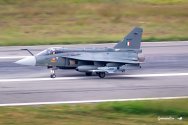
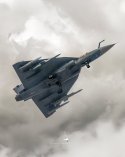
And yes, it could be made better(or outright bought better) if not for attempt at sovereignty and domestic design capability. Literally replace domestic Astra with imported Derby-ER (as was in fact considered),and primary performance grows.
But this is, again, a trade forum members consider worthy.
Last edited:
That’s the key point I have always thought about. India is victim to their own delusions of grandeur and projecting their imagination into reality. They face no real threat to their territory and interest. The border issue with China doesn’t require a massive sophisticated military machine. It can be resolved with the troops and equipment India already has and priority should be a diplomatic resolution.tejas has no capability though. its a tiny dink of a plane. r-73s look massive on it. no matter what they say it's obvious the iaf doesnt actually like the type when the chips are on the table.
the whole indian obsession with squadron count is absurd. they're not under any real military threat and they're literally squandering(-ed, its honestly already too late) their golden hour to scrap and rebuild their forces anew.
So India should take her time to plan for any military purchase and indigenous production they needed without feeling the need to rush to catch up with China, since China is not really a threat to India , and Pakistan can be easily handled by India without too much effort. So I don’t understand this paranoia they have with trying to rush things just to keep up with China , which has led to the current situation where erroneous decisions have been made which otherwise wouldn’t have been the case. I believe they should focus more on domestic production without feeling under the pressure of matching the West/China .
They should get out of this mindset, else they will keep lagging behind more and more. It will take time but it’s better long term if they stick to their local projects and learn through iterations. By contrast their navy have been very patient and methodical in their military purchase/ production and strategy. Which has worked better than air force and army. Even though they also made the mistake of trying to convince the government to approve the construction of another larger aircraft carrier to match China, even though they know the budget is limited and inadequate, just to keep appearances and match China . Thankfully the government smacked that idea down. They should be more realistic in their demands/objectives
Tejas is a nice little fighter and its worse problem is the engine sold by the US that is not available in quantity fast enough. India would need to build 300 of them for stop gap solution and giving pilots flying times and training.Tejas conforms your rule though; unlike kaveri, it's useful, even if badly delayed.
And being absolutely fair to Tejas, it is late to party, some of the latest, but it isn't alone on the party:
FCA Tejas was delivered together with some of the last new non-ESA aircraft around (Gripen C to Hungary, M-346FA here and there, etc).
Equally, Tejas mk.1a is emerging just amongst many newly delivered 4th gen AESA aircraft. No, it isn't a world beater - even if they were to deliver mk.2 tomorrow, it won't be. But neither mk.1a nor mk.2 are behind last trains.
Furthermore, in Indian case, they do provide badly needed capabilities(frontal interceptor), which are very difficult to procure from the market otherwise, as they're at this point effectively endemic...
View attachment 177804View attachment 177805
And yes, it could be made better(or outright bought better) if not for attempt at sovereignty and domestic design capability. Literally replace domestic Astra with imported Derby-ER (as was in fact considered),and primary performance grows.
But this is, again, a trade forum members consider worthy.
For the rest... some argue about capabilities but we often forget that old tired f-5 fighters bombed an air base in Kuwait after penetrating a layered American air defenses.
Pakistan is, in many ways, a more complex military challenge for India than China. Against China, India's primary objective is to maintain deterrence along the border through troops, military equipment, and, in the maritime domain, platforms such as aircraft carriers and submarines. In contrast, dealing with Pakistan requires conducting precision military operations deep inside hostile territory. This is where stealth aircraft, stealth drones, stealth cruise missiles, electronic warfare systems capable of jamming enemy radars, satellite intelligence, and an entire ecosystem of advanced capabilities become critical.That’s the key point I have always thought about. India is victim to their own delusions of grandeur and projecting their imagination into reality. They face no real threat to their territory and interest. The border issue with China doesn’t require a massive sophisticated military machine. It can be resolved with the troops and equipment India already has and priority should be a diplomatic resolution.
So India should take her time to plan for any military purchase and indigenous production they needed without feeling the need to rush to catch up with China, since China is not really a threat to India , and Pakistan can be easily handled by India without too much effort. So I don’t understand this paranoia they have with trying to rush things just to keep up with China , which has led to the current situation where erroneous decisions have been made which otherwise wouldn’t have been the case. I believe they should focus more on domestic production without feeling under the pressure of matching the West/China .
They should get out of this mindset, else they will keep lagging behind more and more. It will take time but it’s better long term if they stick to their local projects and learn through iterations. By contrast their navy have been very patient and methodical in their military purchase/ production and strategy. Which has worked better than air force and army. Even though they also made the mistake of trying to convince the government to approve the construction of another larger aircraft carrier to match China, even though they know the budget is limited and inadequate, just to keep appearances and match China . Thankfully the government smacked that idea down. They should be more realistic in their demands/objectives
If an Indian pilot is shot down inside Pakistani territory, any rescue operation would carry significant risks, including the possibility of additional aircraft and personnel being lost or captured. Capabilities such as stealth aircraft, stealth drones, AWACS, electronic warfare systems, and long-range precision weapons can help reduce those risks by enabling operations with a lower chance of detection.
United States first employed stealth aircraft in combat during operations against Iraq, and it has continued to rely on stealth platforms for missions requiring penetration of heavily defended airspace. The ability of stealth aircraft to infiltrate hostile territory with a reduced likelihood of detection makes them particularly valuable for conducting precision strikes and other high-risk operations. stealth capabilities are especially relevant to India's military options in the India–Pakistan context.
To be a bit more precise, yes Tejas does fit the bill, but at this point Tejas has been horribly mismanaged. You have 3 different versions Mk1, Mk1A, Mk2, all going on with some degree of concurrency even though none have achieved significant operational ability. Mk1 was essentially a failure, but politics forced it into limited production which now requires operational support. Mk1A at this point literally cannot fly as there is an inability to acquire engines. Mk2 will have the same problem as Mk1A, but still there is work being done on it. On top of this you have ADA embarking on the development of AMCA. Literally running a sprint and a marathon when you didn’t even learn to walk yet…Tejas conforms your rule though; unlike kaveri, it's useful, even if badly delayed.
And being absolutely fair to Tejas, it is late to party, some of the latest, but it isn't alone on the party:
FCA Tejas was delivered together with some of the last new non-ESA aircraft around (Gripen C to Hungary, M-346FA here and there, etc).
Equally, Tejas mk.1a is emerging just amongst many newly delivered 4th gen AESA aircraft. No, it isn't a world beater - even if they were to deliver mk.2 tomorrow, it won't be. But neither mk.1a nor mk.2 are behind last trains.
Furthermore, in Indian case, they do provide badly needed capabilities(frontal interceptor), which are very difficult to procure from the market otherwise, as they're at this point effectively endemic...
View attachment 177804View attachment 177805
And yes, it could be made better(or outright bought better) if not for attempt at sovereignty and domestic design capability. Literally replace domestic Astra with imported Derby-ER (as was in fact considered),and primary performance grows.
But this is, again, a trade forum members consider worthy.
Fourth-generation fighter jets will always remain in service. Fifth-generation fighters will eventually be phased out, but fourth-generation jets will still be flying. U.S. Air Force is a good example, production of the F-22 Raptor has already ended, and it is now nearing retirement, while the more than 50-year-old F-16 is still in production, with new variants continuing to be developed.Tejas is a nice little fighter and its worse problem is the engine sold by the US that is not available in quantity fast enough. India would need to build 300 of them for stop gap solution and giving pilots flying times and training.
For the rest... some argue about capabilities but we often forget that old tired f-5 fighters bombed an air base in Kuwait after penetrating a layered American air defenses.
Similarly, Rafale, Eurofighter Typhoon, and Gripen are all fourth-generation fighter jets that are still in production, with new iterations being introduced every 10–15 years.
Failure is a bit too harsh - they're now operational, and with IOC aircraft brought to partial FOC standard, there'll be at least some numbers and operational use out of them.To be a bit more precise, yes Tejas does fit the bill, but at this point Tejas has been horribly mismanaged. You have 3 different versions Mk1, Mk1A, Mk2, all going on with some degree of concurrency even though none have achieved significant operational ability. Mk1 was essentially a failure, but politics forced it into limited production which now requires operational support.
Yes, it isn't much of a combat aircraft (barely/if better than MiG-21 Bison, provided everything works); it's still a monumental achievement in that India has managed a broadly modern fighter, after all.
Remember how China got to J-7D/J-8-II back in the 1980s. It was also a long and really painful story.
Or, I don't know... since KF-21 isn't at IOC yet, right now India is still *notionally* ahead of Korea, for example. Operational FA-50s are equal mix of international components, but FA-50 is a simpler plane, done with much broader and basic foreign assistance.
Last edited:
India plans to revive and fast-track a 700-km rail link to connect Iran's Chabahar port with a city called Zahedan, near the Iran-Afghanistan border.
Indian and Iranian officials will now discuss this infrastructure plan. While no dates have been decided for formal ministerial talks, Iranian ministers have visited New Delhi in connection with multilateral meetings, and India is looking at engaging with officials in Iran to restart several stalled projects.
the area seems near to Pak's Balochistan?