
You are using an out of date browser. It may not display this or other websites correctly.
You should upgrade or use an alternative browser.
You should upgrade or use an alternative browser.
News on China's scientific and technological development.
- Thread starter Quickie
- Start date

烽火通信/FiberHome and 甘肃电信/Gansu Telecom completed hollow-core fiber/HCF/空芯光纤 deployment at 庆阳 EDWC node in Gansu. First such deployment at any national northwest hub nodes. EDWC becomes AI compute backbone around 智算中心 Interconnect/DCI. HCF with speed-of-light in air propagation (~1.0 refractive index) offers materially lower latency in data transmission.YOFC is Fiberhome's major domestic competitor.
excerpts:Why are Korean engineering prodigies flocking to Chinese universities?
Last year, after sweeping science Olympiads, Kim became an intern at KAIST. He was deciding where to apply for college: KAIST, Seoul National University or perhaps an engineering school in the United States.
Then his supervising professor, Lee Pil-seung, made a suggestion Kim had never imagined.
“Seung-hyun, have you ever seriously considered engineering schools in China?”
For Kim, it was a surreal moment. Did a KAIST professor, from an institution widely considered the pinnacle of engineering education in Korea, just suggest that he study in China?
But Lee spoke calmly, with unmistakable conviction. “Their pace of advancement is frankly formidable. No other country in the world can match them in robotics and artificial intelligence. It is we who have to learn from them.”
Kim is not some lone exception. Some 653 Korean students were enrolled in undergraduate science and engineering programs in China last year — a sign of a new reality.
Kim said that despite having counseled thousands of students, even he was taken aback when a student from a science high school came to him for advice.
Kim had to ask why the student was considering studying in China when Seoul National University was likely within reach. The student replied that he wanted to study at Zhejiang University, which ranked third among universities in this year’s Nature Index, a research performance ranking by the prominent science journal Nature.
While some students were eyeing China in search of a better research environment, others decided to head to China to make a living while pursuing their dream career.
Yoon Jeung-jin, an 18-year-old who recently graduated from a foreign language high school in Korea and hopes to become an astronomer, said he once counted how many observatories there were in Korea.
Korea has one national research institute in Daejeon and about 10 observatories nationwide, Yoon said. China, by contrast, has five clusters under the Chinese Academy of Sciences spread across the country, with more than 40 observatories.
“In Korea, even a degree does not guarantee that you will find a place in the field,” Yoon said. “Applied physics and astronomy are often pushed aside when research budgets are allocated. But China is planning to build 10 new major observatories, each with more than 50 telescopes, and even a space observatory near its space station.”
“I want to study somewhere I can keep doing research without being cut off,” he said.
Choi, 24, said she recently withdrew from Ewha Womans University after being admitted to Fudan University’s artificial intelligence program. The reason was because she wanted to properly study engineering.
“The difference in the research environment is hard to miss,” she said. “In China, commercialization moves quickly, allowing researchers to observe how advanced technologies are applied in the real world and collect live data from the process.”
so it also go both ways on certain conditions
While some of Korea’s aspiring scientists are leaving for Chinese universities in search of a better research environment, the opposite is also happening in China. Students who have fallen behind in the country’s fierce academic competition are choosing Korea instead.
In China, graduate students are called “research students,” a term that reflects how they are treated as researchers even before earning a degree.
In that environment, Korea has become a relatively accessible destination for what amounts to study abroad refuge. The trend reflects a convergence of needs — China is struggling with a glut of talent, while Korea is grappling with a shortage of students.
An official at a China-based study abroad agency that has helped students study in Korea for 30 years said that admission standards in Korea’s science and engineering fields have generally dropped in recent years.
“Chinese engineering schools can still attract students even after eliminating English-language courses for foreigners and teaching only in Chinese,” Park said. “Korea has become the opposite. The balance has shifted with the competitiveness of science and engineering.”
“When professors gather and someone brings up a noteworthy paper, almost without exception, it is from China,” Lee said. “The quality, quantity and speed of the research are just overwhelming.”
“We do not talk about doomsday scenarios in public,” he said. “But among professors, there is a shared recognition that China is no longer merely a rival trying to poach Korean technology. China is the dominant front-runner, and Korea has to run hard just to keep up.”
“Korea has to acknowledge that it has fallen behind and restore the academic and human exchanges that have been cut off,” Lee said. “Students like Seung-hyun will be the first wave. Through them, Korea will gradually come into contact with leading technologies and learn from them.”
Last edited:

Paper on the increasing prevalence of cancer in society, and steps taken to address it.
- China is a major contributor to the global cancer burden, and, owing to its rapidly ageing population, the number of cancer cases in the country is expected to continue rising.
- Epidemiological trends for cancer in China have shifted over the past few decades, with a changing cancer spectrum that is increasingly shaping global cancer patterns.
- A range of initiatives to prevent cancer-related behavioural, metabolic, dietary and environmental risk factors as well as infectious agents is being implemented in China.
- Four national cancer screening programmes and dozens of local screening programmes have been established in China, and they target eight cancer types: cervical, female breast, lung, colorectal, oesophageal, gastric, liver and nasopharyngeal.
- With increased early diagnosis, advances in cancer care and extensive health insurance coverage, the 5-year relative survival rate for individuals with cancer in China has been steadily improving.
- To address the challenges of cancer control, China is implementing a people-centred, collaborative cancer control roadmap: the Healthy China 2030 Cancer Control Plan.
The team led by Pan Feng at the School of New Materials, Peking University, has made significant progress in the field of MOF crystal structure prediction based on graph-theoretic structural chemistry and AI.
nic frameworks (MOFs) have attracted much attention due to their tunable structure and wide range of applications. X-ray diffraction (XRD) technology is also well-established in materials characterization. However, in high-throughput experiments and self-powered laboratory settings, efficiently analyzing PXRD data of MOF materials and predicting their crystal structures remains a challenge for researchers. Professor Pan Feng's team at the School of New Materials, Peking University Shenzhen Graduate School, specializing in graph-theoretic structural chemistry, AI4S, and materials genomics, has successfully used artificial intelligence to analyze XRD, innovatively proposing a diffusion-based generative artificial intelligence framework, Xrd2Mof. This model takes PXRD patterns, metal nodes, and organic ligand information as input and MOF structure as output. It is the first to introduce coarse-grained representation into this task to extract the most diffraction-related skeletal geometric features, thus preserving key "material gene" information.
Sanan Optoelectronics: Achieves mass production of 6-inch indium phosphide (IP) photonic chips!
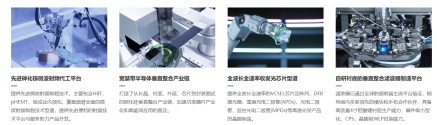
Sanan Optoelectronics has officially disclosed that it has achieved large-scale mass production of 6-inch InP optical chips. This milestone represents a breakthrough in overcoming previous technological barriers regarding large-wafer manufacturing for high-speed data transmission.
The company now controls the complete supply chain, including epitaxial growth (the critical pre-process), chip manufacturing, and packaging/testing. This self-sufficiency allows them to tightly manage quality and costs. Sanan's technology ranks among the top in China for InP substrates, which are essential for high-end optical modules like 800G and 1.6T. They have successfully completed a significant expansion of their core epitaxial process to support this new production scale.
The company capacity upgrade is substantial:
- Total Basic Optical Technology Capacity: ~2,750 wafers/month.
- Dedicated Epitaxial Capacity (Post-Expansion): Nearly 6,000 wafers/month.
- Growth Metric: The epitaxial capacity has more than doubled, directly enhancing the company's ability to deliver high-speed optical chips required by AI infrastructure.
Strategically, Sanan Optoelectronics is addressing the acute global shortage of domestically produced Indium Phosphide (InP) chips by filling this void and reducing reliance on imports for local optical module manufacturers, while simultaneously positioning itself to capitalize on the surging AI computing power and data center boom through alignment with high-demand downstream modules like 800G/1.6T. Looking ahead, the company plans to further upgrade wafer sizes based on market orders, a move that will lower per-chip production costs and solidify its leadership in China's InP industry chain localization efforts, effectively transitioning Sanan from a potential supplier into a dominant player capable of stabilizing the domestic supply chain for critical upstream materials essential to next-generation AI computing.
TCL CSOT's printed OLEDs will enter the branded monitor and laptop market in the second half of the year.
TrendForce reported that TCL CSOT is poised to disrupt the long-held dominance of South Korean manufacturers (Samsung Display and LG Display) in the display market by introducing Inorganic Jet Printing (IJP) OLED technology. This breakthrough aims to enter the high-value branded monitor and laptop supply chains starting in the second half of 2026. It offers the following benefits:
- Cost Reduction: Compared to traditional Fine Metal Mask (FMM) processes, IJP can reduce laptop display panel costs by 30–35%.
- Efficiency & Quality: The technology offers up to 90% material utilization, superior flexibility, better panelization capabilities, and larger pixel apertures.
- Energy Efficiency: It provides significant energy savings for high-end business and creative scenarios.
TCL CSOT has successfully validated this technology through its G5.5 production line, which recently achieved a product yield exceeding 70%. Capacity ramped from 3K/month to 9K/month while mass-producing medical display panels. This experience directly fueled the investment in an 8.6-inch IJP OLED production line, expected to begin official mass production and shipment in the third quarter of 2026.
TCL CSOT is focusing on the mid-to-low-end laptop segment with a 14-inch WUXGA panel, utilizing an aggressive pricing strategy. Mainland and Taiwanese brands are expected to adopt these panels first, while American brands are currently in the verification stage.
While Korean manufacturers currently hold high penetration rates (approx. 3% overall, 6% for notebooks), the influx of advanced IJP OLEDs from TCL CSOT, alongside domestic competitors like BOE and Visionox, is projected to boost overall OLED panel penetration to 6.2% by 2030 and laptop panel penetration to 22.4%.
This move marks a significant shift in the global display landscape, challenging the oligopoly of Korean giants with cost-effective, high-performance Chinese technology.
TCL CSOT is focusing on the mid-to-low-end laptop segment with a 14-inch WUXGA panel, utilizing an aggressive pricing strategy. Mainland and Taiwanese brands are expected to adopt these panels first, while American brands are currently in the verification stage.
While Korean manufacturers currently hold high penetration rates (approx. 3% overall, 6% for notebooks), the influx of advanced IJP OLEDs from TCL CSOT, alongside domestic competitors like BOE and Visionox, is projected to boost overall OLED panel penetration to 6.2% by 2030 and laptop panel penetration to 22.4%.
This move marks a significant shift in the global display landscape, challenging the oligopoly of Korean giants with cost-effective, high-performance Chinese technology.
A 220 million yuan rare earth special alloy wear-resistant material project has been launched in Yili Xinyuan.
On June 18, 2026, a significant industrial development was announced in Yili Xinyuan following the signing of a tripartite investment framework agreement. The project involves the Xinyuan County Industrial Park Management Committee, Inner Mongolia Zhongtian Hongyuan Rare Earth New Materials Co., Ltd., and Xinyuan County Xinjiang Trade and Logistics Co., Ltd. Together, they have launched a comprehensive 220 million yuan rare earth special alloy wear-resistant material full-industry chain integrated project. This initiative marks the establishment of a new manufacturing hub designed to transform the regional economy through advanced materials science and high-value-added industrial applications.
The project is structured into two phases, with construction commencing in July 2026 and reaching full production capacity by December 2028. Once operational, it aims to construct an intelligent production facility featuring 39,000 square meters of workshops capable of producing 100,000 tons of rare earth manganese special alloy wear-resistant castings annually. Upon completion in late 2026, this base will become the first high-capacity intelligent production site in Northwest China with an annual output of 100,000 tons (noting a discrepancy between the introductory "10,000" and detailed "100,000" figures, with the latter representing the total planned capacity). Economically, the project is projected to generate over 500 million yuan in annual revenue and contribute more than 10 million yuan in tax payments, while also stimulating growth in raw material supply, logistics, and supporting sectors.
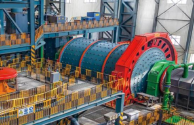
Inner Mongolia Zhongtian Hongyuan, a "Little Giant" enterprise based in Baotou's Rare Earth High-tech Zone, leads this venture as the primary investor. The company specializes in precision control technology for rare earth lanthanum and cerium, utilizing these abundant elements to dramatically enhance the toughness and wear life of industrial components. By precisely adjusting grain boundary structures, their alloys achieve over 50% improvements in wear resistance compared to traditional high-manganese or high-chromium cast irons, addressing critical issues like downtime and material loss in heavy industries such as mining, metallurgy, and power generation. This technology represents a strategic shift from simple consumable replacement to a superior "material upgrade," offering lower lifecycle costs despite higher initial performance requirements.
Beyond the technical innovation, the project holds significant geopolitical and environmental importance. While Northwest and Central Asia possess strong demand for infrastructure and mining, they have historically lacked access to high-end wear-resistant materials, relying on imports from eastern China. This new facility bridges that gap with a "high-end + intelligent + green" manufacturing model. It incorporates green electricity coupled with energy storage systems, utilizes short-process smelting technologies, and maintains a wastewater reuse rate exceeding 95%, achieving over 30% energy savings compared to traditional casting methods. With an 80% renewable energy consumption target, the project aligns perfectly with global low-carbon goals while solidifying China's rare earth advantages in frontier regions.

broadsword
Brigadier
China Speed.
Damn China never stops upgrading!
China needs a straw checkerboard printer to reclaim the desert.
Damn China never stops upgrading!
China needs a straw checkerboard printer to reclaim the desert.

You get run over by one of those things and the red smear you leave on the ground is swept up immediatelyChina Speed.
Damn China never stops upgrading!
China needs a straw checkerboard printer to reclaim the desert.