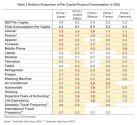
Related article to the recent discussion. They’re saying that China’s approach is actually very similar to Japan’s approach to addressing domestic demand which while making them competitive in new technologies at the time, didn't work to address demand.
“In fact, most economic historians would that Tokyo in the late 1980s and 1990s, like Beijing today, found it politically difficult to address its deep, demand-side imbalances and instead hoped to accelerate supply-side reforms by focusing on the development of new technology.
At the time, Tokyo expected that technological advancement would lead to large enough technological breakthroughs and productivity gains for the overall economy that Japan would be able to rebalance its economy towards a greater role for domestic demand without slowing the growth of the supply side. It would be growth in supply that would drive even faster growth in demand.”
thoughts? I think there’s something missing here.
What's missing is that when Japan's property bubble burst, its growth collapsed to ~1% and stagnated there. Meanwhile, Chinese growth post-bubble bursting is still ~5%. Even the author concludes by pointing out the differences between Japan and China. There's also a parallel track on the politics of it all which is not captured by headline growth numbers, but I digress. Suffice to say Japan's political context, and therefore options, in the 90s were completely different from Chinese analogues today.
I am not arguing that an intense supply-side focus on developing new technology won’t make a difference for China and will fail. It is certainly possible that such a focus could help China avoid—or at least reduce—a long and difficult adjustment associated with boosting a very weak demand side of the economy. But it is foolish to suggest that such a focus must inevitably work, and even more foolish to claim that China is the first country to try this approach. Many countries have tried to resolve demand imbalances with technology-driven supply-side measures—most notoriously the Soviet Union in the 1960s and Japan in the late 1980s and early 1990s—but it has always proved far more difficult than expected. The important lesson is that ignoring the problems of its historical precedents won’t make China’s success any more likely.
At the end of the day, Japan is not China. Comparing apples and oranges only gets you so far. Time will tell, as it always does, but for the time being all the ongoing whining from countries opposed to Chinese success is quite telling as a metric of continued Chinese success.