China's Space Program Thread II

NoetherSpudCharge

New Member
Registered Member
Long Lehao did slip a 2032 in a presentation back in January (even if official statements in the past months still mention a 2030 target or "by the end of the 5 year plan", generally speaking, 2030 seems a very tight target given the planned construction milestones for the CZ-9 factory infrastructure at wenchang
View attachment 176286

To be fair, Andrew Jones had sources in the 2020-2022 period which prompted him to quote a CZ-9 first flight of around 2033, so a 2032-2035 estimate would be consistent with that. I think the 2030 date is an optimistic (overly optimistic?) estimate based on best-case scenarios; perhaps circles within CASC are using an early deadline to create a sense of urgency whthin the development teams, like what Jared Issacman is trying to do for the Artemis program. When aggressive plans meet reality, delays may be the result; this has occurred for both Artemis and the Starship-superheavy programs (we'll see about CZ-9). Always good to temper optimism with caution.

(Addendum: the thought has occurred to me that there may be a possibility that the CZ-9 program may pursue a more aggressive development-through-testing process akin to that of Starship, so that "first-flight" may not necessarily come with an expectation of a perfect full-stack orbital flight. CASC seems to be moving away from the traditional conservative development process [necessitated by prior tech-backwardness] as seen in the rather aggresive February Max-Q plus first stage verification/controlled-landing test of the Mengzhou + CZ-10 test stage sub-orbital launch. If this is indeed the case then an earlier first-flight date is not out of the question.)
 
Last edited:

Nx4eu

Junior Member
Registered Member
Based on the existing CZ-9 first stage that is indeed the best depiction.

I do wonder where the aristists on the Chinese side are getting their 80m first stage from, if it's based off some information that hasn't filtered through to our side yet, or if it's just "we ball".
My problem with the 80m first stage is that we know the ballpark thrust of the YF-215 is targeted to be 200T. Whereas if the rocket was to be as tall as depicted from the Chinese side, the rocket would need to have 30x >300T thrust engines to even have the hope of getting off the launchpad. All in all making the whole thing completely implausible.
 

Blitzo

General
Staff member
Super Moderator
Registered Member
My problem with the 80m first stage is that we know the ballpark thrust of the YF-215 is targeted to be 200T. Whereas if the rocket was to be as tall as depicted from the Chinese side, the rocket would need to have 30x >300T thrust engines to even have the hope of getting off the launchpad. All in all making the whole thing completely implausible.

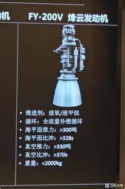
I had assumed a higher thrust variant of YF-215 or even an alternate engine like FY-200V (300t FFSC methalox) would be part of it. Not an initial CZ-9 variant by any means

1780799550403.png
 

Nx4eu

Junior Member
Registered Member
I had assumed a higher thrust variant of YF-215 or even an alternate engine like FY-200V (300t FFSC methalox) would be part of it. Not an initial CZ-9 variant by any means

View attachment 176287
That’s a good explanation, and I don’t doubt the growth potential of CZ-9. However connecting the dots like this is wishful thinking and CZ-9 has never been described to be so big, nor has a YF-215 upgrade variant been shown. I have big problems with the original graphics from the Chinese posters because it’s a completely non-fictional representation of the CZ-9, while being labeled as “CZ-9”

It has now the internet thinking CZ-9 will be a monster rocket that dwarfs starship V4 which is absurd.
 

Blitzo

General
Staff member
Super Moderator
Registered Member
That’s a good explanation, and I don’t doubt the growth potential of CZ-9. However connecting the dots like this is wishful thinking and CZ-9 has never been described to be so big, nor has a YF-215 upgrade variant been shown. I have big problems with the original graphics from the Chinese posters because it’s a completely non-fictional representation of the CZ-9, while being labeled as “CZ-9”

It has now the internet thinking CZ-9 will be a monster rocket that dwarfs starship V4 which is absurd.

As I said on twitter, I think PRC space fans (especially artists) probably didn't think things would be shared so widely outside of the PRC side where the cautions are more established.

In a way this is similar to PLA watching of the 2000s if there was greater social media overlap and if there was an organic RoW military fanbase that were genuinely open to PLA matter back then.


I'm somewhat sympathetic to the notion that PRC space fans don't necessarily need to abide by the lack of understandings/caution by RoW space fans re PRC space projects, and if any of them do take the extra step to be more careful in their depiction that's more of a luxury than a baseline expectation.


More broadly one can level a criticism to all forms of art/visual comparisons/semi-schematic looking diagrams in context of social media like twitter -- the problem with pictures telling a thousand words is that sometimes they would benefit from not existing in the first place.
 

nativechicken

Junior Member
Registered Member
That’s a good explanation, and I don’t doubt the growth potential of CZ-9. However connecting the dots like this is wishful thinking and CZ-9 has never been described to be so big, nor has a YF-215 upgrade variant been shown. I have big problems with the original graphics from the Chinese posters because it’s a completely non-fictional representation of the CZ-9, while being labeled as “CZ-9”

It has now the internet thinking CZ-9 will be a monster rocket that dwarfs starship V4 which is absurd.
Translation:
1. Firstly, regarding the concept images made by online enthusiasts, you actually don’t need to look at them. That 185-meter Long March 9 rocket concept image is absolutely nonsense. According to the data in that image, the total mass of liquid oxygen-methane fuel for just the first and second stages of the rocket is between 7,200 and 8,000 tons. Adding the third stage, the overall rocket mass, and payload mass, the liftoff mass would exceed 9,000 tons, requiring 13,000 tons of thrust for the rocket to even take off. This isn’t just ordinary nonsense—it’s ignorant-level nonsense. Anyone with even a basic understanding of rocket data wouldn’t come up with this. Including conceptual heavy-lift rockets like Sea Dragon and NOVA in the same table already calls their professionalism into question. Look at actual aerospace experts—who references Sea Dragon and early NOVA configurations? Those configurations not only never existed in reality but were doomed from the start. This isn’t the 1960s, when human understanding of space was superficial. Back then, tools were scarce and knowledge was shallow, so some unrealistic designs emerged. No one pursues that now.

2. However, I hope everyone understands that all the designs of CZ-9 you’re seeing now are only for the first phase of CZ-9. This model will definitely undergo major revisions, and the improvements will be astonishing. Actually, as far as I’m concerned, China’s aerospace literature and official documents have been saying this for 10 years, and not just in one document. It also includes explanations from subsystem chief designers in interviews with Xinhua News Agency.

Currently, CZ-9’s thrust is in the 6,000-ton class, but in the older version of CZ-9’s plan from 5 years ago, there were designs exceeding 6,000 tons of thrust (2–4 solid boosters of 1,600 tons each + core stage thrust of 2,000 tons = 8,400 tons). You can check my earlier posts on this site—I remember posting an image, originally from a large-scale solid launch vehicle roadmap exhibition board around 2022–2023 (no one noticed, but I saw it).

Let me briefly explain: The earliest preliminary research for the Long March 9 rocket was conducted from 2005 to 2010 (during a Five-Year Plan). This was the early exploration phase, with the rocket targeting LEO payloads of 100 tons, largely referencing the Energia rocket, the U.S. Space Shuttle, and Saturn V. At that time, CZ-9 had not yet been assigned a specific model designation. It was simply referred to as a heavy-lift launch vehicle. Just like CZ-10, which, before 2020, was mostly referred to in professional literature as the “new-generation crewed launch vehicle.” Most Chinese space fans confused that name with the crewed versions of CZ-7 and CZ-5.

After 2011, the CZ-9 rocket designation was formally established, and it was internally confirmed from the start as a rocket requiring a 20-year development cycle (as explicitly mentioned in literature by an academician in the aerospace system). In other words, in 2011, when the CZ-9 designation was confirmed, it was already decided that CZ-9 would enter service after 2030. Internally, the development cycle for a Chinese rocket is 10 years (two Five-Year Plans: one for component development and one for integration, not counting preliminary research time). Because heavy-lift rockets have a relatively high starting point, when the rocket model was confirmed in 2011, considering the lessons from U.S. and Soviet heavy-lift rocket development, it was decided that the first 10 years would focus on supplementary research and in-depth key technology studies, fully mastering and breaking through the foundational technologies for heavy-lift rockets. The following 10 years would be for building the rocket. Simply put, China’s new large rockets have always followed a schedule of 5 years of preliminary research + 5 years of components + 5 years of integration. For heavy-lift launch vehicles, it was decided from the start: 5 years of conceptual preliminary research + 5 years of specific configuration selection + 5 years of key technology deepening research + 5 years of component development + 5 years of integration.

As early as 2010, it was already decided to plan for crewed lunar landing around 2024–2025 (later officially paused in 2013 and resumed in 2018). The rocket for this plan was the kerosene first-stage version of CZ-5 (CZ-5DY), now the CZ-10 series rockets.

From 2010 to 2015, CZ-9 (configuration selection phase, strap-on two-and-a-half-stage design) started with the Energia rocket and Ares V as templates. It had no high-orbit capability (two-stage launch vehicle), and due to clear lunar mission requirements, LEO payload capacity referenced Saturn V, set at 120–130 tons. At that time, CZ-9’s liftoff mass was around 3,000 tons, with liftoff thrust around 4,000 tons.

From 2015 to 2020, CZ-9 (key technology deepening research phase, strap-on three-and-a-half-stage design) had a liftoff thrust just under 6,000 tons and a liftoff mass just over 4,000 tons (around 4,1xx tons). In this phase, the three-and-a-half-stage design was confirmed, essentially a smaller-core Saturn V with strap-on boosters. Actually, this strap-on Saturn V was also a NASA plan at one time.

By 2020, it was almost time to enter the actual rocket development process. According to related literature, by 2019–2020, relevant institutions had already mobilized hundreds of personnel, made extensive preparations for coordinating with supporting factories, and initiated trial production of components (with thousands of specification documents). Vast amounts of procedural documents were compiled, just waiting for the green light.

Later, as everyone saw, with the appearance of Starship, the issue of reusability for heavy-lift rockets emerged. The top level of China’s aerospace sector pressed the pause button to reassess CZ-9’s reusability design. During the early configuration selection and key technology deepening research phases, China studied hundreds of configuration options (evidenced in literature), but one option was notably missing: the single-stick (no strap-ons) configuration. Most of China’s selected configurations were strap-on designs. The single-stick configuration is more conducive to rocket reusability (the old CZ-9 had reusability plans, but recovering five first-stage bodies simultaneously was too troublesome. Also, strap-on reinforcement for heavy-lift vehicles is extremely challenging, and China was using liquid boosters, where fluid dynamics simulations for liquid sloshing in tanks are incredibly complex and painful. Moreover, the earlier CZ-9 design prioritized strap-ons for maximum payload, so the core single-stick performance and structural mass degradation, combined with reusability losses, made it meaningless). Therefore, from 2021 to 2025, China readjusted the design for a reusable single-stick CZ-9.

 

nativechicken

Junior Member
Registered Member
My problem with the 80m first stage is that we know the ballpark thrust of the YF-215 is targeted to be 200T. Whereas if the rocket was to be as tall as depicted from the Chinese side, the rocket would need to have 30x >300T thrust engines to even have the hope of getting off the launchpad. All in all making the whole thing completely implausible.
So, starting now, about 8–10 years will be for CZ-9’s production, construction, and maiden flight. No need to worry—everything is on the normal track.

Actually, much of the work for CZ-9 started before 2020, such as engine preparation and tank manufacturing process development. Now it’s just about building it according to plan, followed by various integrated tests and trials, likely around 2033–2035. Don’t forget that CZ-10 was already delayed by 5 years, so CZ-9 being delayed by 5 years due to reusability issues is not a problem either.

Finally, let me add: In multiple documents from 2015 to 2020, especially those related to key technology deepening research for heavy-lift launch vehicles, it was very clearly stated:

Long March 9 is the endpoint of China’s chemical rocket development series (there likely won’t be officially larger chemical rockets in the future, meaning no rockets with diameters above 10 meters).
This rocket will have a lifecycle of at least 30 years, meaning it must maintain world-class competitiveness from around 2035 to 2065.
Previously, there was a three-phase improvement plan for this rocket: the original plan was Phase 1: LEO 150 tons, expendable (about 10 launches); Phase 2: reusable configuration; Phase 3: nuclear thermal configuration (third stage).
With the nuclear thermal configuration, the rocket’s payload capacity would be LEO 200 tons (first and second stages still chemical, upper stage nuclear thermal).

So, it’s now 100% confirmed that the 4,000-ton class liftoff mass, 6,000-ton thrust CZ-9 is just the appetizer for this rocket series.
The goal has always been a heavy-lift rocket with >8,000 tons of thrust, >5,500 tons liftoff mass, and >200 tons to LEO (which existed before 2020).
Whether these specifications will increase again today, I don’t know, but from the information available, a CZ-9 with 6,000-ton class liftoff mass and maximum thrust >10,000 tons could very well exist.

Today, in my WeChat group, someone shared a high-resolution engineering drawing of a factory building, clearly showing that the 85-meter-high door is over 31 meters wide.
CZ-9’s core stage diameter is 11-meter class. China’s largest known solid rocket booster is 3.7-meter class (1,600 tons thrust). Additionally, 5-meter class liquid boosters still exist (2x YF-130 + 1x YF-102).
The 31-meter wide door has a 10-meter margin, allowing the strap-on first stage of the rocket to exit smoothly.

China’s aerospace sector considers strap-on technology for heavy-lift launch vehicles a technological crown jewel (in China, it’s called “kiloton-class booster strap-on technology”; CZ-10’s CBC is child’s play in comparison). China will not be absent in this field.

I think I am the only one among all CZ-9 enthusiasts who has publicly speculated about the payload fairing volume of CZ‑9. In my previous articles, I have mentioned many times that CZ‑9 has the world's largest payload bay volume. The maximum possible height is 35–40 m, with a volume of 2400–3000 m³, possibly even reaching 3600 m³.

I have also said that Starship’s payload bay is about 18 m tall, with a volume of roughly 900 m³ (officially 1000 m³), and that SLS Block 2’s payload bay volume is around 1800 m³.

Although I never dared to imagine that CZ‑9 could actually adopt a payload fairing of 15‑meter class (my estimate was based on 12 m; SLS Block 2’s largest planned fairing is 12 m. Considering that SLS Block 2’s core stage is 8.4 m, I did consider the possibility of a fairing larger than 12 m, but it still seemed somewhat unbelievable, so I was relatively conservative and did not use that figure), at least I have guessed a few things correctly (the height increase of the first‑stage tanks in the old CZ‑9 design, confirmed in the solid‑booster version of CZ‑9; the 35–40 m height of CZ‑9’s fairing, already confirmed).

Therefore, based on my research on CZ‑9 (having tracked related information for over 10 years), I am quite confident. I believe you can refer to my opinions regarding the development history of CZ‑9 that I have described.
 
Top