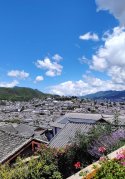
China's population size makes it impossible to achieve the "15-minute city" you described.
I think you have an unrealistic fantasy about urban planning. A slightly well-known city in China has at least several million people. If planned according to your ideas, China might not even have enough land to grow crops.
The concept of "15 minute city" and "human scale development" was coined by adherents of Jane Jacobs whose seminal work was "The Death and Life of Great American Cities". I read this book many moons ago, and honestly have forgotten most of it.
That being said, one of her central tenets (which I do remember) was fighting large scale top down projects (she helped kill a major highway project in Toronto after moving there, leaving a vestigial short highway), and emphasizing walking over cars.
One point to note, she was somewhat of a libertarian (not totally), and an avowed anti-communist. The politics should not be an avenue of criticism, but rather that her philosophy might naturally be opposed to China's way of governance.
A few other notes...
IMO, OP's original criticism of massive multilane streets and fenced off has some merit. It certainly makes crossing the road a more unpleasant experience. The solution to this is flyovers or tunnels, but it makes accessibility more challenging.
That being said, your point also has merit. The megacities of China simply do not exist in America, nor do they exist in Europe. Logistics alone means large numbers of roads are required for trucks and vans. Money and technology will evolve cities. 40 years ago, Chinese cities were trying to increase car ownership as a matter of economic development, bike lanes were being removed or neglected. Now they have been revived with new concerns with respect to pollution and evolving micro-mobility options.
Many road surfaces are in dismal condition, requiring major repairs or complete restructuring. These observations come from trips to Qingdao, Chongqing, Lijiang, Dali, Urumqi, Karamay, Beijing, and Linyi.
I actually don't understand why roads in the Northeast are so bad. Roads are resurfaced with asphalt on a regular basis, yet within 2-3 years potholes begin to form again. Perhaps using reinforced concrete as is done in China would be better than using asphalt?
I cannot speak for the issues with more southerly located cities, but as mentioned northern cities in any country will always have issues with road surface quality. Asphalt is highly sensitive to freeze-thaw cycles due to water penetration and will inevitably destroy the road surface within a few years. Concrete is more durable, but very, very noisy. It also takes longer to repair. You can easily patch up potholes in asphalt in minutes.
Human scale? Non-monstrous city? Is this even human language?
I live in Vancouver, a so called top tier Western city with only 2-3 million population and the infrastructure is already dragged to its knees. Cracks in paved roads? Uneven sidewalks? Go look around the Kerrisdale or Arbutus area where the average house is $5-$10 mil and that’s every other street. In fact there’s an entire rail road track stretching north to south across Arbutus that’s basically abandoned and overgrown with grass. The skytrain frequently breaks down, especially at first rain or first snow of the season. The car commute to suburbs takes an hour and a half in traffic and the tunnel expansion has been in approval stage for ten years. The trans-Canada highway, just to expand by two lanes for 100kms, started next year and will take five more years to complete. Don’t even get me started on the crackheads and homeless camped a block away from the business district.
You’re asking for utopian planning even the wealth here couldn’t accomplish, applied to a city of 20+ mil. The double standards are ridiculous.
I only visited Vancouver, so I can't speak to the day to day life. However, with respect to the property prices, they are inflated due to geography. You have mountains on one side, ocean on the other, leaving a small narrow strip where people can live. The wealth doesn't really change anything, if anything it becomes an impediment to development. Going back to the original philosophy of Jane Jacobs, this is actually somewhat the intended outcome. By having more power (which in this case is due to wealth), the people living there can dictate the terms of development over the city government which will shape the city more organically.