Chinese semiconductor thread II

gaussgun

New Member
Registered Member
Please, Log in or Register to view URLs content!

Axera has supplied AXClaw Box with its AI Inference SoC for OpenClaw endpoint product with help of Infinigence/无问芯穹. Supports Kimi K2.5, Minimax2.5 & GLM-5.
AXClaw Box(帝王虾盒)预装热门Skills,支持Kimi K2.5、MiniMax M2.5、GLM-5等多款主流大模型调用
Sounds more like it can call large models, but even a tiny raspberry pi can call a large model endpoint if it's on cloud.

There's almost no way it can run those models locally. The entire model would need to fit on RAM, and a Q1 quant of GLM 5 is already 200GB. 200GB of fast RAM is expensive, to say the least, and a Q1 is pretty lobotomized.

Probably just has a claw pre-installed and can run a small model locally as a sub-agent.
 
Last edited:

sunnymaxi

Colonel
Registered Member
They have inched towards 14nm years ago, is in their roadmap, so is no surprising that they want to compete against SMIC
yeah. October 2022 sanctions disrupted their plans but eventually returned with the bang and as per the article they are closely linked with Sicarrier for equipment and tools. i think other local equipment manufacturer will also benefitted. this is another strong hint about localized supply chain.
 

tokenanalyst

Lieutenant General
Registered Member

USTC team achieves major breakthrough in diamond quantum sensing​


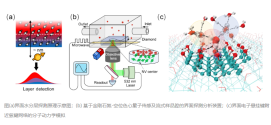
Researchers from the University of Science and Technology of China (USTC), in collaboration with teams from Shanghai University and Nanjing University, have made a significant breakthrough in diamond quantum sensing. For the first time, they have achieved the quantitative detection of a nanoscale "ice-like" water layer at the diamond interface under room temperature and open atmospheric conditions.
1773680707623.png
The team utilized diamond Nitrogen-Vacancy (NV) color centers as quantum sensors to detect magnetic resonance signals. They combined this with flow cytometry to control the gas-liquid environment and used molecular dynamics simulations to analyze the results.​
  1. Layered Structure: The surface adsorption layer is not a single structure but a composite of a nanoscale "ice-like" water layer and a tightly bound organic adsorption layer.​
  2. Formation Mechanism: Dangling bonds on the diamond surface provide stable sites for water molecules, creating a rigid hydrogen bond network that restricts diffusion and mimics solid ice.​
  3. Competitive Adsorption: Organic molecules in the air compete with water molecules for binding sites. As organic layers accumulate, they destroy the ice-like structure of the water layer.​
  4. Dynamic Evolution: The exchange between the ice-like water layer and gaseous water molecules is a slow process, lasting several hours, indicating the structure evolves dynamically over time.​
This study fills a critical gap in traditional characterization techniques, which previously struggled with precision and invasiveness under ambient conditions. The research provides new experimental tools and theoretical foundations for fields such as catalyst design, low-dimensional material interface control, and microelectromechanical system (MEMS) stability optimization.
Please, Log in or Register to view URLs content!
 

tphuang

General
Staff member
Super Moderator
VIP Professional
Registered Member
AXClaw Box(帝王虾盒)预装热门Skills,支持Kimi K2.5、MiniMax M2.5、GLM-5等多款主流大模型调用
Sounds more like it can call large models, but even a tiny raspberry pi can call a large model endpoint if it's on cloud.

There's almost no way it can run those models locally. The entire model would need to fit on RAM, and a Q1 quant of GLM 5 is already 200GB. 200GB of fast RAM is expensive, to say the least, and a Q1 is pretty lobotomized.

Probably just has a claw pre-installed and can run a small model locally as a sub-agent.
Yes, that's entirely likely in this case. But keep in mind that M2.5 Q4 can fit in under 128GB of ram and run on a MacBook. So, it is plausible that they could run it directly on the hardware.
 

gaussgun

New Member
Registered Member
Yes, that's entirely likely in this case. But keep in mind that M2.5 Q4 can fit in under 128GB of ram and run on a MacBook. So, it is plausible that they could run it directly on the hardware.
It's definitely plausible; any model can be run with sufficient RAM.

I think given the branding and the way they've presented it, the hardcore local LLM crowd isn't the target demographic. That group doesn't care about the OpenClaw branding, cos they know they can run OpenClaw on almost anything. The company would need to be advertising about the RAM and memory bandwidth to attract that crowd, but we don't see it.

Instead, we see advertisements talking about value; that sounds more like the mass market consumers who are getting hyped by OpenClaw, and they usually won't spend that much on this kind of hardware, so 16 or 32GB max, and possibly less given the RAM crisis.
 
Last edited:

tokenanalyst

Lieutenant General
Registered Member

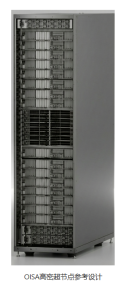
Moore Threads, in collaboration with China Mobile Research Institute and others, released a 128-card high-density supernode reference design, defining a new standard for ultra-large-scale intelligent computing infrastructure.​


As the global AI industry accelerates from the "thousand-card era" toward the massive scale of the "10,000 to 100,000 card cluster," traditional server architectures are hitting a critical wall. Conventional single-machine designs (typically housing 8 cards) struggle with trillion-parameter models because communication overhead between nodes becomes too high, preventing linear scaling and rendering further power density increases inefficient.

To solve this, the industry is pivoting toward Supernode Architecture—a design that treats multiple GPUs as a single unified machine. Recently, a consortium led by Moore Threads (the chip manufacturer) alongside major partners like the China Mobile Research Institute, Zhejiang Lab, and others through the OISA Collaborative Innovation Platform, has officially released the "OISA High-Density Supernode Reference Design." This isn't just a prototype; it defines a new industry standard for ultra-large-scale, independent, and controllable intelligent computing infrastructure.

1773694460449.png

Revolutionary Interconnect Architecture

  • Massive Density: Unlike traditional racks limited to 32–64 cards, this design fully interconnects 128 high-density GPUs within a single standard rack width. It even supports scaling to 256 cards by consolidating two such units. This maximizes computing power per square meter.​
  • Near-Perfect Unification: Through deep reconstruction of the logical topology and OISA 2.0's native memory semantics, the system treats these hundreds of distinct chips as if they were one single computer. Data flows seamlessly across nodes without bottlenecks.​
  • Extreme Performance: By leveraging innovative message reconstruction technology, the inter-card bandwidth reaches the TB/s level, while latency drops to just a few hundred nanoseconds. This ensures that large-scale model training performs with nearly 100% of the speed of a hypothetical single supercomputer node.​

Next-Generation Power & Cooling

  • High-Voltage DC System: To handle GPUs consuming over 700W each and racks demanding 350kW+, the design abandons inefficient multi-stage power conversion. Instead, it uses a centralized high-voltage DC system with "blind-plug" technology at the rack level, drastically cutting energy loss during conversion.​
  • Liquid Cooling as Standard: Liquid cooling is no longer an optional upgrade but a mandatory requirement for supernodes. The design specifically optimizes for single-GPU heat outputs exceeding 2kW.
    • Impact on Efficiency: This optimization lowers the Power Usage Effectiveness (PUE) from the typical ~1.4 (air-cooled) down to 1.05–1.15, making the infrastructure significantly greener and more cost-effective.​
The release of this specification signals the end of fragmented exploration in AI infrastructure. By providing a full-stack solution—from chip interconnection to power distribution—the OISA High-Density Supernode design lays the essential groundwork for building the next generation of AI supercomputers that can handle ever-larger models efficiently, sustainably, and independently.

Please, Log in or Register to view URLs content!
 

tokenanalyst

Lieutenant General
Registered Member

Relying on domestic quartz mines, Hubei's 4N8-grade high-purity quartz sand project will commence production in October.​

Hubei Guoda New Materials Group has launched a significant 3.5 billion yuan project in Yunyang District, Shiyan City, designed to produce high-purity quartz sand relying entirely on domestic resources. The initiative aims to address China's heavy dependence on imports for 4N8-grade (99.998% purity) quartz sand, which currently accounts for a roughly 90% import dependency rate. By leveraging the region's exceptional quartz ore reserves with over 99% silicon dioxide content, the project seeks to break foreign monopolies in this strategic sector and enhance national competitiveness in semiconductor and photovoltaic supply chains.

The first phase of the manufacturing base, featuring fully automated production lines with independent intellectual property rights, is currently 80% complete and expected to commence operations in October. This initial stage involves an investment of 1.5 billion yuan across seven sub-projects, covering 100 mu of land, with a target annual output of 20,000 tons of quartz sand generating over 700 million yuan in revenue once operational. Concurrent efforts are underway to prepare supporting infrastructure such as power, water, and equipment procurement to ensure a smooth transition from construction to full-scale production by the end of July for final installation.

Looking ahead, the second phase represents a major expansion with a planned investment of 2 billion yuan to cover an additional 100 mu, aiming for an annual output value of up to 6 billion yuan once fully realized. This stage will introduce new capabilities, including production lines for 50,000 tons of high-purity quartz purification and 50,000 tons of spherical silicon micropowder specifically required for chip manufacturing. Together with the first phase, the completed project will establish a robust, end-to-end high-end new materials industrial cluster in Yunyang, effectively advancing China's domestic substitution efforts under national strategic planning goals.

Please, Log in or Register to view URLs content!
 
Top