Lol. No need for chip to chip comparison, it's cluster to cluster. Sure Huawei's cluster uses more energy for more chips but China has cheap energy. So who cares if chip to chip is not on par yet.Well, according to Huawei's roadmap, to get something that can actually be competitive chip to chip with the latest Nvidia product and hopefully power draw as well is going to take until atleast Q4 2028 with the Ascend 970.

You are using an out of date browser. It may not display this or other websites correctly.
You should upgrade or use an alternative browser.
You should upgrade or use an alternative browser.
Chinese semiconductor thread II
- Thread starter vincent
- Start date
Lens Technology has achieved mass production and shipment of SSD solid-state drives assembled for enterprise-grade NVMe SSD manufacturer DERA in its Xiangtan Industrial Park.
Derui Leading Technology launched its D8000 series PCIe 5.0 enterprise-grade SSD at the CFMS | MemoryS Summit. This product uses a domestically produced PCIe 5.0 controller chip and Yangtze Memory 3D TLC NAND flash memory, achieving sequential read/write speeds of 14/10 GB/s and 4K random read/write performance of 3.3 million/900,000 IOPS. Its performance-to-power ratio is improved by over 70%, and it has passed PCI-SIG certification.
Currently, the products have been deployed on a large scale by leading internet companies, telecom operators, and banking systems. Lens Technology has proposed customized solutions for SSD solid-state drives, and this year it will accelerate the customer verification of its self-developed HDD glass substrate, supporting the mass production of HAMR high-density hard drives (single disk 30TB and above), with a heat resistance temperature higher than that of traditional aluminum alloy substrates and a surface roughness at the angstrom level.
The aforementioned strategy enables Lens Technology to form a dual-engine strategy of SSDs and HDDs in the high-end storage field of AI data centers, providing important support for the company to enter the core layer of the high-end storage supply chain.
Currently, the products have been deployed on a large scale by leading internet companies, telecom operators, and banking systems. Lens Technology has proposed customized solutions for SSD solid-state drives, and this year it will accelerate the customer verification of its self-developed HDD glass substrate, supporting the mass production of HAMR high-density hard drives (single disk 30TB and above), with a heat resistance temperature higher than that of traditional aluminum alloy substrates and a surface roughness at the angstrom level.
The aforementioned strategy enables Lens Technology to form a dual-engine strategy of SSDs and HDDs in the high-end storage field of AI data centers, providing important support for the company to enter the core layer of the high-end storage supply chain.
Hangzhou Signs Major GPU Project
Hangzhou hosted a significant conference aimed at solidifying its status as the leading city in China for national AI innovation and development. The event focused on building a first-class innovation ecosystem and attracted attention through a high-stakes signing ceremony where multiple key stakeholders committed to advancing artificial intelligence technologies locally. This gathering served as a strategic milestone, highlighting Hangzhou's determination to capture commanding heights within the global AI industry through concentrated investment and collaborative efforts.
At the heart of the agreements were 12 major projects spanning computing chips, smart terminals, and industrial innovation centers, with a total projected investment exceeding 25.5 billion yuan. Each individual project carries an investment surpassing one billion yuan, underscoring the scale and ambition of Hangzhou's initiatives. A standout achievement among these is the "High-Performance GPU and Inference Chip R&D Project" by Zhejiang Sunrise Intelligent Technology Co., Ltd., which marks the city's first commitment to AI inference GPUs and acts as a cornerstone for its broader computing power infrastructure goals.
The concentrated deployment of these capital-intensive projects is designed to foster a robust cluster development within Hangzhou's AI sector, thereby strengthening its global competitiveness. By solidifying the local foundation for artificial intelligence computing power and advancing core hardware technologies, Hangzhou aims to provide strong support for its strategic objective: becoming the foremost hub for innovative AI development in China by 2026. This influx of resources signifies a major step toward transforming Hangzhou into an unparalleled center for technology and industry within the region.

don't just look at compute. That's not fully utilized. the constraint these days is memory. So, that's one area they need expand quickly. Also why ByteDance & Alibaba is buying their AI chips from Samsung. you are guaranteed memory supplyLol. No need for chip to chip comparison, it's cluster to cluster. Sure Huawei's cluster uses more energy for more chips but China has cheap energy. So who cares if chip to chip is not on par yet.
Very good article on China's 12-inch wafer capacity
Will increase from 22% of global in 2022 to 25% in 2025 (2.4m wpm)
Taiwan is at 22% (2.11m wpm) and South Korea 23% (2.21m wpm). Japan is at 13% (1.25m wpm)
China is adding 120k wpm of 12-inch capacity in 2026. 77% are in fabs.
28nm are 36%, 40nm are 33% and 55% are in 28%.
and this is the 8-inch capacity in WSPM right now
very interesting, I didn't think China was first in analog chip production, but it is.国大陆是全球仅有的两个(另一个为中国台湾)在全部六类芯片产能中均进入全球前五的经济体。具体细分产能(折合8英寸等效WSPM)显示了中国在广阔工业应用领域的深厚布局:
功率/分立器件:中国大陆以628万WSPM的产能位居全球第一。
模拟芯片:以364万WSPM的产能同样高居榜首。
成熟逻辑芯片:以423万WSPM的产能领先全球。
通用存储器:以237万WSPM的产能位列全球第二(仅次于韩国)。
专用存储器:以92万WSPM的产能排名第二。
NAND wafer prices continue to go up, 512Gb TLC is almost 5x as expensive. LPDDR4x is also significantly more expensive vs last October. Great time for CXMT and YMTC科创板日报》3日讯,近半年来,NAND Wafer现货价格普遍全面走高,相比去年10月来看,1Tb QLC/TLC价格累计涨幅超3倍,单价逼近$0.2/GB,512Gb TLC更是录得近5倍的价格涨幅,单价已然突破$0.3/GB。同样的,LPDDR4X资源经历连续数月上涨过后,仅资源成本价格已高达$1.50/Gb以上。受新采购资源成本持续攀升影响,本周嵌入式eMMC、LPDDR4X价格全面上涨。尽管存储厂商因资源价格太过昂贵不断更新和调高成品价格,势必造成相关应用端需求萎缩,但对于企业本身而言,维持较为稳健的利润水平也是重中之重。
Wuyuan Semiconductor received investment from Shangqi Capital and others to help promote the application of advanced 3D stacking packaging technology.
According to a March 4th announcement from Xiamen Torch Group Venture Capital Co., Ltd., the company recently reached an agreement with Gaoyuan (Anji) Equity Investment Fund Co., Ltd.
(hereinafter referred to as "Gaoyuan Capital") officially signed a cooperation agreement, and the two parties jointly invested in Wuyuan Semiconductor Technology (Qingdao) Co., Ltd. (hereinafter referred to as "Wuyuan Semiconductor"), a leading domestic wafer-level advanced packaging technology company, to inject capital power into promoting the development of the national semiconductor advanced packaging industry.
Meanwhile, Shangqi Capital pointed out on March 4 that it recently completed its Series A investment in Wuyuan Semiconductor, helping the leading domestic 3D stacking advanced packaging technology company accelerate technological breakthroughs and industrial implementation.
Established in May 2022, Wuyuan Semiconductor focuses on wafer-level advanced packaging. Utilizing hybrid bonding technology as a platform, it applies high-density, high-reliability 3D stacking technology to computing chips, memory chips, and customized specialty processes. The company has established the first large-scale mass production line in China dedicated to hybrid bonding , and its products have been introduced to multiple customers, generating commercial orders.
It is understood that the hybrid bonding technology mastered by Wuyuan Semiconductor replaces traditional bumps with direct copper-copper bonding, realizing ultra-fine pitch interconnects of less than 10μm. This brings orders of magnitude improvement in interconnect density, bandwidth, energy efficiency and unit interconnect cost, and is a key breakthrough supporting 3D stacking and heterogeneous integration .
(hereinafter referred to as "Gaoyuan Capital") officially signed a cooperation agreement, and the two parties jointly invested in Wuyuan Semiconductor Technology (Qingdao) Co., Ltd. (hereinafter referred to as "Wuyuan Semiconductor"), a leading domestic wafer-level advanced packaging technology company, to inject capital power into promoting the development of the national semiconductor advanced packaging industry.
Meanwhile, Shangqi Capital pointed out on March 4 that it recently completed its Series A investment in Wuyuan Semiconductor, helping the leading domestic 3D stacking advanced packaging technology company accelerate technological breakthroughs and industrial implementation.
Established in May 2022, Wuyuan Semiconductor focuses on wafer-level advanced packaging. Utilizing hybrid bonding technology as a platform, it applies high-density, high-reliability 3D stacking technology to computing chips, memory chips, and customized specialty processes. The company has established the first large-scale mass production line in China dedicated to hybrid bonding , and its products have been introduced to multiple customers, generating commercial orders.
It is understood that the hybrid bonding technology mastered by Wuyuan Semiconductor replaces traditional bumps with direct copper-copper bonding, realizing ultra-fine pitch interconnects of less than 10μm. This brings orders of magnitude improvement in interconnect density, bandwidth, energy efficiency and unit interconnect cost, and is a key breakthrough supporting 3D stacking and heterogeneous integration .
Sitan Technology completes a new round of financing, raising over 200 million yuan in its Series B round.
Sitan Technology has successfully completed its Series B financing round, raising over 200 million yuan on March 1st. This capital injection will be strategically allocated to accelerate the commercialization of automotive projection systems and augmented reality (AR) displays. Beyond these core applications, the company plans to expand into diversified businesses such as industrial visual inspection, further consolidating its market position in Micro-LED technology and its extensive industrial applications.
Founded in 2018 as a national-level "little giant," Sitan Technology specializes in Micro-LED research, development, and production. The company boasts a robust R&D foundation, with a core team that has accumulated nearly two decades of original industry experience and holds over 500 patents. This technological depth is supported by an impressive shareholder lineup comprising industry leaders like Xiaomi and SMIC Capital, top-tier venture firms such as Sequoia China and SAIF Partners, and government-guided funds from Xiamen. This diverse backing provides critical industrial synergy and long-term financial commitment to the company's growth trajectory.
Recent developments highlight Sitan Technology's significant progress in its automotive business line. The company recently achieved a successful first-pass tape-out of its self-developed CMOS driver chip, achieving industry-leading performance that meets stringent AEC-Q standards for high-end vehicle displays. By adopting advanced die-to-wafer technology and proprietary one-chip solutions over traditional two-chip methods, Sitan has optimized production yields and reduced costs while maintaining active matrix driving capabilities for precise pixel control. These innovations have already led to the securing of targeted development contracts and mass production orders from leading international clients.
Founded in 2018 as a national-level "little giant," Sitan Technology specializes in Micro-LED research, development, and production. The company boasts a robust R&D foundation, with a core team that has accumulated nearly two decades of original industry experience and holds over 500 patents. This technological depth is supported by an impressive shareholder lineup comprising industry leaders like Xiaomi and SMIC Capital, top-tier venture firms such as Sequoia China and SAIF Partners, and government-guided funds from Xiamen. This diverse backing provides critical industrial synergy and long-term financial commitment to the company's growth trajectory.
Recent developments highlight Sitan Technology's significant progress in its automotive business line. The company recently achieved a successful first-pass tape-out of its self-developed CMOS driver chip, achieving industry-leading performance that meets stringent AEC-Q standards for high-end vehicle displays. By adopting advanced die-to-wafer technology and proprietary one-chip solutions over traditional two-chip methods, Sitan has optimized production yields and reduced costs while maintaining active matrix driving capabilities for precise pixel control. These innovations have already led to the securing of targeted development contracts and mass production orders from leading international clients.
capex of all the major semi companies in East Asia here. I wish they had CXMT out here, but that will need to wait for earnings for CXMT.
The latest breakthrough of the Advanced Bonding Center of the National Innovation Center
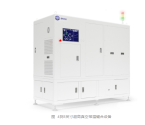
The National Innovation Center (Suzhou) has launched a significant breakthrough in semiconductor engineering through its newly established Advanced Bonding Technology R&D Center, addressing critical challenges posed by the approaching physical limits of Moore's Law. As the industry shifts toward heterogeneous materials and three-dimensional integration for applications like power electronics, radio frequency communications, and AI chips, traditional high-temperature bonding processes often fail when dealing with wide-bandgap semiconductors such as Gallium Arsenide (GaN), Silicon Carbide (SiC), and emerging oxides like Ga₂O₃. The center focuses on room-temperature direct bonding technology, which enables atomic-level fusion of diverse materials without the need for extreme heat. This innovation overcomes bottlenecks related to interface thermal resistance and material compatibility, offering a transformative path forward for improving device performance, reliability, and thermal management under extreme operating conditions.
To achieve this vision, the center has systematically solved core scientific and engineering problems associated with direct bonding at room temperature. Key challenges such as surface treatment, ultra-high vacuum environment control, precise alignment accuracy, and the regulation of interface stress have been addressed to create a stable, replicable process system. The team successfully developed ultra-high vacuum bonding equipment capable of handling wafers ranging from 2 to 8 inches, reaching an international advanced level in terms of consistency, scalability, and material compatibility. These breakthroughs allow for the integration of diamond—a material renowned for its superior heat dissipation capabilities with mainstream semiconductor materials like silicon and Ga₂O₃, creating highly reliable heterogeneous structures that can withstand temperatures up to 1000°C while maintaining nanometer-level interface flatness.
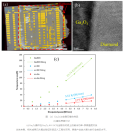
The practical application of these technologies has already yielded verifiable performance improvements. For instance, the successful construction of a Ga₂O₃/diamond heterostructure demonstrated that the new bonding method reduces interface thermal resistance to less than one-twentieth of traditional substrate structures. This drastic reduction significantly suppresses surface temperature rise in devices, effectively breaking through previous limits on power and frequency performance. These achievements move the technology from proof-of-concept stages to engineering readiness, providing a robust solution for enhancing high-power devices, solving high-frequency failures in RF microwave systems, and supporting advanced packaging solutions that are essential for the next generation of computing and energy technologies.
Strategically, this initiative is designed to leverage multiple trillion-yuan-level industrial tracks, from restructuring upstream materials supply chains to empowering midstream fields like front-end radio frequencies and downstream emerging industries such as AI chips. By establishing an independent and controllable equipment and process system for atomic-scale manufacturing, the center aims to enhance China's self-controllability of its semiconductor industrial chain and seize a technological high ground in the post-Moore era. Aligned with Jiangsu Province's "15th Five-Year Plan," this R&D hub represents a leapfrog development path for compound semiconductors and advanced packaging, positioning Suzhou as a leading domestic and international innovation hub that drives the transformation of research results into core industrial capabilities.