
You are using an out of date browser. It may not display this or other websites correctly.
You should upgrade or use an alternative browser.
You should upgrade or use an alternative browser.
Pakistan Military News, Reports, Data, etc.
- Thread starter A.Man
- Start date

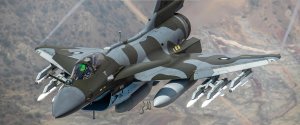


Some great images from that person @alpha_limaa (Awais Lali),A simply stunning image of PAF J-10CE no. 22-119 via (Awais Lali)
This might be the same J-10 posted above. Very large HD image on airlines.net (too big to post here).
From an @ajlalkhalid on TikTok,
With AWACS in play, terrain masking is basically irrelevant.
AWACS absolutely does make it basically irrelevant against a smaller and relatively low RCS fighter like J-10 that's flying low if the AWACS is flying high. Radar is not magic. Provided the beams even have the angle to pick up on J-10 hugging the terrain, from the available aspect, those J-10s may as well be 5th gen fighter level stealthy. There are ways to interrogate returns to determine whether it's a viable moving ground target for example when striking a vehicle formation but it isn't an easy task gaining the level of granularity to detect J-10 at those ranges and that's even if they had line of sight.
Mountain geometries provide lots of areas where there isn't clear line of sight for radar emissions to even pick up on fighters. Pakistan had their Erieye flying high to pick up all Indian assets flying towards them. India made the mistake of loudly announcing their positions and intentions from literally hundreds of kilometers away. That's if Chinese space based ISR didn't already give Pakistan hours to days of warning since it takes time to prep and organise your assets in such a way days prior that it becomes obvious you're intending to strike.
There is no doubt the level of disparity here indicate at least some level of ambush.
Conditionality, PL-15's were fired at very long ranges so that is only possible if J10's were flying fast and at high altitude as firing from lower altitude would significantly reduces the AAM range. This was no ambush. It was well planned operation, Indians just underestimated PAF & PL-15 (Chinese Weapons doesn't work according to them).
PL-15s do not need to be fired high and fast! There is absolutely no logical flow to your claims here. Take the win as it actually is, don't make fantasy up like Jai Hind crowd.
We do not really know the exact launch ranges of the PL-15s that hit their targets right? You would admit this at least right? They could have been fired from 300km away or 20km away. You heard some numbers like 200km and you assume that is gospel. How about we admit we do not know? We only know it's most likely that all the downed fighters were hit on the Indian side of the border and the longest ranged hit was around 200km within Indian side. But we do not know where that Pakistani fighter which launched the kill shot was when it fired that kill shot. We assume it is within Pakistani side but even if so, how far in? Again reminder that this is a big if. Both sides have gone over the border in the past. They don't necessarily announce or admit to such.
Yes firing from low altitude reduces the AAM range. By how much? Do you know? I'll admit I dont but I doubt it reduces so much as to render that missile unable to hit a fast fighter. Particularly when you note the previous point re launch position.
J-10CE is no stealth fighter. Rafale has a decent enough AESA. Rafales were armed with Meteor missiles. Do you really think if both sides met face to face from hundreds of km away, you'd get at least 2 Rafales clapped like that not to mention a Su-30MKI, Mig-29 and a Mirage 2000? To say the least with just those being more or less confirmed? All with zero J-10 losses. The ridiculous disparity within just 30 minutes or so of the most heavy and large scale air to air engagement in modern history (and this includes Ukraine - Russia war) should indicate a lot of tactical superiority was yielded/handed/mastered by Pakistani Airforce.
Just because we ought to be proud of what Chinese missiles and fighters can do (second tier - third tier level, export grade and dated at that), we cannot lose track of reality. If Pakistan were flying Rafales and India were flying J-10s, the same thing would have happened to J-10s.
Last edited:

Please go through this article - References both Pakistani and Indian Officials:We do not really know the exact launch ranges of the PL-15s that hit their targets right? You would admit this at least right? They could have been fired from 300km away or 20km away. You heard some numbers like 200km and you assume that is gospel. How about we admit we do not know? We only know it's most likely that all the downed fighters were hit on the Indian side of the border and the longest ranged hit was around 200km within Indian side. But we do not know where that Pakistani fighter which launched the kill shot was when it fired that kill shot. We assume it is within Pakistani side but even if so, how far in? Again reminder that this is a big if. Both sides have gone over the border in the past. They don't necessarily announce or admit to such.
Yes firing from low altitude reduces the AAM range. By how much? Do you know? I'll admit I dont but I doubt it reduces so much as to render that missile unable to hit a fast fighter. Particularly when you note the previous point re launch position.
The PL-15 that hit the Rafale was fired from around 200km (124.27 mi) away, according to Pakistani officials, and even farther according to Indian officials. That would make it among the longest-range air-to-air strikes recorded.
As for your second question, I asked ChatGPT:
A lot. For BVR AAMs like AIM-120 / PL-15, the “headline” range people quote is usually a best-case kinematic shot: high altitude + high launch Mach + cooperative target aspect. If you take away altitude and speed, range (and especially the no-escape zone) collapses because the missile starts with far less total energy and immediately bleeds it faster.
Why altitude and speed matter so much
1) Drag scales with air density and speed²
2) Launch speed is “free” missile energy
- Down low, air is much denser → much higher drag for the same missile speed.
- High altitude also helps the missile keep speed longer after motor burnout.
3) Gravity / climb penalties
- Launching at Mach 1.5–2 gives the missile a big initial kinetic energy boost.
- Launching subsonic forces the motor to spend more of its impulse just getting up to speed.
- Many long shots use a lofted trajectory; if you’re low, you either can’t loft as effectively or you pay more to climb into thinner air.
Rule-of-thumb impact (order-of-magnitude, not exact)
Think in fractions of best-case:
- High / fast (optimal): 100% of “advertised” kinematic potential
(e.g., ~35–45k ft, Mach ~1.5–2)- Medium altitude / modest speed: ~60–80% of optimal
(e.g., ~20–25k ft, Mach ~0.9–1.2)- Low altitude / subsonic: ~30–50% of optimal
(e.g., ~5–10k ft, Mach ~0.8–0.9)- Very low (sea level) / slow + maneuvering target: often <30% of optimal in practical terms
The “no-escape zone” shrinks even more
Even if the missile can still reach a far target (kinematically), it may arrive with too little energy to:
So NEZ reductions can be harsher than max-range reductions—commonly feeling like “half or worse” when you go from high/fast to low/slow.
- turn with the target,
- overcome target maneuvers,
- or sustain endgame speed for the fuse/PK to be meaningful.
Biggest modifiers (why there isn’t one single %)
If you tell me roughly what launch condition you mean (e.g., 40k ft Mach 1.6 vs 15k ft Mach 0.9, and whether it’s head-on or tail-chase), I can give a tighter relative estimate (still high-level, not exact numbers).
- Target aspect: tail-chase shots lose a lot; head-on shots gain a lot.
- Target altitude: shooting up from low altitude is punishing.
- Missile profile: loft logic, motor burn time, energy management, guidance updates.
- Countermeasures / jamming / support: affects effective range more than kinematic range.
10 February, 2025: Pakistan Air Force successfully conducted Exercise Golden Eagle in the Southern Air Command’s area of responsibility, involving the synchronized orchestration of the complete combat potential at the disposal of Pakistan Air Force showcasing battle readiness and operational agility. The exercise was aimed at further enhancing PAF’s operational prowess through an AI-enabled, net-centric training framework, integrating niche, disruptive and smart indigenous technologies. Aligned with evolving regional security dynamics, the exercise was planned and executed on a Two-Force construct, wherein friendly forces shaped the battlespace while operating within a robust Integrated Air Defence System matrix. This was achieved through seamless fusion and collaborative employment of kinetic capabilities alongside operations across the cyber, space and Electro-Magnetic Spectrum Operations arenas.
Interesting information in the press release by PAF about Cooperative Engagement Capability of PAF using AWACS and PL-15s.
Attachments
-
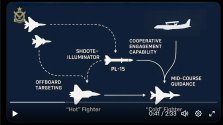 PAF.jpg216.1 KB · Views: 54

1. Bahawalpur isnt far from the border.There's no doubt India had Meteor missiles in May 2025. They considered officially lying about that and ran with it for a few weeks before pining on the whole "our ROEs hurt us".
They sent Mig-29s, Su-30MKIs and Rafales tasked with patrol and escort roles within an air to air focused capacity. There were Rafales tasked with firing SCALPs only and there were surely Rafales tasked with air to air escort only.
In India's defense, they were playing a harder position. They had to fly high to maximise the range of their air to ground weapons particularly when they decided to not break through to Pakistani airspace. This forced them to be very visible from very far away. Pakistani fighters were able to loiter low and take shots at the Indians without being seen themselves. It's very easy to terrain mask against IAF by flying near the ground. Indian radars from way up high simply cannot accurately determine the situation.
Perhaps in this sense, India's ROE were indeed to blame. Reverse the positions and J-10CE flown by Pakistan releasing air to ground weapons from high and if you have Rafales terrain masking and shooting from undiscovered positions with the aid of AWACS cuing, I think the same result would eventuate, just reversed. The main miscalculation by India was not breaking through Pakistani airspace and also underestimating effective range of PL-15 and its electronic capabilities. These missiles were likely only realised by India when they became active. Even then PL-15's LPI AESA seekers may not even have alerted the Indians despite being active.
2. You dont snipe at 200km when shooting from low altitude to targets at higher altitude.
3. What RoEs when you literally have A2A escorts with you.
They got outplayed.

Interesting information in the press release by PAF about Cooperative Engagement Capability of PAF using AWACS and PL-15s.
What kind of ai generates monstrosity is depicted in the infographics???

Pakistan to Upgrades Mirage Fleet with Grifo-E AESA Radar
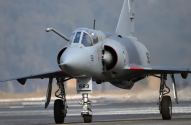
Grifo-E AESA integration with 157km detection range and 24-target tracking capability signals Pakistan’s strategic recalibration in South Asia’s high-intensity, network-centric air warfare environment.
