
You are using an out of date browser. It may not display this or other websites correctly.
You should upgrade or use an alternative browser.
You should upgrade or use an alternative browser.
PLA Air Force news, pics and videos
- Thread starter Jeff Head
- Start date


No, these two bases are not used for UAV testing, but rather serve as comprehensive Army training and exercise centers. Both bases feature extensive vehicle parking areas and ammunition depots, along with barracks capable of accommodating at least one brigade-sized unit. Airfields for UAVs and helicopters are simply supplementary facilities at these bases.Two nearly identical airbases located at the deserts of Xinjiang, with the new one (Gaozuizi AB) being about 97 kilometers north-northeast of the older one (Lop Nur AB). It has been speculated that these two bases are related to UAV testing and evaluation.
It must be noted that this Lop Nur AB is not the same base as the other Lop Nur AB with the J-36 and J-XDS/50 prototypes spotted last year, which is located about 173 kilometers to the west.
Posted by @nuwangzi on Twitter.
View attachment 167897
View attachment 167898
View attachment 167899

Four unidentified aircraft were spotted flying in formation somewhere in northwestern China. Some said that these might be just J-10s, or GJ-11s, or an unknown aircraft/drone model. Information posted by @齐天的孙猴子 on Weibo.
Source video:
Two of the aircraft in question:

Source video:
Two of the aircraft in question:

Contrails suggest at least 2 engines. This rules out J-10, GJ-11, and the unmanned fighters seen in the September parade.Four unidentified aircraft were spotted flying in formation somewhere in northwestern China. Some said that these might be just J-10s, or GJ-11s, or an unknown aircraft/drone model. Information posted by @齐天的孙猴子 on Weibo.
Source video:
Two of the aircraft in question:
View attachment 169305
The most conservative explanation, assuming that they're Chinese aircraft, would be drones of some sort. The rate at which they appear to be flying suggests that they're not large.

Contrails suggest at least 2 engines. This rules out J-10, GJ-11, and the unmanned fighters seen in the September parade.
The most conservative explanation, assuming that they're Chinese aircraft, would be drones of some sort. The rate at which they appear to be flying suggests that they're not large.
I don't think we can clearly say the contrail is that of a two engine configuration -- a single engine aircraft can still have a "wide" looking contrail pretty close to it, and the image quality means we can't see how it actually develops closer to the engine nozzle and airframe, nor can we tell if there is actually genuinely a "separation" in the contrail or if it's just image quality.

It's not that they're wide; there are clearly two (bifurcated) contrails per aircraft. So the aircraft each have either two engines or two groups of engines.I don't think we can clearly say the contrail is that of a two engine configuration -- a single engine aircraft can still have a "wide" looking contrail pretty close to it, and the image quality means we can't see how it actually develops closer to the engine nozzle and airframe.
It's not that they're wide; there are clearly two bifurcated contrails per aircraft. So the aircraft either have two engines or two groups of engines.
But given the quality of the image, is it actually bifurcated or is it that it just appears bifurcated? That is to say, it should a closer image or a more potent camera may well reveal more details of the contrail -- including showing it emerge closer to the aircraft, as well as showing more "detail" in the centre of the contrail as well.
I'm not inherently opposed to the possibility that this may be a twin engine aircraft (after all we should assume the PLA are working on multiple types of tactical UAVs, including possibly twin engine ones, or alternatively this could just be an existing twin engine manned aircraft), but I also think given poor image quality and high altitude of the airframe itself, it should make a single engine aircraft be considered just as likely.
It's also worth noting that a twin engine tactical UAV probably would have to be fairly large for it to make sense -- the two UADFs are already J-10 sized by dimension, and powered by WS-10 family engines by the looks of it. A single engine configuration for a tactical UAV of course has benefits for endurance/fuel economy. A twin engine UAV/UCAV intended for tactical purposes would have to be rather large to need two engines (anything that would need two WS-13/21 sized engines could just as competently be served with a single WS-10) -- and anything that needs two WS-10s would likely be a huge airframe if it was unmanned (see possibly GJ-X and WZ-X -- though they are more strategic sized UAVs rather than tactical)
(And the smaller CCAs were also powered by a single engine as well as far as we could tell)
So intuitively I do have some reservations as to the viability of a twin engine CCA/tactical UAV pattern airframe and will always go searching for alternative explanations especially if the image quality is poor ---- though of course the idea of a twin engine tactical UAV is never considered zero, merely "less likely than single engined".
Of course nothing can be ruled out per se, given the quality of these photographs, but I would disagree that the possibility of the aircraft being single-engined should be given the same weight as it being dual-engined. The bifurcated contrails are seen with all four airframes, not just one, and the distinct gap between the contrails suggest that they are indeed bifurcated rather than it being due to image distortion brought about by the low resolution. We all agree that better cameras would yield more definitive answers, but we need to work with what we have here.But given the quality of the image, is it actually bifurcated or is it that it just appears bifurcated? That is to say, it should a closer image or a more potent camera may well reveal more details of the contrail -- including showing it emerge closer to the aircraft, as well as showing more "detail" in the centre of the contrail as well.
I'm not inherently opposed to the possibility that this may be a twin engine aircraft (after all we should assume the PLA are working on multiple types of tactical UAVs, including possibly twin engine ones, or alternatively this could just be an existing twin engine manned aircraft), but I also think given poor image quality and high altitude of the airframe itself, it should make a single engine aircraft be considered just as likely.
We have examples of twin-engined UAVs that are much smaller than the J-10 or the various UADFS.It's also worth noting that a twin engine tactical UAV probably would have to be fairly large for it to make sense -- the two UADFs are already J-10 sized by dimension, and powered by WS-10 family engines by the looks of it. A single engine configuration for a tactical UAV of course has benefits for endurance/fuel economy. A twin engine UAV/UCAV intended for tactical purposes would have to be rather large to need two engines (anything that would need two WS-13/21 sized engines could just as competently be served with a single WS-10) -- and anything that needs two WS-10s would likely be a huge airframe if it was unmanned (see possibly GJ-X and WZ-X -- though they are more strategic sized UAVs rather than tactical)
(And the smaller CCAs were also powered by a single engine as well as far as we could tell)
So intuitively I do have some reservations as to the viability of a twin engine CCA/tactical UAV pattern airframe and will always go searching for alternative explanations especially if the image quality is poor ---- though of course the idea of a twin engine tactical UAV is never considered zero, merely "less likely than single engined".
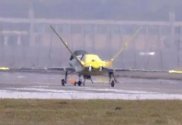
Sky Wing III (prototype precursor of the WZ-10):
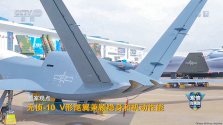
WZ-10:
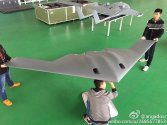
CH-805 target drone:
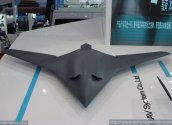
Star Glory SG-1 target drone concept:
The rapid pace at which the objects appear to be moving relative to the clouds kind of suggests that these are smaller aircraft rather than a platform in the size category of J-10 or even GJ-11.
Another clue is the supposed location - northwestern China - which kind of shifts the probability of these aircraft in favor of them being UAVs rather than manned platforms (Malan Airbase).