PLA Air Force news, pics and videos

Blitzo

General
Staff member
Super Moderator
Registered Member
Of course nothing can be ruled out per se, given the quality of these photographs, but I would disagree that the possibility of the aircraft being single-engined should be given the same weight as it being dual-engined. The bifurcated contrails are seen with all four airframes, not just one, and the distinct gap between the contrails suggest that they are indeed bifurcated rather than it being due to image distortion brought about by the low resolution. We all agree that better cameras would yield more definitive answers, but we need to work with what we have here.

Well, I also agree that the possibility of the aircraft being single engined should not be given the same weight as it being dual engined -- I think the possibility of it being single engined should be given more weight than it being dual engined.
Even in the video, it looks as much plausibly to be a single contrail that is dissipating as it trails the aircraft, rather than two separate contrails dissipating over distance.


We have examples of twin-engined UAVs that are much smaller than the J-10 or the various UADFS.

Sky Wing III (prototype precursor of the WZ-10):
View attachment 169321

WZ-10:
View attachment 169322

CH-805 target drone:
View attachment 169323

Star Glory SG-1 target drone concept:
View attachment 169324

The rapid pace at which the objects appear to be moving relative to the clouds kind of suggests that these are smaller aircraft rather than a platform in the size category of J-10 or even GJ-11.

Another clue is the supposed location - northwestern China - which kind of shifts the probability of these aircraft in favor of them being UAVs rather than manned platforms (Malan Airbase).

I am aware of those UAV examples, and they are exactly what I had in mind as causing me to be more intuitively cautious of twin engine setups, because they either have been procured only in limited numbers, or not procured at all.
It would be a bit of a step backwards for a tactical or smaller UAV to be twin engined, especially if it were J-10 sized or smaller. If they were Flanker sized or larger otoh, then it would actually be more plausible for a twin engine UAV to make sense.

Which circles back to the "not impossible, but should have relatively high threshold to suspect," for a tactical sized or smaller UAV to be twin engine rather than dual.
 

terry92

Just Hatched
Registered Member
It's not that they're wide; there are clearly two (bifurcated) contrails per aircraft. So the aircraft each have either two engines or two groups of engines.
To me it looks like the contrail is expanding out into a hollow cone due to the altitude, giving the appearance of two contrails at the edge of the cone when viewed from the side (similar effects in rocket launches).
 
  • Like
Reactions: pkj

Neurosmith

Junior Member
Registered Member
Well, I also agree that the possibility of the aircraft being single engined should not be given the same weight as it being dual engined -- I think the possibility of it being single engined should be given more weight than it being dual engined.
Even in the video, it looks as much plausibly to be a single contrail that is dissipating as it trails the aircraft, rather than two separate contrails dissipating over distance.
Single-engined aircraft do not generate bifurcated contrails, especially ones that split almost immediately aft of the aircraft. Contrails also do not dissipate in such a manner that generates a perfect division in their centre. You would be hard-pressed to find photos of such phenomena in the context of single-engined jet aircraft. The altitude and speed of the objects would also rule out the possibility of wingtip vortices.

I am aware of those UAV examples, and they are exactly what I had in mind as causing me to be more intuitively cautious of twin engine setups, because they either have been procured only in limited numbers, or not procured at all.
It would be a bit of a step backwards for a tactical or smaller UAV to be twin engined, especially if it were J-10 sized or smaller. If they were Flanker sized or larger otoh, then it would actually be more plausible for a twin engine UAV to make sense.

Which circles back to the "not impossible, but should have relatively high threshold to suspect," for a tactical sized or smaller UAV to be twin engine rather than dual.

At this point, given the paucity of imagery and more information, I think it is best to leave the discussion where it is: that it is unknown how many engines each aircraft has (and, by extension, what kind of aircraft they might be).

And all of this is predicated on the assumption that the video is legit and was taken in China.
 

Neurosmith

Junior Member
Registered Member
To me it looks like the contrail is expanding out into a hollow cone due to the altitude, giving the appearance of two contrails at the edge of the cone when viewed from the side (similar effects in rocket launches).
You mean like this?
tf2r8ggruaux.jpg

AFAIK, we only see this level of Plume-Induced Flow Separation at very high altitudes, and I wonder if the height at which these UAVs were captured on video would be sufficient for that effect. I've never seen photos of single-engined aircraft producing this effect, but would be glad to be proven incorrect.
 
  • Like
Reactions: pkj

Deino

General
Staff member
Super Moderator
Registered Member
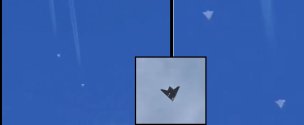
Four unidentified aircraft were spotted flying in formation somewhere in northwestern China. Some said that these might be just J-10s, or GJ-11s, or an unknown aircraft/drone model. Information posted by @齐天的孙猴子 on Weibo.

Source video:
Please, Log in or Register to view URLs content!


Two of the aircraft in question:

View attachment 169305


In fact I'm not sure if these are actually GJ-11! IMO the GJ-11 looks different and even if I have no clue about these, they are IMO not GJ-11s.

1770554679492.jpeg
 
Top