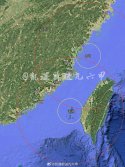
The Taiwan Strait and the geographic separation that it provides is a double-edged sword for both China and Taiwan.
While the Strait makes a Taiwan campaign logistically challenging for China, it also acts as a buffer against Taiwanese missile raids aimed at China. If we are to assume that ROC's land-attack and anti-ship missiles are meant to be used in a defensive or counteroffensive role, the following would need to occur for any missile attack to be viable:
- The missiles would need to survive the initial barrage of PLA fires in addition to the sustained around-the-clock "Scud-hunting"-type patrols carried out by PLAAF/PLANAF aircraft.
- However many missiles that remain would need to cross the Taiwan Strait, where they would almost certainly be detected and fired upon by a mix of sea-based PLAN assets, shore-based long-range SAMs, and patrolling aircraft.
- If the missiles somehow make it through Chinese airspace, they would need to survive multiple layers of air defenses ranging from the HQ-29 to the HQ-17.
- All of the above assumes that there would be no such thing as PLA electronic interference/disruption. Of course, in a real conflict this would not be the case.
While higher-performance missiles such as the
Yun Feng and
Hsiung Feng-III might have a higher chance of breaching defenses compared to older munitions, the physical and PLA-imposed hurdles would remain for them as well.
So, perhaps surprisingly, the best chance that these missiles could get at striking targets on the mainland would be via a pre-emptive attack, taken place in a world where China would not be expecting a conflict with Taiwan.
Of course, the calculus changes if the United States is involved, but that would mean a whole new level of conflict with a different set of goals and operating parameters.