Footage of Russian military personnel training to operate FPV drones. The training is conducted by unmanned aerial systems instructors from the Vostok Group of Forces, who have real combat experience. The training process is divided into stages. First, cadets learn how to operate drones, then move on to practical training on simulators. After passing tests on virtual simulators, the cadets begin operating real FPV drones. Drone flights take place on an obstacle course that simulates trenches, dugouts, shelters, and other confined spaces where the enemy might seek cover in real combat.

You are using an out of date browser. It may not display this or other websites correctly.
You should upgrade or use an alternative browser.
You should upgrade or use an alternative browser.
Russian Military News, Reports, Data, etc.
- Thread starter tphuang
- Start date
Historical article about the N-1 rocket:
A report to the US Congress on Russian nukes:
The Soyuz 5 rocket did great on its debut launch:
An Angara launch also went well:
The Progress launch went well, too:
Another launch from Plesetsk with a whole lot of sats seems to have gone off, too:
The launch cadence seems to have significantly picked up it seems to me. Feel free to correct.
A report to the US Congress on Russian nukes:
The Soyuz 5 rocket did great on its debut launch:
An Angara launch also went well:
The Progress launch went well, too:
Another launch from Plesetsk with a whole lot of sats seems to have gone off, too:
The launch cadence seems to have significantly picked up it seems to me. Feel free to correct.
The Soyuz-5 is most powerful liquid engine.
There will be deep integration of Military, PMC, interior ministry , emergency ministry, traffic police management commanded by people with experience in UKraine conflict. This tech development applied governance.
Mi-26 Surgical medical procedure already developed. and now smaller version like Mi-8 and Ansat.
The Russian Minister of Health particularly praised the skill of the NSSA pilots. Vladimir Putin personally spoke with the Ansat aircraft commanders, Dmitry Shchukin and Alexander Khelimendik, who regularly perform medical evacuations in the Kursk region, including in the counter-terrorism operation zone.
On Sakhalin, ZALA T-16 UAVs are conducting aerial monitoring of the flood situation.
There will be deep integration of Military, PMC, interior ministry , emergency ministry, traffic police management commanded by people with experience in UKraine conflict. This tech development applied governance.
Mi-26 Surgical medical procedure already developed. and now smaller version like Mi-8 and Ansat.
Interceptor drones and laser weapons have been added to the Russian border guard force.
They also included anti-aircraft missile systems, aircraft, ships, and electronic warfare systems.
The Russian Minister of Health particularly praised the skill of the NSSA pilots. Vladimir Putin personally spoke with the Ansat aircraft commanders, Dmitry Shchukin and Alexander Khelimendik, who regularly perform medical evacuations in the Kursk region, including in the counter-terrorism operation zone.
On Sakhalin, ZALA T-16 UAVs are conducting aerial monitoring of the flood situation.
A record 55 million kilometers in the civilian sector: ZALA takes fuel and energy sector monitoring to a new level.
Something that I suspected all along, that tanks are indirect firing over 10km past the paper specs, literally acting as self propelled gun pieces. As a note, full weight HE-FRAG shells don't shoot out of barrels as fast as subcaliber APDFS, and barrel wear isn't as short lived as with firing sabots. While smoothbores lack the rifling needed to spin stabilize rounds, tank rands can be equipped with fins to create the stabilizing spin effect.
Training cadets on tanks to hit more than 11km.
Translate:
Setting up the – sight and 11 km is not the limit!
Tank crew training and combat work 19 tp 67 msd #25_armies GW «West»
Tank instructor T-72B3M with call sign «German» knows: accuracy decides everything. Its crews practice shooting from closed firing positions. Main combat kit – high-explosive fragmentation shells. Target at a distance of up to 11 kilometers.
On the battlefield, the T-72B3M is in all its glory: leaving cover, taking up a position, setting up a sight. Fire! The target was hit from the first shot.
√The coordination of the crew – is not just an understanding at a glance. This is a reaction at a glance.
Training cadets on tanks to hit more than 11km.
Translate:
Setting up the – sight and 11 km is not the limit!
Tank crew training and combat work 19 tp 67 msd #25_armies GW «West»
Tank instructor T-72B3M with call sign «German» knows: accuracy decides everything. Its crews practice shooting from closed firing positions. Main combat kit – high-explosive fragmentation shells. Target at a distance of up to 11 kilometers.
On the battlefield, the T-72B3M is in all its glory: leaving cover, taking up a position, setting up a sight. Fire! The target was hit from the first shot.
√The coordination of the crew – is not just an understanding at a glance. This is a reaction at a glance.
War is a great way to drive governmental efficiency and economic innovation, unfortunate as it is. These battlefield robots and drones are probably in the process of being repurposed for agri, mining and forestry.The Soyuz-5 is most powerful liquid engine.
There will be deep integration of Military, PMC, interior ministry , emergency ministry, traffic police management commanded by people with experience in UKraine conflict. This tech development applied governance.
Mi-26 Surgical medical procedure already developed. and now smaller version like Mi-8 and Ansat.
The Russian Minister of Health particularly praised the skill of the NSSA pilots. Vladimir Putin personally spoke with the Ansat aircraft commanders, Dmitry Shchukin and Alexander Khelimendik, who regularly perform medical evacuations in the Kursk region, including in the counter-terrorism operation zone.
On Sakhalin, ZALA T-16 UAVs are conducting aerial monitoring of the flood situation.
A record 55 million kilometers in the civilian sector: ZALA takes fuel and energy sector monitoring to a new level.
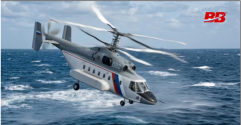
there is info that Russia last year created new carbon fibre and they implying it maybe used in upcoming Ka-65 naval helicopters. i think with light weight materials, lighter weight electronics and higher twr engines even small choppers can do work of bigger ones. but this is substantially larger than current Naval choppers.
Kamov has the most complex task on hand in aviation. what if these more power engines and composite applied to Ka-52M. Ka-52M stand at 12.2tons MTOW. Mi-38 at 16.5tons and still over 300km/hr speed.
Preparations are underway to begin flight tests of the Ka-226 helicopter with a VK-650V engine
Kamov has the most complex task on hand in aviation. what if these more power engines and composite applied to Ka-52M. Ka-52M stand at 12.2tons MTOW. Mi-38 at 16.5tons and still over 300km/hr speed.
Preparations are underway to begin flight tests of the Ka-226 helicopter with a VK-650V engine
04.05.2026
Sea Hunter: Russia is preparing to test the most mysterious Ka-65 Lamprey helicopter
Last year, for the first time in the country's history, Russian scientists managed to produce carbon fiber with a strength of 7 gigapascals. Until recently, only three companies in the world – two Japanese and one American – had similar technologies. Soon, Rosatom launched the country's first mass production of thermoplastic composites, thus closing the entire technological chain: from crude oil production to its processing into carbon fiber and final products from it. But even mastering the full cycle does not guarantee the most important thing, for which everything was conceived – the introduction of technology into mass production. Now it can be stated that Russia has passed this stage.
Now there is unofficial information that the project is still moving according to schedule, and this year it will enter the testing stage.
As aviation experts explain, the Ka-65 Lamprey is a multi–purpose ship-based helicopter designed to replace several Soviet-designed models at once. In terms of dimensions and carrying capacity, it is close to the Mi-38. During the development of the helicopter, the designers retained the traditional coaxial scheme for the Kamov Design Bureau, and the proven TV7-117VK engine is used as the power plant.
This R-37M speed now they estimating 7400 km/hr. This is revealed in context of export to India. if they are exporting this speed than much newer versions are already deployed but it does not mean they are going to use it in Ukraine.
Exceeding the speed of Maximum speed Mach 6 sound significantly, reaching (approximately 7,408 km/h).
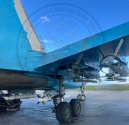
there is this picture inside this link. i wont pay attention to the statement but point is that most powerful version of Flanker is limited to 4 regular glide bombs and 2 SDBs. bombs need to released certain altitude and speed for maximum range and extra fuel always needed for strike from deep bases. i presume air frame life conservation is also part of it. This SDB is part of S-70. smaller the bomb the higher the precision.
Exceeding the speed of Maximum speed Mach 6 sound significantly, reaching (approximately 7,408 km/h).
there is this picture inside this link. i wont pay attention to the statement but point is that most powerful version of Flanker is limited to 4 regular glide bombs and 2 SDBs. bombs need to released certain altitude and speed for maximum range and extra fuel always needed for strike from deep bases. i presume air frame life conservation is also part of it. This SDB is part of S-70. smaller the bomb the higher the precision.
The Su-34 was unable to carry six bombs, but the military solved the problem.
Among the twisted and burnt remains of the drone, the nose cone from at least one example of the winged precision-guided bomb can be clearly made out. This is a weapon we have in the past, but it wasn’t previously known to be part of the S-70’s armory. The weapon is a much more refined glide bomb compared to the , a of weapon that nonetheless has caused considerable difficulties for Ukrainian air defenses since its introduction in around early 2023.
This related to Su-57 and IL-100/476. 200 to 300 percent increase in productivity and similar increase in life span.
Two leading Russian aircraft factories are moving to a new level thanks to Irkutsk National Research Technical University (IRNITU) developments.
NIA-Kuzbass / News from Kemerovo and Novokuznetsk
Published: 05/04/2026 17:11
Irkutsk National Research Technical University is entering a new stage of cooperation with PJSC United Aircraft Corporation (UAC).
As part of a large-scale technological modernization of the aircraft manufacturing industry, Irkutsk Polytechnic University is beginning to implement innovative robotic equipment and specialized software at two key UAC sites—in Komsomolsk-on-Amur and Ulyanovsk.
Irkutsk National Research Technical University (IRNITU) has won a competition held by the Russian Ministry of Industry and Trade for a state subsidy for the creation of production and automation equipment for R&D on specialized equipment. Of the 76 applications submitted, 12 were accepted for expert evaluation. Two programs proposed by aircraft manufacturers jointly with Irkutsk Polytechnic University were approved and will receive funding totaling over 800 million rubles. The professional team of aircraft engineers who will develop technological solutions and equipment is part of a strategic project of the "Priority 2030" program.
"Winning the competition is the result of our university's collaboration with the UAC corporation as part of a roadmap to achieve technological leadership in the aircraft industry. Our university has professional experience in aircraft R&D for the Tupolev Design Bureau and plants in Irkutsk, Samara, Kazan, and Ulyanovsk. As part of the competition, we plan to complete a range of projects to automate the processes of forming, straightening, and surface hardening of critical aircraft components, which will significantly increase productivity and precision, as well as eliminate the risk of defects in the production of aircraft. I would like to express my gratitude to Irkutsk Region Governor Igor Ivanovich Kobzev and State Duma Deputy Maria Vasilkova for their personal contribution to the university's development and support during the competition," said Irkutsk National Research Technical University Rector Mikhail Kornyakov.
As a result of the project's implementation, the Yury Gagarin KnAAZ (Komsomolsk-on-Amur), a branch of PJSC UAC, will receive an innovative robotic technology complex (RTC FP) by the end of 2028. The equipment is designed for shaping and straightening reinforced aircraft skin and frame components using local plastic deformation methods—roller rolling and fit/spread.
The key advantage of the new system is its full automation. Unlike outdated manually operated hydraulic presses, where quality depended on the operator's skill, the new robotic press, powered by an industrial robot, will target the part using machine vision. Interchangeable automated working tools—a rolling tool and a seater—allow for producing surfaces of any curvature, while the system's mobility allows for processing both small parts in a stationary workstation and large items directly in the assembly area.
Another large-scale project will be implemented at the Ulyanovsk branch of JSC Il-Aviastar. There, using equipment developed by Irkutsk National Research Technical University (IRNITU), a high-tech facility for shaping and strengthening large-size aircraft skins is planned to be created. It will include several automated units. The complex will enable the implementation of a unique combined shaping-strengthening technology, which not only ensures perfect geometry (with a deviation of no more than 0.5 mm) but also significantly improves the service life of the component. Work at the JSC Il-Aviastar plant is scheduled to be completed by the end of 2029.
The core component of both plants' equipment will be specialized process software developed by Irkutsk National Research Technical University (IRNITU) aircraft manufacturers. The developed software functions as a "digital technologist," completely eliminating manual labor during equipment setup and dependence on operator skills. Control programs for the robots are generated based on a reference model and measurement data from the actual component.
According to Irkutsk National Research Technical University (IRNITU) specialists, the implementation of the developed technological solutions will increase productivity by 2-3 times due to automation and a reduction in non-essential time, and will increase the service life of aircraft components by three times.
The modernization of factories with high-tech equipment will mark the transition of the domestic aircraft industry from disjointed manual operations to digital, robotic production. Irkutsk National Research Technical University has once again confirmed its status as one of the country's leading engineering universities and its readiness to address national challenges in cooperation with leading aviation industry players.
It says Su-57 carry 10 R-77M inside. R-77M is old tech so it could be some new version. Su-57 is also associated with new hypersonic cruise missile Kh-99 or air lunched Zircon.
Just look at the "Product 180." That's what design bureaus call the modernized RVV-SD, so modernized that it can now hit a target at a range of 250 kilometers!
Here's an important detail: all these missiles fit compactly into the Su-57's internal compartments. Up to ten Izdeliye 180 missiles fit in the belly of just one fighter. It's like carrying ten sniper rifles with different scopes...
This satellites are directly related to power electronics and GaN. That 6G operational by 2030.
I have read that GaN on Si cheaper and almost equal to GaN on SiC. and this not only research they doing.
VSU PISh Year-End Results: Record R&D and a Breakthrough in GaN Technologies
Here are just a few of the products that already have practical applications for the defense industry and civilian electronics:
- Five types of microwave power amplifiers based on domestic components have been launched into production.
- Amplifiers for aircraft systems have been created, which, according to the developers, outperform foreign counterparts.
- Beam steering algorithms for ground satellite terminals and multi-beam airborne active phased array antennas for low-orbit satellite communications have been developed.
The fundamental groundwork deserves special attention. Voronezh engineers were the first in Russia to master molecular beam epitaxy technology for growing gallium nitride (GaN) layers on silicon. This is the basis for creating high-power microwave transistors (up to 6 GHz) and PIN diodes. Essentially, the region is laying the foundation for all Russian energy-efficient power electronics.
Considering that 2026 will be the final stage of budget financing within the framework of the national project "Youth and Children," the school faces the task of proving its financial independence. A 35% increase in intellectual property and sustainable The portfolio of orders from industrial partners allows VSU to look to the future up to 2030 without regard for budgetary infusions.
The Russian army has begun actively using the new Prince Prophetic Oleg reconnaissance drone, with videos from several units having been published. The Prince Prophetic Oleg UAV, abbreviated as KVO, is manufactured at the Ushkuynik production center, which also produces the Prince Vandal Novgorodsky FPV drone. The KVO UAV is already actively used for reconnaissance, artillery guidance, and target identification for FPV drones. Algorithms are currently being implemented in the UAV that automatically avoid enemy drones and identify targets on the ground. The drone was designed to be as inexpensive and easy to use as possible, while still maintaining good performance. The drones use a jam-resistant channel for communication. For operator safety, the communication antenna can be positioned at a range of up to 75 meters. Launching the KVO UAV does not require a bulky catapult; a simple stand is sufficient. The UAV lands using a parachute. The Prince Oleg UAV, weighing 11 kg, can fly at altitudes of up to 3,000 meters, at speeds of up to 130 km/h, and with a range of up to 45 km. Flight time is up to 2-3 hours. The drone's price has not been announced.
The small missile ship "Bura" has been accepted into the Navy
A solemn ceremony of raising the Navy flag and commissioning the small missile ship "Bura" of Project 22800 "Karakurt", built for the Baltic Fleet at the Pella shipbuilding plant, took place in Baltiysk.
The solemn ceremony was attended by the commander of the Baltic Fleet, Admiral Sergei Lipilin, representatives of the shipbuilding enterprise's management, servicemen of the missile ship and boat unit of the Baltic Naval Base, and representatives of the clergy.
The acceptance of the new combat ship into the Russian Navy was preceded by the successful conduct of factory sea trials and state tests, which took place at the sea ranges of the Baltic Fleet. The ship's crew, together with representatives of the manufacturer, conducted maneuvering and speed tests of the small missile ship in the Baltic Sea, checked the operation of all units, systems and assemblies, navigation and radio technical means, as well as its armament.
A solemn ceremony of raising the Navy flag and commissioning the small missile ship "Bura" of Project 22800 "Karakurt", built for the Baltic Fleet at the Pella shipbuilding plant, took place in Baltiysk.
The solemn ceremony was attended by the commander of the Baltic Fleet, Admiral Sergei Lipilin, representatives of the shipbuilding enterprise's management, servicemen of the missile ship and boat unit of the Baltic Naval Base, and representatives of the clergy.
The acceptance of the new combat ship into the Russian Navy was preceded by the successful conduct of factory sea trials and state tests, which took place at the sea ranges of the Baltic Fleet. The ship's crew, together with representatives of the manufacturer, conducted maneuvering and speed tests of the small missile ship in the Baltic Sea, checked the operation of all units, systems and assemblies, navigation and radio technical means, as well as its armament.