December 26, 2025, 7:30 AM
The Second Coming, or No Need to Clap: Are Supersonic Passenger Jets Making a Comeback?
Strizh: Russia's first technological swallow
As reported to TASS by the press service of the National Research Center "Zhukovsky Institute", the center is currently working on a supersonic civil aircraft as part of the integrated scientific and technological project "Supersonic Aircraft with a Low Environmental Impact" (KNTP "SGS"). The development is being carried out under government contracts concluded with the Ministry of Industry and Trade of the Russian Federation. Leading Russian specialized institutes that are part of the center are participating in this work: the N.Ye. Zhukovsky Central Aerohydrodynamic Institute (TsAGI), the P.I. Baranov Central Institute of Aviation Motors (TsIAM), the State Research Institute of Aviation Systems (GosNIIAS), the S.A. Chaplygin Siberian Research Institute of Aviation (SibNIA), and the L.K. Safronov State Scientific Test Range of Aviation Systems (GkNIPAS). The United Aircraft Corporation (UAC) and the United Engine Corporation (UEC) are also participating in the work.
"The work is aimed at creating a scientific and technological foundation for a high level of technology readiness (HLT), including the creation and testing of technology demonstrators close to full-scale objects, one of which is the flight demonstrator of the SGS Strizh technology complex (DKT Strizh)," the press service added.
"Supertech Set"
As the center explained, the SGS developers are seeking compromises between the required aerodynamics of the future aircraft, weight efficiency, and environmental constraints. One promising area is new design solutions, particularly the use of polymer composite materials. This could not only reduce weight but also improve flight safety thanks to integrated condition monitoring and predictive diagnostic systems.
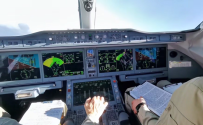
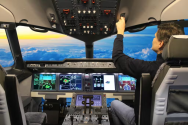
The use of neural network algorithms will allow for maximum automation of aircraft control functions at all stages of flight, while halving the workload on pilots by automating typical (routine) operations and providing recommendations to the crew.
Research Center "Institute named after N.E. Zhukovsky"
"By implementing our scientific advances in the form of intelligent aircraft control technologies in the future GSS, most tasks can be accomplished without human intervention in the control loop, implementing the concept of automatic control 'from the departure terminal to the arrival terminal,'" added the N.E. Zhukovsky Institute Research Center. "The pilot will be present in the cockpit as a controller or decision maker, thus ensuring the required level of flight safety."
"
The SGS is not just a next-generation aircraft of this class, but a set of super-technologies," the center's press service told TASS.
It is planned that the bulk of passenger traffic will be made up of passengers currently flying on subsonic business and first class aircraft. Accordingly, the passenger capacity of future SGSs will be significantly smaller than that of subsonic long-haul passenger aircraft.