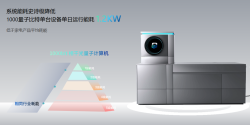
In February 2026, a research team led by Professors Wang Jianwei and Gong Qihuang from Peking University’s School of Physics, in collaboration with Researcher Chang Lin from the School of Electronic Engineering, made a landmark breakthrough by building the world’s first large-scale quantum key distribution (QKD) network based on integrated photonics chips the "Weiming Quantum Chip Network." Published in
Nature, the study presents a fully integrated system featuring high-performance QKD chips and an optical microcavity frequency comb light source. This innovative chip-based architecture enables parallel communication among 20 users over distances up to 370 kilometers without requiring quantum repeaters, achieving a networking capability of 3,700 kilometer-user pairs setting new international standards. The system leverages indium phosphide and silicon nitride material platforms, demonstrating high yield, scalability, and low-cost potential at the wafer level, paving the way for practical, large-scale quantum secure communication.
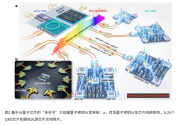
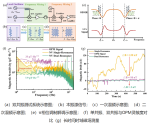
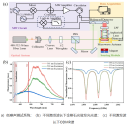
The breakthrough centers on a dual-field QKD (TF-QKD) protocol implemented through integrated photonics, which overcomes critical challenges in long-distance quantum communication. By using wavelength division multiplexing (WDM), the team enabled simultaneous multi-user transmission via shared fiber links. At the server node, a silicon nitride microcavity generates an ultra-stable, low-noise frequency comb locked to sub-Hertz linewidths—eliminating the need for complex external lasers or electronic phase control systems. Each of the 20 user nodes employs an indium phosphide quantum dot chip that integrates laser, modulator, attenuator, and encoding/decoding components into a single wafer-fabricated device. These chips are injection-locked to the central comb source, ensuring precise phase coherence essential for secure single-photon interference. Performance characterization confirmed exceptional consistency: 97.5% yield across hundreds of devices, ultra-low phase noise, and high modulation efficiency demonstrating a viable path toward mass production.
Experimentally validated over long fiber channels (up to 490 km), the network achieved stable phase tracking despite environmental fluctuations, maintained low bit error rates at distances of 204 km and 370 km, and surpassed the theoretical repeaterless limit by 251.4%, marking a major leap in quantum communication performance. The system effectively mitigated crosstalk and Raman noise through optimized filtering, ensuring secure key generation even under challenging conditions. Four anonymous reviewers of
Nature hailed it as a “major breakthrough,” emphasizing its scalability and transformative impact on the field. This work not only represents the first chip-based quantum network published in top-tier journals since QKD chips were proposed in 2004 but also lays the foundation for future ultra-large-scale, reconfigurable quantum networks through advanced heterogeneous integration—positioning China at the forefront of next-generation secure communication technologies.